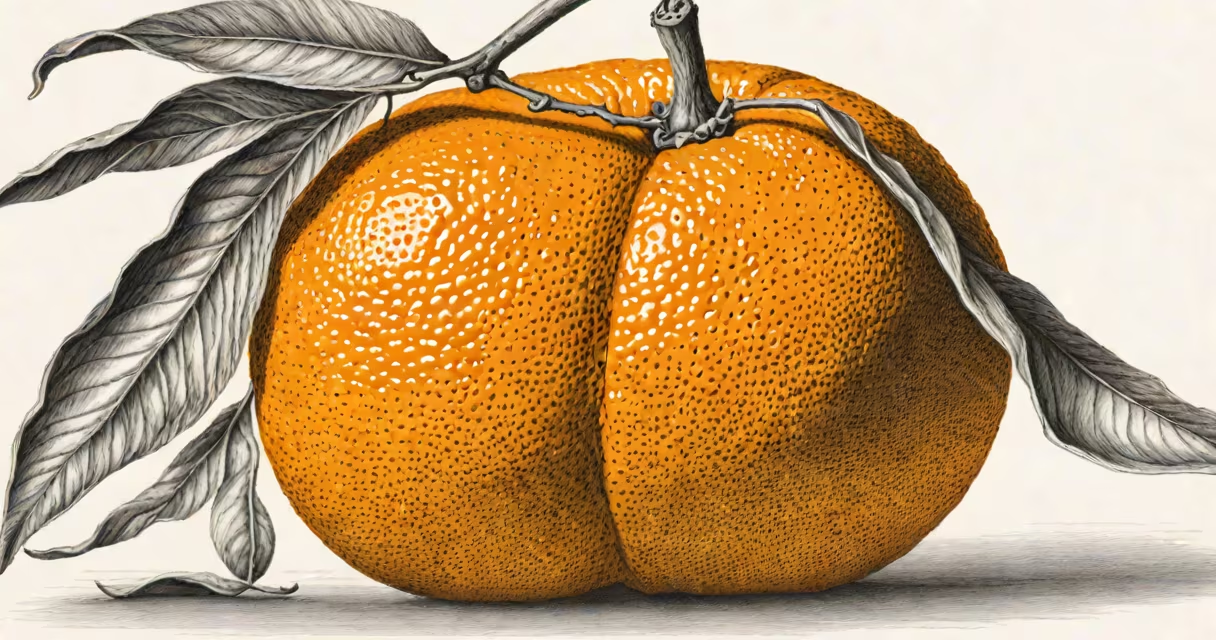
Oranges originated in Southeast Asia, specifically in regions that now include southern China, northern Vietnam, and parts of Myanmar. They were first cultivated over 4,000 years ago and later spread through trade routes to the Middle East, North Africa, and eventually Europe.
The earliest known domestication of the sweet orange (Citrus sinensis) occurred in southern China around 2500 BCE. Historical records from Chinese dynasties describe the fruit as a luxury item, often gifted to royalty. By the 1st century CE, traders carried orange seeds along the Silk Road, introducing them to Persia and the Mediterranean.
Portuguese explorers brought sweet oranges to Europe in the 15th century, where they became popular among the aristocracy. Spanish colonists introduced them to the Americas during the 16th century, planting orchards in Florida, California, and Mexico. Today, the United States, Brazil, India, and China lead global orange production.
Modern orange farming relies on climate zones between 30°N and 30°S latitude. These areas provide consistent temperatures above 10°C (50°F) and ample sunlight. The most productive regions include the southeastern U.S., the Mediterranean basin, and parts of South America.
Commercial orchards use grafted trees-typically a sweet orange scion on a rootstock like trifoliate orange (Poncirus trifoliata)-to ensure disease resistance and faster fruiting. Trees begin producing fruit within 3-5 years and yield 50-100 pounds annually under optimal conditions.
Harvesting occurs between October and April in the Northern Hemisphere. Machines shake trees to dislodge fruit, which is then sorted by size and color. About 70% of harvested oranges go into juice processing; the rest are sold fresh or used in preserves.
Not all oranges are the same. The main cultivated varieties differ in origin, flavor, and use:
| Type | Origin | Common Use | Key Trait |
|---|---|---|---|
| Sweet Orange (Citrus sinensis) | China | Fresh eating, juice | Low acidity, high sugar content |
| Tangerine (Citrus reticulata) | Southwest China, Vietnam | Fresh, candied | Peel easily, seedless variants common |
| Blood Orange (Citrus sinensis 'Sanguinello') | Italy (Sicily) | Salads, juice, desserts | Red flesh due to anthocyanin pigments |
| Seville Orange (Citrus aurantium) | India, Southeast Asia | Candied, marmalade | Extremely bitter; not eaten raw |
Despite their shared name, blood oranges are not a hybrid of sweet and tangerines. They result from a mutation in the anthocyanin pathway triggered by cold nights during fruit development-a trait absent in most other citrus species.
Many assume oranges were native to the Mediterranean or were introduced by Christopher Columbus. This is incorrect. Columbus did bring citrus seeds to the New World, but the specific sweet orange he likely carried was already centuries old in cultivation.
Another misconception is that all orange-colored fruits are oranges. Tangerines, mandarins, and even some maraschino cherries share the name due to color, not botanical relation. True oranges belong to the genus Citrus and are hybrids of wild ancestors like the pomelo (Citrus maxima) and citron (Citrus medica).
A lesser-known fact: the word "orange" entered English via Old French *orenge*, borrowed from Arabic *nāranj*, which itself came from Sanskrit *nāranga*. The fruit's name traveled farther than the plant itself.
In 2023, Florida produced approximately 70 million boxes of oranges, accounting for about 60% of U.S. fresh-market supply. The state's groves span over 500,000 acres, mostly in central Florida near Lake Wales and the Kissimmee region.
Each year, growers face challenges from citrus greening disease (Huanglongbing), caused by the bacterium Candidatus Liberibacter asiaticus. Infected trees show yellow leaves, stunted growth, and fruit drop. Since 2005, the disease has reduced Florida's orange output by nearly 70%, forcing farmers to adopt resistant rootstocks and intensive monitoring systems.
One grower in Polk County reported losing 40% of his 100-acre grove to greening in 2021. He switched to a new hybrid tree-'Sunrise' rootstock on 'Valencia' scion-which showed 90% survival after two years. This shift reflects a broader trend: modern agriculture is adapting to biological threats while maintaining yield.
Oranges did not emerge from a single geographic point but evolved through millennia of human selection and environmental adaptation. Their current global presence stems from ancient cultivation practices in Asia, followed by centuries of colonial expansion and industrial farming.
Understanding where oranges come from reveals more than geography-it shows how food systems evolve under pressure. Climate shifts, pests, and consumer demand have shaped the modern orange. The fruit we eat today is a product of both nature and human intervention.