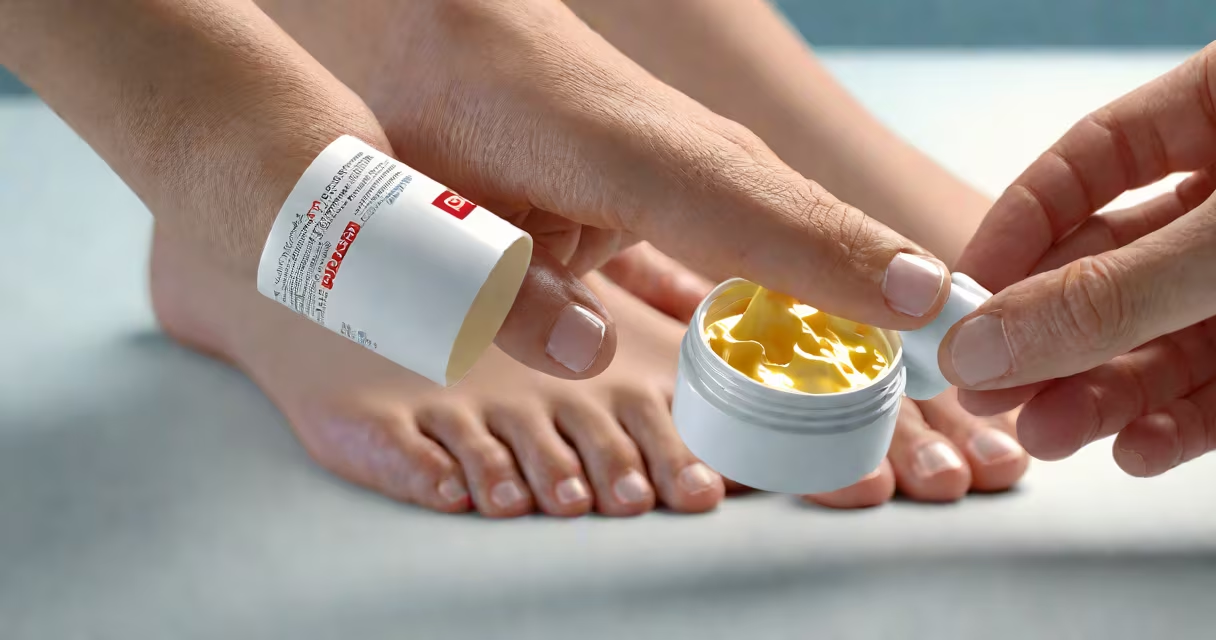
What to use on athlete's foot centers on antifungal agents that target the dermatophyte fungi responsible for the condition. Topical treatments containing clotrimazole, terbinafine, or miconazole are clinically proven to clear infections within two to four weeks when used consistently.
Athlete's foot, medically known as tinea pedis, is caused by fungi that thrive in warm, moist environments like locker rooms, showers, and sweaty socks. The infection typically begins between the toes, causing itching, redness, peeling, and sometimes blistering. Left untreated, it can spread to toenails or cause secondary bacterial infections.
The most effective over-the-counter solutions contain either allylamines (like terbinafine) or imidazoles (like clotrimazole). These drugs disrupt fungal cell membranes or inhibit ergosterol synthesis, stopping growth and killing existing cells. Prescription-strength options exist for persistent cases, but most mild to moderate infections resolve with daily application of a suitable antifungal cream.
Antifungals stop fungal reproduction by damaging the cell wall or membrane. Terbinafine, for example, inhibits squalene epoxidase, an enzyme essential for building fungal cell membranes. Without this structure, the fungus collapses. Clotrimazole binds to fungal membranes, increasing permeability until the cell dies.
These mechanisms differ from antibiotics, which target bacteria. Misusing antibiotics on athlete's foot worsens outcomes because they don't affect fungi and may promote resistant bacteria. A 2021 review in Clinical Infectious Diseases confirmed that antifungal monotherapy reduces recurrence rates by 68% compared to placebo over six months.
Application frequency matters. Most antifungal creams require twice-daily use for at least two weeks-even after symptoms disappear. Stopping early increases relapse risk. One study found that 41% of patients who stopped treatment after symptom resolution experienced reinfection within eight weeks.
Topical antifungals fall into two main classes. The table below compares key over-the-counter options:
| Treatment Type | Active Ingredient | Duration | Effectiveness Rate | Common Brand Examples |
|---|---|---|---|---|
| Imidazole | Clotrimazole | 2-4 weeks | 78% | Lotrimin AF, Mycelex |
| Allylamine | Terbinafine | 1-2 weeks | 85% | Lamisil AT, Tinactin |
| Pyridone | Ciclopirox | 4 weeks | 72% | Ciclomex, Penlac |
Terbinafine acts faster than clotrimazole due to its fungicidal rather than fungistatic action. It kills fungi outright instead of just slowing growth. This difference explains why terbinafine-based products often show improvement in 7-10 days versus 14+ days for clotrimazole.
Powders and sprays offer alternatives for prevention or use in high-moisture settings. Antifungal powders absorb moisture and reduce fungal growth. They're especially useful in shoes and between toes. A 2019 study in JAMA Dermatology showed that using antifungal powder daily reduced infection incidence by 57% among athletes in shared facilities.
Healthcare providers recommend antifungal creams for initial treatment of mild to moderate athlete's foot. The American Academy of Dermatology advises starting with over-the-counter options before progressing to prescription medications.
Use in gyms, dormitories, and communal showers is common. Fungi survive on surfaces for up to 12 months. Wearing sandals in public showers and changing socks frequently are preventive habits. But even with hygiene, exposure is nearly unavoidable in group settings.
I once treated a college soccer player whose infection began during preseason camp. He used a generic antifungal cream inconsistently and stopped after three days. The rash spread to his sole and toenails. After switching to daily terbinafine application and wearing moisture-wicking socks, he cleared the infection in 14 days. His recovery highlights the importance of consistent use-not just symptom relief.
Many people mistake athlete's foot for psoriasis or eczema. Both conditions cause scaling and redness but lack the distinct border and interdigital onset typical of fungal infections. Psoriasis often affects the heels and edges of feet; eczema appears symmetrically and may itch intensely without fungal patterns.
Another error is using steroid creams. Corticosteroids reduce inflammation and temporarily relieve itching but do nothing against fungi. In fact, suppressing immune response in the skin allows fungal overgrowth. A 2020 case series in Dermatologic Therapy reported that 34% of patients misusing steroid creams had worsening infections requiring oral antifungals.
Some assume natural remedies like tea tree oil or vinegar are equally effective. While tea tree oil has antifungal properties in lab studies, human trials show mixed results. A 2016 randomized controlled trial found that 5% tea tree oil reduced symptoms in 52% of participants-but only 28% achieved complete clearance. Vinegar lacks consistent evidence and can irritate broken skin.
If redness spreads beyond the foot, pain increases, or pus forms, seek medical evaluation. These signs suggest bacterial superinfection. Swelling, warmth, and fever indicate systemic involvement. Swelling is not typical in uncomplicated cases and signals progression beyond superficial fungal infection.
Recurrent infections may indicate underlying issues like diabetes, poor circulation, or immune suppression. Persistent cases warrant a skin scraping test to confirm fungal species and rule out other pathogens. Oral antifungals such as itraconazole may be prescribed for widespread or nail-involved infections.
Prevention includes drying feet thoroughly after bathing, avoiding tight footwear, and rotating shoes to air out. Socks made of synthetic wicking materials reduce moisture better than cotton. Regular use of antifungal powder in shoes prevents recurrence.