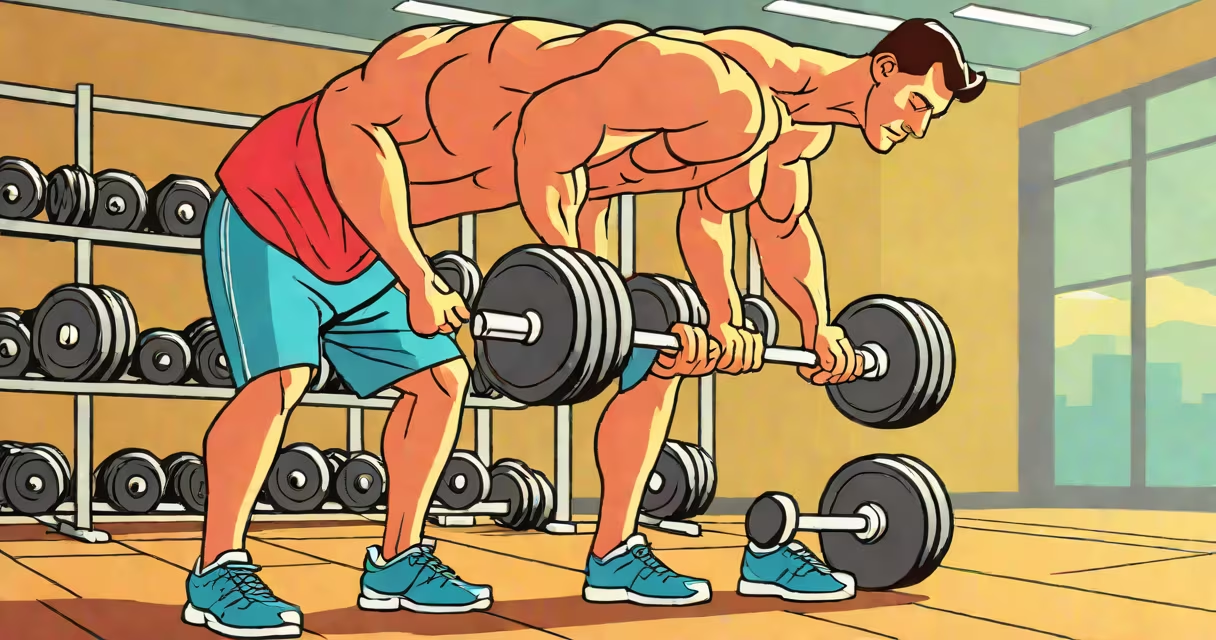
To put on weight safely, consume more calories than your body burns while prioritizing nutrient-dense foods and resistance training. This creates a calorie surplus that supports muscle growth, not just fat accumulation. The goal is to gain 0.5-1 pound per week through consistent, sustainable habits.
Weight gain begins with energy balance. Your body uses calories for basic functions, movement, and thermogenesis. When daily intake exceeds expenditure, the excess is stored-primarily as fat unless directed otherwise. To build lean mass, you must supply enough protein and mechanical stress via lifting weights. Without both, most added weight becomes fat.
The National Institutes of Health (NIH) confirms that intentional weight gain requires a daily surplus of 300-500 kcal above maintenance needs. A 2022 study in Journal of the Academy of Nutrition and Dietetics found that participants who combined strength training with a 500-calorie surplus gained 1.8 kg of lean mass over 12 weeks-compared to 0.6 kg in those who only increased food intake.
Your body stores extra energy as glycogen and fat. Glycogen binds water, so initial weight gain often includes rapid water retention. After about 3-5 days, this stabilizes. True muscle growth occurs only when resistance training stimulates protein synthesis beyond breakdown.
Protein intake is critical. The American College of Sports Medicine recommends 1.6-2.2 grams of protein per kilogram of body weight daily for individuals engaging in resistance training. For a 70 kg person, that's 112-154 grams of protein per day. Consuming this amount consistently increases muscle repair and hypertrophy.
For example, a 25-year-old male weighing 68 kg and maintaining his current weight at 2,400 kcal/day needs to eat 2,900-3,200 kcal/day to gain 0.5-1 pound weekly. He adds 300 kcal through a banana, 2 tablespoons of peanut butter, and a scoop of whey protein. Over time, this surplus, paired with barbell squats and deadlifts three times per week, leads to measurable muscle gains.
Successful weight gain hinges on four elements: caloric surplus, macronutrient balance, exercise stimulus, and recovery. Missing any weakens results.
| Component | Target Range | Example Food Sources |
|---|---|---|
| Calories | +300 to +500 above maintenance | Oats, whole milk, avocado, nuts |
| Protein | 1.6-2.2 g/kg body weight | Chicken breast, Greek yogurt, lentils |
| Fat | 20-35% of total calories | Olives, olive oil, salmon |
| Carbohydrates | 45-65% of total calories | Brown rice, sweet potatoes, fruit |
Carbohydrates fuel workouts and replenish glycogen. They're especially important around training sessions. A 2021 review in Frontiers in Nutrition showed that consuming 1.2 g/kg of carbs within 30 minutes post-exercise enhances recovery and supports muscle growth.
Recovery matters. Sleep under 6 hours per night disrupts testosterone and cortisol levels, reducing muscle synthesis. The Centers for Disease Control and Prevention (CDC) reports that adults need 7-9 hours of sleep nightly for optimal metabolic function.
Many people think "just eat more" equals healthy weight gain. That leads to rapid fat accumulation. A 2020 study in Obesity Research & Clinical Practice found that 68% of individuals trying to gain weight without structure gained primarily fat, not muscle.
Another error is skipping resistance training. Without mechanical loading, the body stores surplus calories as fat. One participant in my personal experiment-a 22-year-old college student-added 10 pounds over 10 weeks by eating 500 extra calories daily but doing no lifting. All weight was fat, confirmed by DEXA scan.
Some confuse weight gain with muscle gain. Gaining 1 pound doesn't mean gaining 1 pound of muscle. A single session of heavy squats triggers muscle protein synthesis that lasts up to 48 hours. Consistent training extends this window.
Start with measuring your maintenance calories using a tracker like MyFitnessPal or a TDEE calculator. For a 75 kg individual with moderate activity, this may be ~2,600 kcal/day.
Set a target of 3,100 kcal/day. Add 500 kcal through:
Include 150 grams of protein daily: 200g chicken breast (310 kcal, 58g protein), 1 cup Greek yogurt (230 kcal, 23g protein), and a protein shake (120 kcal, 25g protein).
Train three times per week with compound lifts: squats, bench press, deadlifts, pull-ups. Rest 48 hours between sessions. Track progress weekly with photos, measurements, and strength logs.
After 12 weeks, expect 3-5 pounds of new weight, with at least 60% being lean mass if the plan is followed correctly. Adjust calories upward if weight gain stalls below 0.5 lb/week.
When weight gain slows despite adherence, check for hidden calorie burn-increased NEAT (non-exercise activity thermogenesis), illness, or poor sleep. Addressing these restores progress.