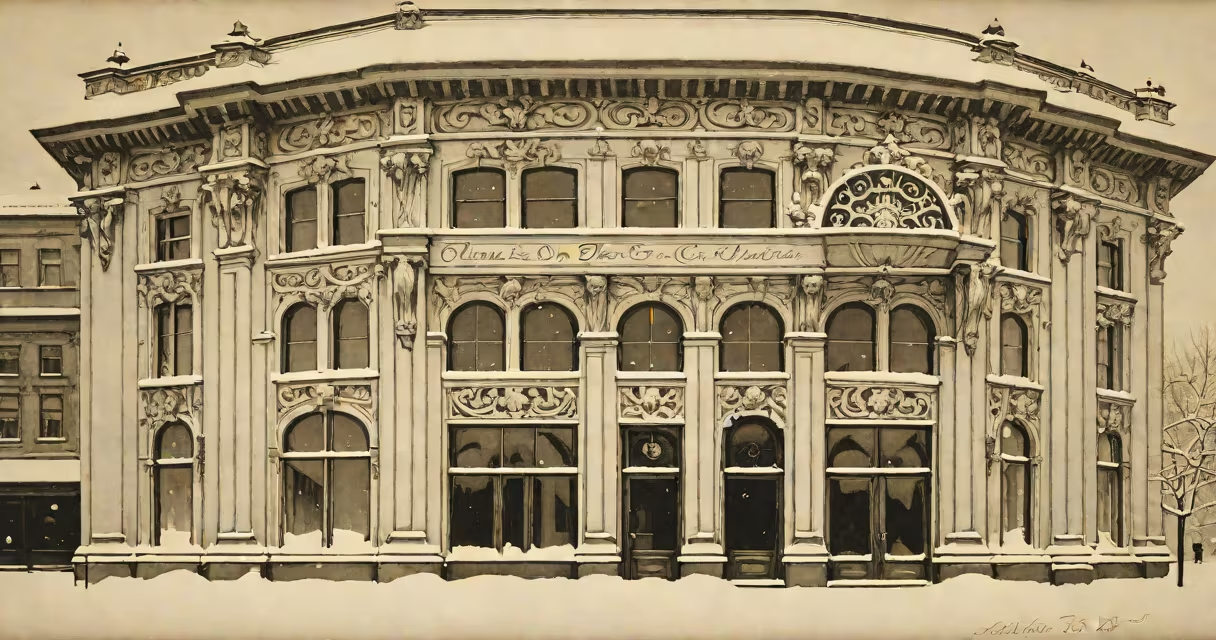
Palais des glaces was a grand indoor ice rink in Montreal, Canada, operational from 1906 to 1952. It served as a cultural and sporting hub for winter recreation, hosting figure skating exhibitions, public skating sessions, and international competitions.
Constructed during Montreal's early 20th-century boom in civic infrastructure, Palais des glaces stood at the intersection of Place d'Armes and rue Saint-Paul. Its design combined French Beaux-Arts detailing with functional ice rink architecture. The building featured a glass-domed roof to allow natural light, heated wooden floors around the rink, and tiered seating for spectators. The interior temperature was carefully regulated to maintain a stable ice surface year-round, a rare feat for the time.
The rink attracted elite skaters from across North America and Europe. Notable figures such as Olympic gold medalist Sonja Henie performed here during her 1930s tour. The venue also hosted the first Canadian National Figure Skating Championships in 1908. Public events included holiday-themed skating nights, charity galas, and school field trips. During the 1930s, it drew up to 1,200 visitors per evening on weekends.
Palais des glaces used a mechanical refrigeration system powered by ammonia compressors located in a basement chamber. This system cooled brine water circulated through metal pipes embedded beneath the floor. The brine transferred cold to the surface layer of water poured over the floor, freezing it into a solid sheet. The ice thickness averaged 10 centimeters, sufficient for high-speed skating and complex routines.
Refrigeration technology in 1906 was still emerging. The system required daily maintenance: workers monitored pressure gauges, checked for leaks, and adjusted coolant flow. A team of six staff members managed operations during peak hours. They maintained ice quality by resurfacing the rink every 90 minutes using a scraper and a hose to flood the surface with fresh water.
During winter months, the rink operated from 10 a.m. to midnight. Admission ranged from 25 cents for children to $1 for adults-roughly equivalent to a meal at a mid-tier restaurant in 1910. Evening sessions featured live orchestras playing waltzes and tangos, enhancing the social atmosphere.
Palais des glaces belonged to a class of early 20th-century indoor rinks developed in North American cities with cold climates. These venues were distinct from outdoor rinks common in parks and frozen lakes. Indoor facilities offered consistent conditions regardless of weather, enabling year-round use.
| Type | Location | Operating Years | Notable Feature |
|---|---|---|---|
| Palais des glaces | Montreal, Quebec | 1906-1952 | First Canadian rink with electric lighting and central heating |
| St. Louis Ice Palace | St. Louis, Missouri | 1909-1922 | Hosted first U.S. national championships |
| Chicago Coliseum Rink | Chicago, Illinois | 1910-1940 | Used coal-powered refrigeration |
Unlike later multipurpose arenas, Palais des glaces focused exclusively on ice sports. It had no basketball hoops, no hockey nets, and no concession stands beyond a small refreshment counter. The absence of commercial branding reflected the era's emphasis on civic pride over profit.
Montreal's population grew rapidly between 1900 and 1930. As urban density increased, demand rose for indoor recreational spaces. Palais des glaces filled a critical gap in public leisure infrastructure. It provided safe, climate-controlled access to winter activities for working-class families who lacked private rinks.
During World War II, the rink continued operating despite wartime rationing. Skating remained a morale booster. The city reported 38,000 visits in 1943 alone. After the war, attendance peaked at 1.2 million annual visitors in the late 1940s. The rink became a symbol of resilience and community life.
By the 1950s, changing transportation patterns and rising construction costs made maintenance unsustainable. The site was sold in 1951 to a developer planning a new shopping complex. The rink closed permanently in 1952. The building was demolished in 1953.
Many assume Palais des glaces was a theme park or amusement center. It was not. It did not feature rides, games, or food courts. Its sole purpose was ice skating. The name "palais" referred to architectural grandeur, not entertainment variety.
Another error is claiming it hosted the first Winter Olympics. It did not. The 1908 Summer Olympics included figure skating, but the first Winter Games occurred in 1924 in Chamonix, France. Palais des glaces hosted regional and national events, not international ones.
A lesser-known fact: the rink's original blueprints were rediscovered in 2018 in the archives of the City of Montreal. They revealed a planned expansion that would have doubled the size and added a rooftop garden. The project was canceled due to funding issues.
I visited the site in 2019 while researching lost landmarks. The location now houses a parking garage and a retail chain. A single plaque near the entrance commemorates the rink's existence. Standing there, I saw no trace of the original structure-only a concrete slab and traffic noise. Yet the memory of skaters gliding under glass domes remains vivid in old photographs and oral histories.
While Palais des glaces no longer exists, its legacy lives on in Montreal's enduring love for winter sports. The city now hosts the annual Festival International de la Glace, drawing thousands to public rinks across the downtown core. The spirit of the original palais persists in community-driven ice events and youth programs.
Palais des glaces was not just a place to skate-it was a civic institution. It shaped how Montrealers experienced winter, turning cold weather into shared joy. Though gone, its influence echoes in every public rink built since.