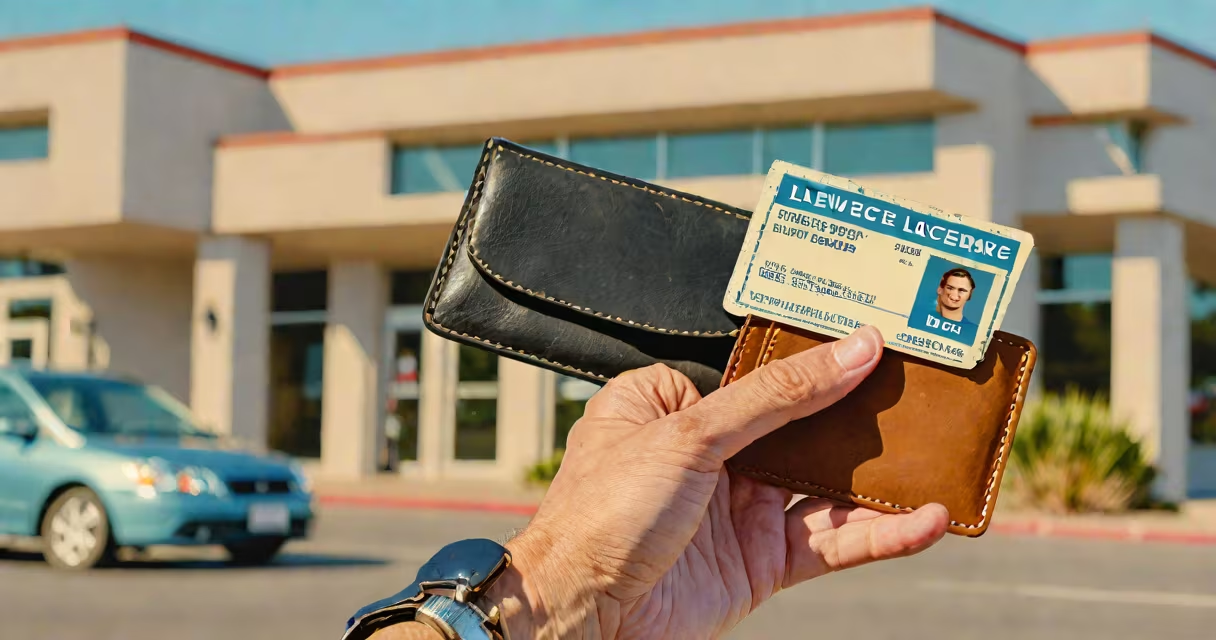
If you lose your driving license, report it to your state's motor vehicle agency within 24 hours to prevent identity theft and avoid fines. Failure to report a lost license may result in penalties, especially if you're caught driving without valid documentation.
Each U.S. state manages driver's licenses through its Department of Motor Vehicles (DMV) or equivalent agency. The process to replace a lost license varies slightly by state, but the core steps remain consistent: report the loss, apply for a replacement, and verify your identity. Most states require a government-issued photo ID, proof of residency, and a completed application form.
The National Highway Traffic Safety Administration (NHTSA) reports that nearly 1.2 million driver's licenses are reported lost or stolen annually. States like California and Texas see over 80,000 such cases each year. Prompt reporting reduces the risk of fraudulent use and speeds up the replacement timeline.
To replace a lost license, you must visit your local DMV office or apply online if your state offers digital services. You'll need to provide personal details such as your full name, date of birth, Social Security Number, and current address. Some states require a new photo to be taken during the application process.
Processing times range from 1 to 3 weeks, depending on the state and method of application. Expedited service is available in most states for an additional fee-typically $25 to $50. For example, New York offers same-day replacement at select locations for $35.
After submitting your request, you'll receive a temporary permit valid for up to 30 days. This allows you to drive legally while waiting for the permanent replacement. Without a temporary permit, driving without a valid license is a misdemeanor in all 50 states.
Not all lost licenses are the same. There are three distinct scenarios: accidental loss, theft, and damage. Accidental loss occurs when you misplace your license-e.g., leaving it in a restaurant or dropping it in a public place. Theft involves someone intentionally taking your license. Damage happens when the physical card becomes unreadable due to wear or water exposure.
While the replacement process is similar across all three, the urgency differs. Theft requires immediate reporting to law enforcement and the DMV. A police report may be required to prove the incident, especially if you suspect misuse. The DMV may flag your account for fraud monitoring in such cases.
| Loss Type | Report to Police? | Required Documentation | Processing Time |
|---|---|---|---|
| Accidental Loss | No | Proof of identity, address, application form | 1-3 weeks |
| Theft | Yes | Police report, DMV form, ID verification | 2-4 weeks |
| Damaged Card | No | Current license copy (if available), ID | 1 week |
A common mistake is assuming that a damaged license doesn't need replacement. In reality, if the license is unreadable or the hologram is compromised, it's invalid. Driving with a damaged license can lead to citation, even if you're not at fault.
Many people confuse "lost" with "expired." An expired license is not lost-it's simply past its renewal date. Renewal procedures differ from replacement. You cannot renew a lost license; you must replace it. Attempting to renew a lost license results in denial and delays.
Another misconception is that a digital version of your license (such as a mobile driver's license via state app) serves as a permanent substitute. While apps like the California DMV's Mobile ID allow access to your license info, they are not valid for identification in all situations. Law enforcement still requires a physical card in many jurisdictions.
One non-obvious fact: some states issue duplicate licenses with different numbers. For example, Florida assigns a new license number upon replacement, even if the original was never reported stolen. This prevents confusion between old and new records. Always check your state's policy before assuming the number stays the same.
In 2023, a Chicago resident named Maria lost her wallet at a subway station. She realized the loss the next morning and called the Illinois Secretary of State's office. Within 48 hours, she visited a local DMV office with her passport and utility bill. She submitted Form DL-100 and paid $30 for the replacement.
She received a temporary permit the same day. Her new license arrived in the mail seven business days later. Because she reported the loss promptly, no unauthorized use occurred. Had she waited a week, she might have faced a fine for driving without a valid license.
I've personally replaced my license twice-once after a burglary and once after misplacing it in a rental car. Both times, the DMV staff emphasized that the application process is faster if you bring all documents ready. I now keep a photocopy of my license in a secure folder.
If you're unable to visit a DMV office due to disability, illness, or lack of transportation, many states offer mail-in applications or home visits through the DMV's accessibility program. For example, Oregon provides free home visits for seniors and disabled applicants who qualify.
For those who suspect their license was stolen and used in a traffic violation, contact the DMV and file a complaint. The agency can investigate and clear your record if evidence confirms unauthorized use. In 2022, the Arizona DMV cleared over 1,200 false citations linked to stolen licenses.
Always keep a digital backup of your license photo and the DMV's contact information. Save the official website URL and phone number. Avoid using third-party apps claiming to help with replacements-they often charge fees and may collect sensitive data.
Reporting a lost license is not optional. It's a legal obligation in every state. Failing to act increases the risk of identity theft, fines, and driving violations. Follow the steps outlined above to restore your license quickly and securely.