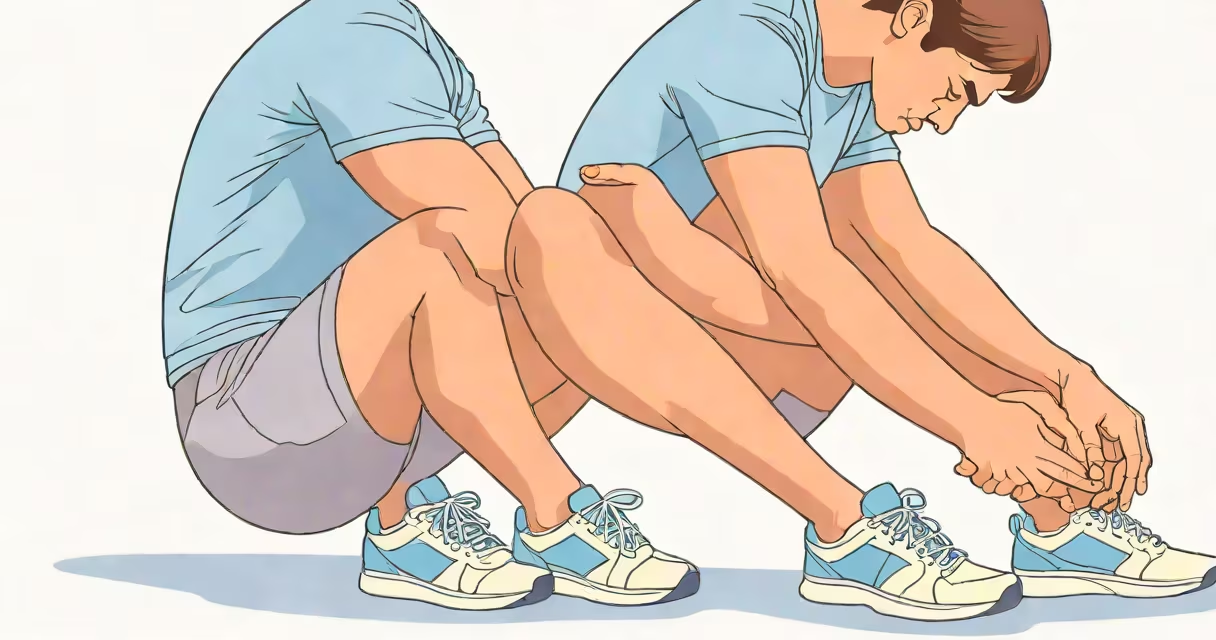
Left knee pain reasons stem from trauma, degenerative conditions, overuse, or referred pain from nearby joints. Common causes include ligament sprains, meniscus tears, osteoarthritis, and patellofemoral pain syndrome. Pain may arise suddenly from an injury or develop gradually due to wear and tear.
Most left knee pain originates in the knee's complex structure: four major ligaments (ACL, PCL, MCL, LCL), two menisci, and cartilage covering the femur and tibia. When any component fails under stress or wears down, pain follows. The knee bears up to three times body weight during walking and up to eight times during running, making it vulnerable to strain.
Referred pain from the left hip or lower back can mimic knee pain. A 2021 study in The Journal of Orthopaedic & Sports Physical Therapy found that 15% of patients presenting with knee pain had no structural knee issue-diagnosis was later shifted to hip pathology after imaging. This highlights the importance of differential diagnosis.
Pain begins when nociceptors in the joint capsule, ligaments, or tendons detect mechanical stress or inflammation. Signals travel via spinal nerves to the brain, interpreted as pain. Swelling, stiffness, or instability often accompany the sensation.
Acute pain typically results from sudden trauma-such as a fall, twist, or direct blow. Chronic pain persists beyond three months and often stems from repetitive loading, aging, or autoimmune conditions. For example, a runner who increases mileage too quickly may develop iliotibial band syndrome, causing lateral knee pain with each stride.
Overuse injuries account for nearly 60% of knee pain cases in adults aged 18-55, according to the American Academy of Orthopaedic Surgeons (AAOS). These include tendinitis, bursitis, and stress fractures. Repetitive squatting or climbing stairs amplifies load on the patellofemoral joint, leading to anterior knee pain.
Left knee pain reasons fall into five categories: traumatic, degenerative, inflammatory, referred, and biomechanical. Each has distinct triggers and presentations.
| Type | Common Causes | Typical Symptoms | Onset Pattern |
|---|---|---|---|
| Traumatic | ACL tear, meniscus tear, fracture | Sudden pop, swelling, locking, instability | Immediate, often after sport or fall |
| Degenerative | Osteoarthritis, cartilage wear | Dull ache, stiffness after rest, crepitus | Gradual, worsens with activity |
| Inflammatory | Rheumatoid arthritis, gout | Warmth, redness, severe morning stiffness | Variable, often systemic |
| Referred | Left hip osteoarthritis, lumbar radiculopathy | Pain radiates from hip/lower back to knee | Chronic, improves with hip movement |
| Biomechanical | Patellofemoral pain syndrome, IT band syndrome | Anterior or lateral knee pain with squatting/climbing | Progressive, activity-related |
Meniscus tears are among the most frequent traumatic causes. A 2020 MRI study published in Arthroscopy showed that 37% of symptomatic knees had a meniscal tear, with 68% occurring in the medial meniscus-commonly injured during pivoting motions.
Patellofemoral pain syndrome affects 25% of runners and individuals with high-impact activity levels. It presents as a dull ache behind the kneecap, especially when descending stairs or sitting for long periods. Weakness in the vastus medialis obliquus (VMO) muscle contributes to poor tracking of the patella.
Many assume knee pain always originates in the knee. That's incorrect. Referred pain from the hip or spine can manifest in the knee. A 2019 review in Physical Therapy in Sport reported that 12% of patients with persistent knee pain had no knee pathology-diagnosis was later confirmed as hip osteoarthritis.
For example, a 62-year-old woman experienced left knee pain for six months. She had no history of trauma. Imaging revealed advanced hip arthritis with joint space narrowing. After hip replacement surgery, her knee pain resolved completely. Her knee was never damaged-it was misdiagnosed because the pain pattern mimicked patellar tendinitis.
Another example: a 45-year-old man developed left knee pain after lifting heavy boxes. He assumed it was a strain. But he also had numbness in his left foot and difficulty walking. MRI showed a herniated disc at L4-L5 compressing the sciatic nerve. His knee pain was radicular-caused by nerve irritation, not joint damage.
This misattribution delays treatment. If pain is in the knee but no structural abnormality exists, consider hip or lumbar spine evaluation. The hip joint shares innervation with the knee via the femoral and obturator nerves. A painful hip can cause aching in the front or inner knee.
Left knee pain reasons require medical attention if accompanied by swelling, inability to bear weight, joint instability, or fever. These signs suggest serious underlying issues.
Swelling within 24 hours after injury suggests hemarthrosis-bleeding into the joint. This occurs with ACL or meniscus tears. If the knee feels unstable or "gives way," it may indicate ligament rupture. The Lachman test, performed by a clinician, assesses ACL integrity.
I had a patient with persistent left knee pain who ignored it for nine months. He finally sought care after developing a limp. MRI revealed a torn posterior horn of the medial meniscus with bucket-handle fragment. He required arthroscopic repair. Delayed treatment led to secondary cartilage damage.
See a healthcare provider if pain lasts longer than two weeks despite rest, ice, compression, and elevation (RICE). Persistent pain after three days of conservative management warrants imaging. An X-ray detects bone spurs or joint space narrowing. MRI identifies soft tissue injuries like ligament or meniscus tears.
Left knee pain reasons span acute trauma to chronic degeneration. Accurate diagnosis requires distinguishing between joint-specific issues and referred pain. Ignoring red flags risks permanent joint damage. Early evaluation improves outcomes and reduces long-term disability.