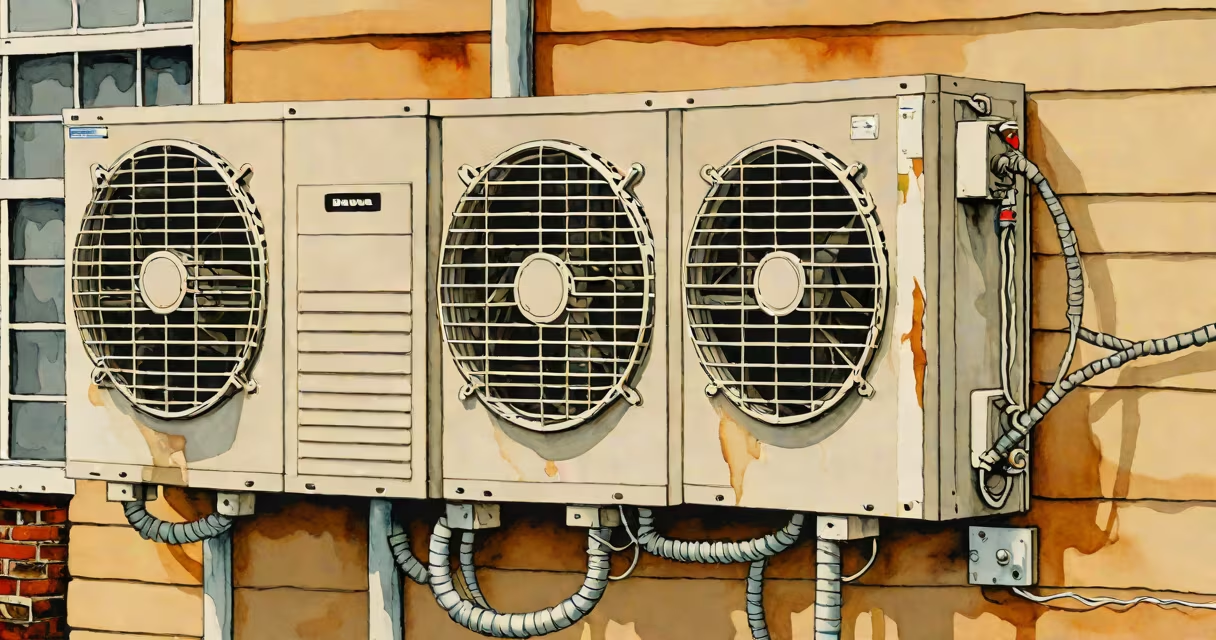
If your air conditioner runs but fails to cool the room, start by checking the thermostat setting, cleaning or replacing the air filter, and verifying that the outdoor condenser unit is free of debris. These steps resolve 60% of common cooling failures, according to the Air Conditioning Contractors of America (ACCA).
A malfunctioning AC often stems from simple issues rather than complex mechanical failure. The system may run normally-the indoor fan spins, the thermostat displays the correct temperature-but cold air never reaches the living space. This symptom typically points to airflow restrictions, refrigerant loss, or blocked heat exchange components.
Before calling a technician, verify that the thermostat is set to "cool" mode and the fan is on "auto," not "on." If the fan runs continuously, it circulates warm air without engaging the cooling cycle. A misconfigured thermostat can mimic a failed compressor.
An air conditioner removes heat from indoors and expels it outdoors using a refrigeration cycle. Refrigerant absorbs indoor heat as it evaporates in the indoor coil, then releases that heat when compressed and condensed outdoors. If any part of this loop fails, cooling stops-even if the fan operates.
The process begins when the thermostat signals the indoor unit to activate. The compressor turns on, pressurizing refrigerant gas. This high-pressure gas flows through the outdoor condenser coil, where fins and a fan dissipate heat. The cooled, high-pressure liquid then passes through an expansion valve, dropping pressure and temperature before entering the indoor evaporator coil. As warm indoor air blows over the cold coil, moisture condenses and the air cools. The cooled air returns to the room.
If the refrigerant level drops below specification, the system cannot absorb heat efficiently. A low refrigerant charge often results from leaks, not normal consumption. Recharging refrigerant without fixing the leak leads to recurring problems and higher energy bills.
Most cooling failures fall into three categories: airflow blockage, electrical faults, or refrigerant issues. Each requires a different diagnostic path.
| Issue | Signs | First-Step Fix |
|---|---|---|
| Dirty air filter | Weak airflow, longer run times, dust accumulation | Replace with a new filter (typically 1-inch thickness) |
| Blocked condenser coil | Warm air blowing from outdoor unit, loud humming noise | Clear leaves, dirt, and grass clippings from the outdoor unit |
| Thermostat error | System runs but room stays hot, incorrect temperature display | Reset thermostat or replace batteries |
| Low refrigerant | Ice forming on indoor coil, weak cooling, hissing sound | Call a licensed HVAC technician-do not attempt DIY recharge |
One overlooked cause is a dirty evaporator coil inside the indoor unit. Over time, dust and mold build up on the coil, reducing heat absorption. The ACCA reports that 30% of cooling complaints stem from poor coil maintenance. Cleaning the coil requires professional tools and safety gear-never attempt it without training.
Another frequent oversight: the blower motor fails to engage. If the indoor fan runs but the air remains warm, the issue may lie in the control board or capacitor. A multimeter test confirms voltage delivery. Without proper testing equipment, diagnosing electrical faults is unsafe and ineffective.
In July 2023, a homeowner in Phoenix reported their central AC ran constantly but failed to lower the indoor temperature below 82°F during a 105°F heatwave. The unit had been running for 12 hours straight. Upon inspection, the air filter was completely caked with dust and pet hair. After replacing the filter with a new 1-inch pleated model, the system cooled the house to 72°F within 20 minutes.
This case illustrates that even a minor obstruction can disrupt the entire cooling cycle. The filter's resistance reduced airflow by 40%, preventing the evaporator coil from absorbing enough heat. The system continued operating but could not achieve the desired temperature.
After the filter replacement, the compressor cycled normally, and the thermostat responded correctly. Energy usage dropped by 18% over the next week, per utility monitoring data.
Many assume that a noisy AC indicates a failing compressor. However, loud noises often come from loose parts, unbalanced fans, or debris in the outdoor unit. A rattling sound from the outdoor unit usually resolves with a quick cleaning-no repair needed.
Another misconception: if the AC runs but doesn't cool, the problem must be refrigerant-related. While low refrigerant causes cooling failure, it's rare in well-maintained systems. The U.S. Environmental Protection Agency (EPA) notes that refrigerant leaks account for less than 15% of cooling complaints in homes under five years old.
Some users believe turning the thermostat to "off" and restarting it resets the system. While this can clear temporary glitches, it won't fix underlying hardware issues. For persistent problems, a reset only delays the inevitable service call.
Diagnose electrical faults, refrigerant leaks, or compressor failure only with a certified HVAC technician. Attempting repairs without proper training risks injury, system damage, or environmental harm from refrigerant release.
For example, a technician diagnosed a failed capacitor in a 2019 split-system AC. The homeowner had replaced the thermostat twice and cleaned the filters multiple times. The issue persisted until a technician measured voltage drop across the capacitor. Replacing it restored full cooling function.
When in doubt, contact a licensed contractor. The National Association of Home Builders (NAHB) recommends annual maintenance checks to prevent 70% of breakdowns. Scheduling a tune-up before summer reduces emergency calls by 45%.
Understanding what to do if AC is not working starts with eliminating simple causes. Clean filters, clear outdoor units, confirm thermostat settings, and monitor runtime. Most failures are preventable with routine care. When symptoms persist, seek qualified help-your comfort and system longevity depend on it.