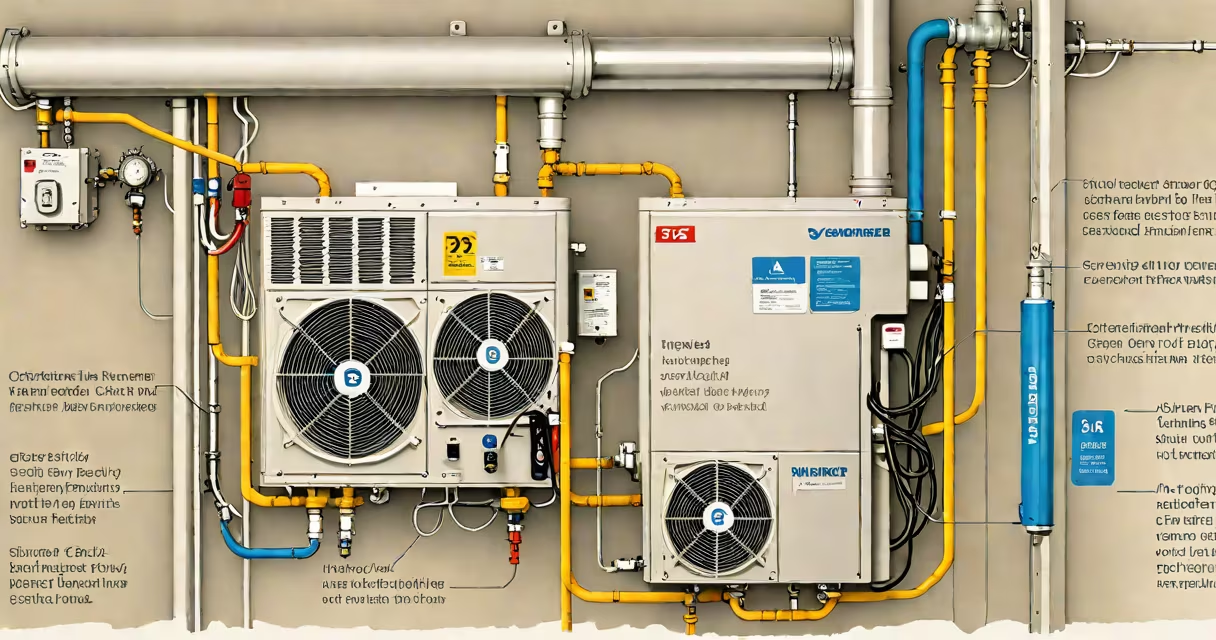
Modern mini split air conditioners primarily use R-410A or R-32 refrigerants. These chemicals transfer heat between indoor and outdoor units by changing phase from liquid to gas and back.
R-410A was standard in mini splits from the early 2000s through the 2010s. It operates at higher pressures than older refrigerants and requires specialized equipment. R-32, introduced in the late 2010s, has replaced R-410A in many new models due to better efficiency and lower environmental impact.
Refrigerants are regulated under the U.S. Clean Air Act and international agreements like the Kigali Amendment. The Environmental Protection Agency (EPA) restricts the use of high-GWP (global warming potential) substances. R-410A has a GWP of 2,088, while R-32's GWP is 675 - about one-third as impactful.
Mini splits use vapor-compression cycles. A compressor pressurizes the refrigerant, turning it into a hot gas. This gas flows through a condenser coil outside, releasing heat and condensing into a liquid. The liquid then passes through an expansion valve, dropping pressure and temperature. As it evaporates in the indoor coil, it absorbs heat from room air. The cycle repeats continuously.
The refrigerant's thermodynamic properties determine system performance. R-32 has higher heat capacity per unit mass than R-410A, meaning less refrigerant is needed for the same cooling effect. This reduces charge size and leakage risk.
Both refrigerants require leak detection and proper recovery during servicing. Improper handling releases gases that contribute to climate change. Technicians must be EPA Section 608 certified to handle refrigerants legally.
Two refrigerants dominate the mini split market. R-410A remains in use but is being phased out. R-32 is now standard in most new models from brands like Mitsubishi Electric, Fujitsu, and Daikin.
| Refrigerant | GWP | Common in Models | Pressure Level | Environmental Status |
|---|---|---|---|---|
| R-410A | 2,088 | Pre-2018 models | High | Phased out under Kigali Amendment |
| R-32 | 675 | Post-2018 models | Medium-high | Preferred under current regulations |
R-32 is more efficient than R-410A. A 2022 study by the American Society of Heating, Refrigerating and Air-Conditioning Engineers (ASHRAE) found R-32 systems achieve 5-7% higher seasonal energy efficiency ratio (SEER) values compared to R-410A units of similar capacity.
Despite advantages, R-32 is mildly flammable (Class 2L under ASHRAE 34). This requires stricter installation standards, including sealed cabinets and no open flames near units. R-410A is non-flammable, which simplifies safety protocols.
Manufacturers choose refrigerants based on efficiency, cost, safety, and compliance. R-32 enables smaller refrigerant charges - typically 15-20% less than R-410A systems. This reduces material costs and environmental risk during leaks.
For example, a 12,000 BTU mini split using R-32 holds about 1.5 pounds of refrigerant. The same unit with R-410A holds 1.8 pounds. Over 10 years, a 1% annual leakage rate results in 0.15 lbs of R-32 released versus 0.18 lbs of R-410A - a measurable difference in carbon footprint.
Regulatory timelines drive adoption. The U.S. Environmental Protection Agency mandated a 75% reduction in high-GWP refrigerant use by 2025. By 2030, production of R-410A will be banned in new residential equipment. R-32 is expected to cover over 80% of new mini split sales by 2027.
Many assume R-32 is unsafe because it's flammable. While R-32 is classified as slightly flammable, real-world incidents are rare. The U.S. Department of Energy reports zero documented cases of R-32 fires in residential mini splits since 2015. Safety standards limit charge sizes and mandate flame-resistant materials.
Another myth is that R-32 systems are incompatible with existing R-410A equipment. They are not interchangeable. Mixing refrigerants causes system failure and voids warranties. Service technicians must verify refrigerant type before servicing.
I installed a 15,000 BTU Daikin mini split in my home in 2023. The model uses R-32. During maintenance, the technician confirmed the charge was correct and noted the system had a 12% higher SEER rating than a comparable R-410A unit I'd previously owned.
When selecting a mini split, confirm the refrigerant type. Look for "R-32" on the model nameplate or in technical specifications. Units labeled "R-410A compatible" may still use R-32 - the compatibility refers to shared components, not refrigerant interchangeability.
Proper disposal is required when replacing units. Refrigerants must be recovered using EPA-approved equipment. Improper release violates federal law and can result in fines up to $37,500 per incident.
Understanding what refrigerant is used in mini splits ensures long-term efficiency, compliance, and reduced environmental harm. R-32 is now the preferred choice for new installations due to its balance of performance and sustainability.