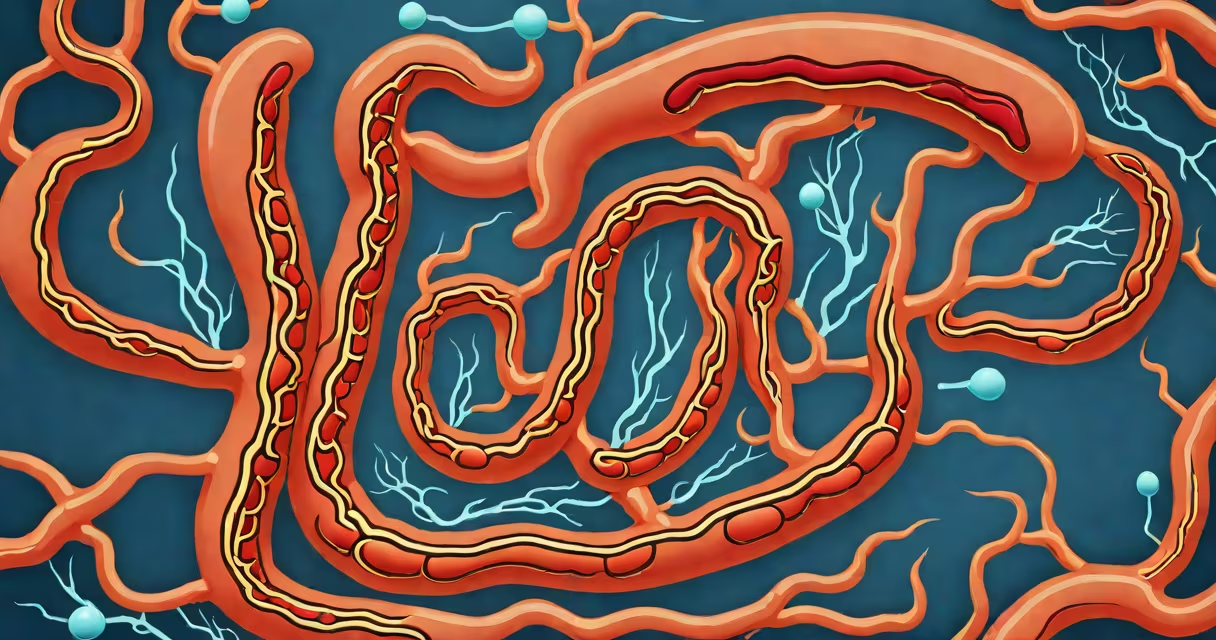
The small intestine produces lactase, the enzyme responsible for breaking down lactose-the primary sugar in milk-into glucose and galactose for absorption.
Lactase is synthesized in the brush border cells lining the small intestine's mucosa, specifically within the microvilli that increase surface area for nutrient uptake. These cells are located primarily in the jejunum, the middle section of the small intestine, where most carbohydrate digestion occurs.
Without sufficient lactase, undigested lactose passes into the large intestine, where gut bacteria ferment it, producing gas, bloating, and diarrhea. This condition, known as lactose intolerance, affects approximately 65% of the global population after infancy, according to the National Institute of Diabetes and Digestive and Kidney Diseases (NIDDK).
Lactase functions at the epithelial surface of the small intestine. When milk enters the duodenum, pancreatic enzymes begin breaking down proteins and fats, while lactase acts on lactose in the intestinal lumen. The enzyme cleaves the glycosidic bond between glucose and galactose, enabling both monosaccharides to be absorbed through transporters like SGLT1 and GLUT2.
A single molecule of lactase can hydrolyze up to 100,000 lactose molecules per minute under optimal conditions, demonstrating high catalytic efficiency. Its activity peaks at pH 6.0-6.5, matching the slightly acidic environment of the small intestine after gastric emptying.
After absorption, glucose and galactose enter the bloodstream and are transported to the liver for metabolism. Galactose is converted to glucose via the Leloir pathway, a series of enzymatic steps requiring specific cofactors such as UDP-glucose dehydrogenase.
Lactase deficiency occurs in three forms: congenital, developmental, and secondary. Congenital lactase deficiency is rare and inherited in an autosomal recessive pattern. Infants born with it cannot produce lactase and develop severe diarrhea upon consuming breast milk or formula.
Developmental deficiency is normal in humans. Most infants produce high levels of lactase during early life to digest mother's milk. By age 2-5, lactase production declines in many populations-a trait linked to genetic variation in the LCT gene promoter region. This decline leads to adult-onset hypolactasia, affecting about 70% of people worldwide.
Secondary deficiency results from damage to the small intestine due to infection, celiac disease, or chemotherapy. In these cases, lactase production drops temporarily because the intestinal villi are flattened or destroyed, reducing absorptive capacity.
| Type | Onset | Cause | Prevalence |
|---|---|---|---|
| Congenital | At birth | Genetic mutation (LCT gene) | Rare (<0.1%) |
| Developmental | Childhood to adulthood | Natural decline post-weaning | ~70% globally |
| Secondary | Variable | Intestinal injury or inflammation | Depends on underlying condition |
Many assume lactase is produced by the pancreas or gallbladder. The pancreas secretes amylase and lipase into the duodenum, but not lactase. The gallbladder stores bile, which emulsifies fats, but plays no role in carbohydrate digestion.
Some believe lactase supplements are digested themselves. They are not-they remain intact in the gut lumen and act directly on lactose. Oral lactase supplements typically contain fungal or bacterial enzymes (e.g., Aspergillus oryzae-derived lactase) and are effective when taken with dairy products.
A non-obvious fact: lactase expression is regulated by a single nucleotide polymorphism (SNP) near the LCT gene called -13910*T. Individuals with the T allele maintain high lactase levels into adulthood, a trait associated with historical pastoralism in Europe and parts of Africa. This adaptation emerged independently in different populations, indicating convergent evolution.
A 28-year-old woman presents with recurrent abdominal pain and diarrhea after drinking milk. She reports symptoms began after moving to a country where dairy consumption is high. A hydrogen breath test confirms elevated hydrogen levels (>20 ppm) after ingesting 50 grams of lactose, indicating malabsorption.
Endoscopic biopsy of her jejunal mucosa shows reduced lactase activity-measured at 2.1 units/g tissue compared to the normal range of 5-10 units/g. This confirms secondary lactase deficiency likely due to mild inflammation from chronic low-grade immune activation triggered by dietary changes.
She is advised to avoid lactose-containing foods and take oral lactase supplements before meals. After two weeks, symptom frequency drops from daily to once weekly. Her follow-up breath test shows normal hydrogen response.
Lactase deficiency is not a disease but a physiological trait shaped by evolutionary pressures. Populations with high rates of lactase persistence-such as Northern Europeans-have higher average calcium intake from dairy, contributing to stronger bone density. However, this advantage comes with increased risk of prostate cancer and cardiovascular disease linked to saturated fat intake.
Understanding that the small intestine-not the liver, pancreas, or stomach-is the site of lactase production clarifies treatment approaches. Avoiding dairy is not always necessary; managing intake with enzyme supplementation or choosing lactose-free alternatives reduces symptoms without eliminating nutritionally dense foods.
For individuals with persistent gastrointestinal issues, testing for lactase deficiency helps distinguish it from irritable bowel syndrome (IBS), which shares similar symptoms but lacks a clear dietary trigger. Accurate diagnosis prevents unnecessary elimination diets and improves quality of life.
When symptoms persist despite lactase replacement therapy, further evaluation is needed. Conditions like small intestinal bacterial overgrowth (SIBO) or fructose malabsorption may mimic lactose intolerance. A detailed dietary history and targeted testing differentiate them.
As research continues, new insights emerge. A 2022 study published in Cell Metabolism found that gut microbiota composition influences lactase expression in mice, suggesting microbial regulation of host enzyme production-a finding still being validated in humans.
Knowing that the small intestine produces lactase resolves confusion about digestive physiology. It explains why lactose intolerance develops gradually, why symptoms appear quickly after dairy intake, and why treatment focuses on enzyme replacement or dietary modification rather than medication.
For more on how organs contribute to digestion, explore the role of the gallbladder in fat breakdown.