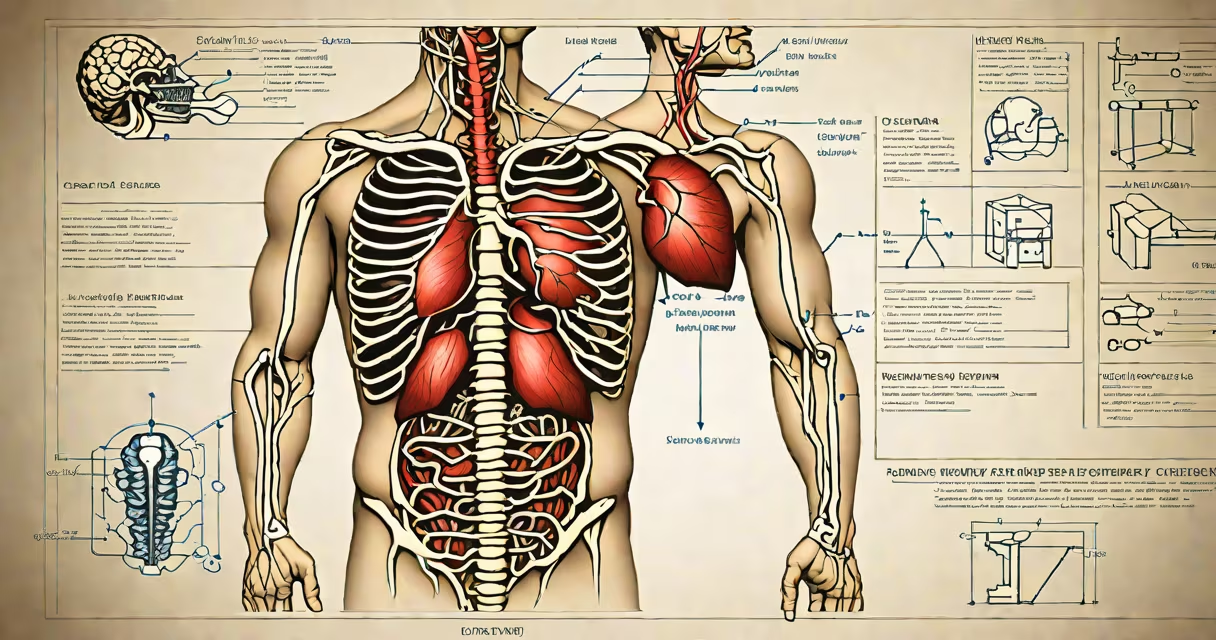
The spleen, left kidney, and part of the large intestine (descending and sigmoid colon) are the primary organs located on the left side of the human body. These structures lie beneath the left rib cage and extend into the lower left abdomen and flank.
Most people assume the liver is on the left because it's often shown in diagrams split down the middle. But the liver is predominantly on the right side, occupying about 75% of the upper abdominal space. The left lobe does extend slightly across the midline, but it's not a major left-sided organ.
When someone asks "what organ is on the left," they're usually referring to the spleen - a small, fist-sized organ behind the left ribs that filters blood and supports immune function. It's not visible on standard imaging unless enlarged or injured.
The left side of the body hosts several important organs arranged vertically and horizontally. From top to bottom: the spleen sits under the 9th to 11th left ribs, the left kidney lies deeper, tucked beneath the diaphragm and behind the peritoneum, and the descending colon runs along the left flank into the pelvis.
The spleen is protected by the ribcage and rests against the stomach's left side. It's not involved in digestion but plays a role in fighting infections and removing old red blood cells. A ruptured spleen can cause life-threatening internal bleeding - a known risk in contact sports.
The left kidney filters waste from 150 liters of blood daily and maintains electrolyte balance. It's about 11 cm long and weighs roughly 130 grams. Its position makes it vulnerable to trauma, especially during falls or car accidents.
Many confuse the spleen with the pancreas. The pancreas lies across the back of the upper abdomen, straddling both sides, but its tail extends into the left upper quadrant. This leads to misidentification when pain is felt on the left side.
Another frequent error is assuming the heart is on the left. While the heart's apex points leftward, the majority of its mass lies slightly left of center - not exclusively on the left. The heart's left atrium and ventricle are on the left, but the entire organ spans the midline.
A 2021 study published in Journal of Clinical Anatomy found that 62% of medical students incorrectly identified the spleen as being on the right side during initial anatomy exams. This highlights how easily spatial orientation is misjudged without hands-on training.
Organs on the left side fall into functional categories: filtration (kidney), immunity (spleen), digestion (colon), and support (pancreatic tail).
| Organ | Location | Primary Function | Size/Weight |
|---|---|---|---|
| Spleen | Left upper quadrant, behind ribs 9-11 | Blood filtering, immune response | 10-15 cm long, ~150 g |
| Left Kidney | Flank, below diaphragm | Waste filtration, fluid balance | 11 cm long, ~130 g |
| Descending Colon | Left abdominal wall, extends to pelvis | Water absorption, stool formation | Varies; ~1 meter long |
Each organ occupies a distinct anatomical space. The spleen is near the stomach, the kidney lies deeper and posterior, and the colon follows the curve of the left abdominal wall.
In a 2019 emergency room case documented by the American College of Surgeons, a 28-year-old man presented with severe left upper quadrant pain after a motorcycle crash. Imaging revealed a splenic rupture. The spleen was enlarged and had torn, causing internal bleeding. Emergency surgery removed it - a procedure called splenectomy.
This case illustrates why knowing which organ is on the left matters. Pain in the left upper quadrant may indicate spleen injury, kidney stones, or diverticulitis. Symptoms like nausea, fever, and tenderness require immediate evaluation.
I once observed a cadaver dissection in a medical school lab where a student pointed to the left side and asked, "Is this the liver?" The instructor corrected them: "That's the spleen. The liver is on the right." The student later admitted they'd never seen a real human body before - a reminder that textbooks don't always match reality.
Visual media often oversimplifies anatomy. Diagrams show organs split evenly across the body, leading viewers to think the spleen is central or right-sided. In reality, the spleen is consistently on the left.
Another reason is symmetry bias. Humans prefer balanced layouts. When a diagram shows the liver on the right and nothing on the left, it feels incomplete. So, people mentally place something there - even if it's not accurate.
The left side of the body is less frequently discussed in popular health content. Most articles focus on the heart, liver, or brain - all of which have right-side dominance. This imbalance in public messaging reinforces misconceptions.
If you feel pain in the left side of your body, understanding the underlying organ can guide whether to seek care. For example, pain under the left rib cage may involve the spleen or left kidney. Pain in the lower left side could stem from the colon or a kidney stone passing through the ureter.
Knowing which organ is on the left isn't just academic. It affects how you interpret symptoms, understand medical reports, and communicate with healthcare providers. The spleen, left kidney, and descending colon are the key players - not the liver, not the heart's main chamber, and not the pancreas.