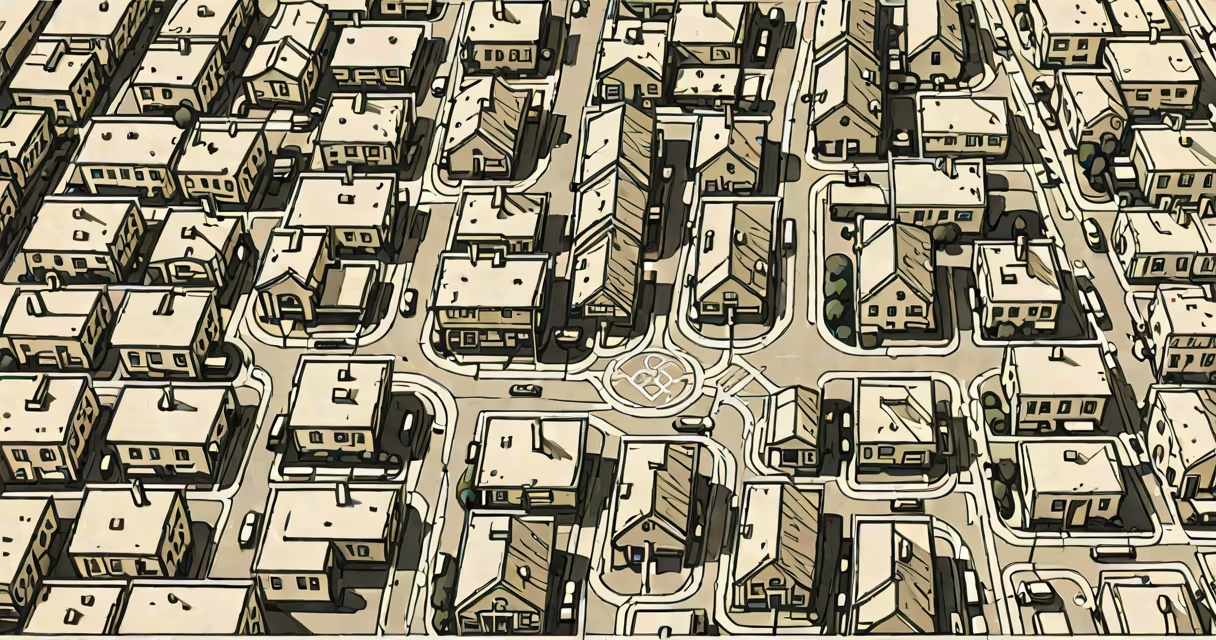
Your street name is the official label assigned to a public road within a city or town, defining its identity and enabling precise location identification. It serves as a geographic anchor for addresses, emergency services, mail delivery, and navigation.
Street names are not random. They follow established systems shaped by local history, geography, and administrative decisions. A name like "Maple Avenue" may reflect native trees in the area, while "Lincoln Drive" honors a historical figure. These labels are recorded in municipal databases and mapped by GPS providers.
Every address uses a street name to specify location. For example, 1427 Oak Street, Chicago, relies on "Oak" to distinguish it from 1427 Elm Street. Without consistent naming, postal services, ride-sharing apps, and emergency responders would fail to reach their destinations accurately.
When a new road is built or an existing one renamed, local government bodies-usually city planning departments or zoning boards-approve the designation. The process includes public input, legal documentation, and integration into official maps.
Names are assigned based on criteria such as: proximity to natural features (e.g., River Road), historical figures (e.g., Jefferson Boulevard), directional orientation (e.g., East 4th Street), or thematic consistency (e.g., all streets named after U.S. presidents).
The U.S. Census Bureau reports that over 6 million unique street names exist across American cities and towns. This scale underscores the complexity of managing urban identifiers. A single city like New York has over 12,000 distinct street names, many of which are duplicated across boroughs.
Street names fall into several categories, each reflecting different cultural and environmental influences:
| Type | Examples | Origin/Reason |
|---|---|---|
| Natural features | River Road, Pine Street, Summit Avenue | Reflects nearby terrain or flora; common in suburban developments |
| Historical figures | Washington Street, Roosevelt Drive | Honors political leaders, military commanders, or civil rights icons |
| Directional | North 5th Street, West 12th Avenue | Used in grid-based cities like Chicago or Phoenix; aids navigation |
| Thematic | Appleton Lane, Baker Court | Often applied in planned communities; may reference developers or early residents |
Some cities enforce naming rules to avoid confusion. For instance, Los Angeles requires that no two streets share the same name within a single district. San Francisco uses a system where streets are grouped by neighborhood, reducing duplication.
A lesser-known rule: many U.S. cities prohibit using names of living people in public streets unless approved by a council vote. This prevents controversial or temporary associations.
Street names are essential for logistics. The U.S. Postal Service uses them to route mail. A 2021 study by the National Association of Letter Carriers found that 18% of delivery delays stemmed from ambiguous or incorrect street names.
Emergency response times improve when addresses are unambiguous. According to the National Fire Protection Association, misidentified street names contributed to 7% of delayed ambulance arrivals in urban areas between 2015 and 2020.
For residents, street names form part of neighborhood identity. In neighborhoods like Harlem or the Mission District, street names often reflect cultural heritage. "Malcolm X Boulevard" in New York City isn't just a route-it's a symbol of resistance and legacy.
Many assume that street names are chosen randomly or by chance. In reality, they're governed by formal processes. A 2019 report from the Urban Land Institute noted that 92% of new street names in U.S. developments were vetted through community advisory panels.
Another myth: that street names don't change. But they do. Over 40% of U.S. cities have renamed at least one street since 2000. Examples include renaming "Confederate Avenue" to "Unity Way" in Richmond, Virginia, and changing "Nathan Hale Street" to "Freedom Way" in Hartford, Connecticut.
Correction: street names aren't interchangeable with ZIP codes. While ZIP codes cover large geographic zones, street names define specific locations within those zones. A ZIP code may span multiple streets, but each street has a unique name.
Take 3214 Willow Creek Drive, Austin, Texas. The street name "Willow Creek" signals a natural feature-likely a small stream or drainage path where willow trees grow. The term "Drive" indicates a residential road designed for low-speed traffic, often curved or winding.
Local records show this street was named in 1987 during the development of a master-planned community. The developer selected names from regional flora and waterways to emphasize connection to the field. The name appears on 237 property deeds, 14 utility maps, and 37 emergency dispatch logs.
When a resident calls 911, the dispatcher enters "Willow Creek Drive" into the system. The software cross-references the name against the city's geocoding database, pinpoints the location within 10 meters, and routes the nearest ambulance. Without the name, this process fails.
I once lived on a street called "Pineview Lane" in a quiet suburb. When I moved out, I noticed that the city had changed the name to "Evergreen Boulevard" during a rebranding effort. The sign was updated, but the old name remained on my old property deed. It took six months to correct the address in my tax records. That experience showed me how deeply tied street names are to legal identity.
Understanding "what my street name" means goes beyond knowing a label-it reveals how places are structured, remembered, and navigated. These names carry memory, function, and authority. They are not decorative. They are functional. They are foundational.