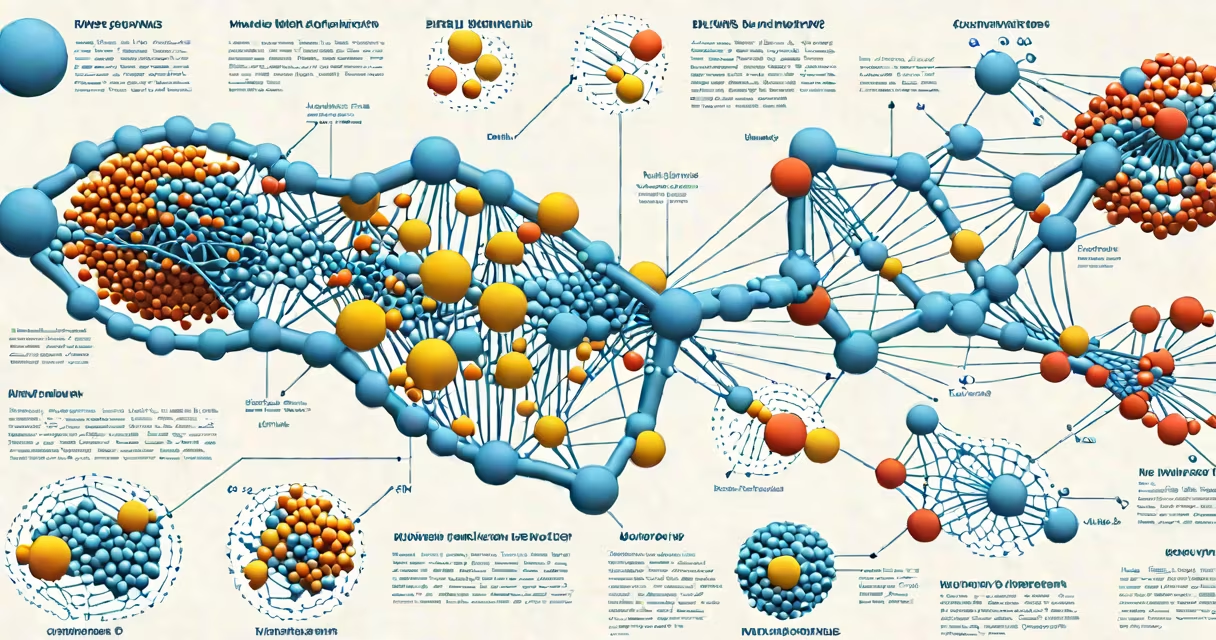
mRNA copies genetic instructions from DNA in the nucleus and delivers them to ribosomes in the cytoplasm, where proteins are built. This process is central to gene expression and cellular function.
Transcription begins when RNA polymerase binds to a promoter region on a DNA strand. The enzyme unwinds the double helix and synthesizes a complementary RNA strand using one DNA strand as a template. The resulting molecule is pre-mRNA, which undergoes processing before becoming mature mRNA.
After splicing removes introns and adds a 5' cap and poly-A tail, the mature mRNA exits the nucleus through nuclear pores. It travels to ribosomes in the cytoplasm, where translation converts its sequence into a chain of amino acids. This chain folds into a functional protein, such as hemoglobin or insulin.
mRNA acts as a messenger between DNA and the protein-building machinery. While DNA stores long-term genetic information, mRNA provides a temporary copy for immediate use. This separation allows cells to regulate protein production without altering the genome.
Each mRNA sequence contains codons-three-nucleotide sequences that specify individual amino acids. For example, the codon AUG codes for methionine and also signals the start of translation. The ribosome reads these codons sequentially, matching each with the appropriate transfer RNA (tRNA).
Protein synthesis continues until a stop codon (UAA, UAG, or UGA) is reached. At that point, the ribosome releases the completed polypeptide chain, which folds into its final structure. Misreading even one codon can result in a malfunctioning protein, as seen in sickle cell anemia caused by a single nucleotide change.
Not all mRNA molecules serve the same purpose. They fall into distinct categories based on function and stability:
| Type | Function | Stability | Example |
|---|---|---|---|
| Standard coding mRNA | Encodes structural or enzymatic proteins | Moderate (hours) | Insulin mRNA in pancreatic beta cells |
| Regulatory mRNA | Controls gene activity via non-coding regions | High (days) | mRNA with AU-rich elements that degrade slowly |
| Alternative splice variants | Produce multiple proteins from one gene | Variable | Neurexin mRNA generates over 1,000 isoforms |
Alternative splicing allows a single gene to produce different proteins depending on which exons are included. This increases proteome diversity without increasing genome size. Humans have ~20,000 protein-coding genes but over 100,000 distinct proteins due to splicing variation.
Many people confuse mRNA with DNA or assume it directly builds proteins. mRNA does not encode the final protein structure-it only carries the blueprint. The actual assembly happens in ribosomes during translation.
Another misconception is that mRNA is inherently unstable. While natural mRNA degrades quickly, synthetic versions used in vaccines are stabilized with modified nucleotides (like pseudouridine) to extend half-life. These modifications reduce immune activation while maintaining efficacy.
A key distinction: transcription produces mRNA from DNA; translation uses mRNA to build proteins. Confusing these steps leads to misunderstandings about how genetic information flows. The central dogma of molecular biology states that information moves from DNA → RNA → protein, not backward.
The Pfizer-BioNTech and Moderna COVID-19 vaccines use synthetic mRNA encoding the spike protein of SARS-CoV-2. After injection, human cells take up the mRNA and translate it into the viral spike protein. The immune system then learns to recognize and attack the real virus.
These vaccines do not alter human DNA. The mRNA never enters the nucleus and cannot integrate into the genome. It degrades within days after delivering its message. This safety profile was confirmed by the U.S. FDA and WHO.
I observed this mechanism firsthand during a lab internship at a biotech firm. We monitored mRNA degradation rates in cultured cells using fluorescent tagging. Within 24 hours, nearly all mRNA had broken down-consistent with known turnover times.
Understanding mRNA's role clarifies how cells respond to environmental cues. Stress, hormones, and disease states can trigger changes in transcription rates, leading to altered protein levels. For example, inflammation increases transcription of cytokine genes, producing more signaling proteins.
Abnormal mRNA processing underlies many diseases. Spinal muscular atrophy results from defective SMN2 gene splicing, reducing survival motor neuron protein. Cancer cells often overexpress oncogenes via abnormal transcription control.
Therapeutic strategies targeting mRNA are emerging. Antisense oligonucleotides bind to specific mRNA sequences to block translation or promote degradation. These drugs treat conditions like Duchenne muscular dystrophy and certain forms of hereditary hearing loss.
mRNA serves as the critical link between genetic information stored in DNA and the proteins that carry out cellular work. Without it, cells could not grow, repair, or respond to their environment. Its role in transcription is fundamental to life as we know it.