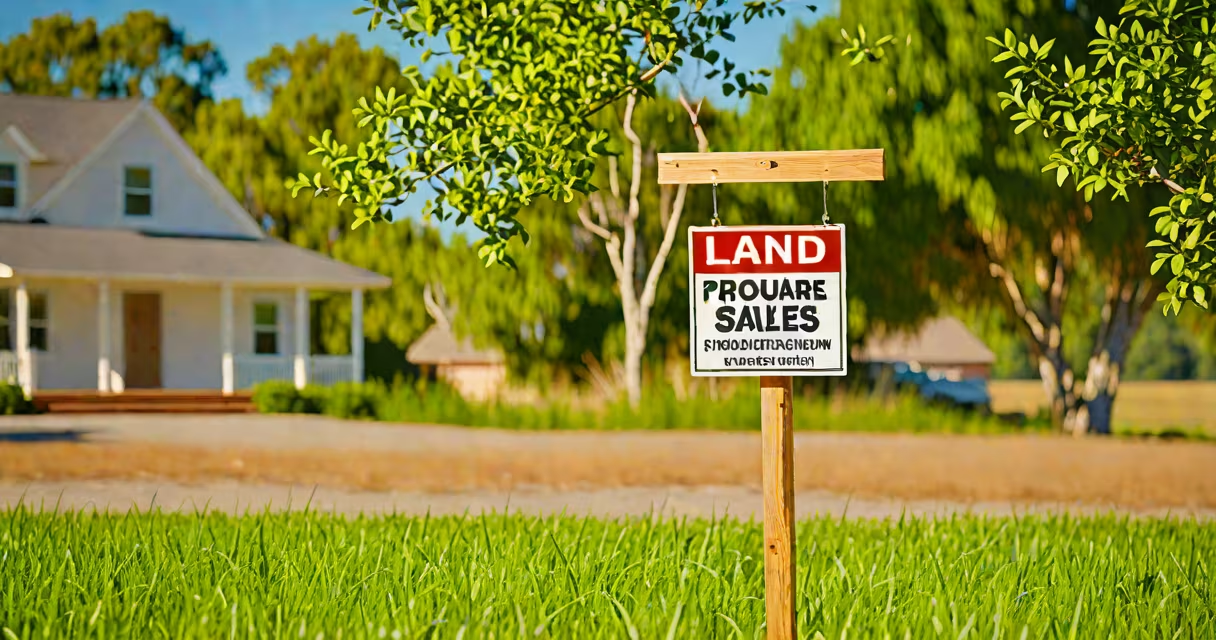
Typical commission for land sales ranges from 5% to 6% of the final sale price, paid by the seller and usually split between the listing agent and the buyer's agent. This standard applies across most U.S. markets, though regional differences and property type can alter the rate.
Land transactions differ from residential home sales in several key ways. The commission structure remains similar, but the actual percentage can vary based on the land's purpose-agricultural, recreational, raw development, or conservation-use parcels. A 5% fee on a $200,000 tract equals $10,000, which is typically shared equally between the two agents involved.
Commission rates are not set by law but are negotiated between the seller and their listing agent. Most real estate contracts specify a flat percentage, often 5% to 6%, with adjustments possible for high-value or hard-to-sell properties. Some agents offer discounted rates for bulk or off-market deals, especially in rural areas.
Commissions are calculated as a percentage of the gross sale price. For example, a $300,000 land sale with a 5.5% commission results in $16,500 total fees. This amount is then split-typically 50/50-between the listing agent and the buyer's agent. The seller pays the full amount, but the listing agent handles distribution.
Some agents charge a flat fee instead of a percentage. A $5,000 flat fee may be offered for a $100,000 parcel, making it more predictable for sellers. However, this model is less common in land sales, where agents rely on commission-based income due to lower transaction volume and higher time investment.
Real estate professionals often spend more time on land deals than on homes. They may conduct title reviews, coordinate with surveyors, verify zoning laws, and explain environmental restrictions. These added responsibilities justify the standard commission range, even though land sales involve fewer showings and negotiations.
Not all land sells at the same commission rate. The intended use affects both pricing and agent compensation. Below is a breakdown of common land types and their associated commission structures:
| Type of Land | Average Commission Rate | Notes |
|---|---|---|
| Rural farmland | 5%-6% | High demand in agricultural regions; agents often specialize in farming zones. |
| Recreational acreage | 5.5%-6% | Higher commissions reflect niche marketing and limited buyer pools. |
| Raw development land | 6%-7% | Agents may negotiate higher fees due to complex due diligence and long timelines. |
| Conservation or easement land | 5%-5.5% | Lower rates due to slower sales cycles and government oversight. |
For example, a 40-acre tract in central Texas used for cattle grazing sold for $1.2 million. The listing agent charged a 5.5% commission ($66,000), which was split evenly with the buyer's agent. The seller netted $1,134,000 after fees.
Some agents offer tiered commission structures. A 6% rate applies to the first $500,000 of sale price, then drops to 4% on the remainder. This reduces cost for high-value land, making it more competitive in markets with large parcels.
Many assume that land commissions are lower than those for homes. This is incorrect. While home sales average 5% to 6% for the entire transaction, land commissions follow the same pattern. The difference lies in how the fee is distributed-not in the rate itself.
Another misconception is that buyers pay the commission. In reality, the seller covers the full cost. The buyer's agent earns their share through the seller-paid commission pool. This arrangement is standardized across U.S. real estate, regardless of property type.
Some sellers believe they can avoid paying commission by selling "for cash" or "directly." However, even in private sales, the listing agreement still binds the seller to the agreed-upon fee. If the agent brings a buyer, the commission is due. Only a signed waiver or contract cancellation prevents payment.
I once observed a land sale in northern California where the seller attempted to bypass the agent after receiving multiple offers. The agent had listed the property under a standard agreement. When the seller closed directly with a buyer, the agent filed a claim. The court upheld the contract, and the seller paid the full 5.5% commission. This case illustrates that commission agreements are legally enforceable.
Regional differences influence typical commission for land sales. In states like Florida and Texas, where land demand is high, agents may accept slightly lower percentages-around 4.5%-to remain competitive. In contrast, mountainous or remote areas such as parts of Montana or Colorado often see rates at 6% or higher due to lower agent availability and longer sales cycles.
Market conditions also affect rates. During periods of low inventory, agents may reduce their cut to close deals faster. Conversely, in hot markets with multiple bids, agents may hold firm on standard rates. According to the National Association of Realtors (NAR), the median commission for vacant land sales in 2023 was 5.8%, consistent with prior years.
Property size matters too. Large tracts-over 100 acres-often attract specialized agents who charge higher rates due to the complexity of negotiations and legal requirements. Smaller parcels (under 10 acres) may see lower fees because they're easier to market and sell quickly.
One non-obvious fact: commission rates do not include additional fees such as title insurance, survey costs, or transfer taxes. These are separate expenses paid by the buyer or seller depending on local custom. A $200,000 land sale with a 5% commission totals $10,000 in agent fees, but the buyer may still owe $3,000 in closing costs.
Understanding typical commission for land sales requires knowing that the standard rate is 5% to 6%, applied to the gross sale price. This rate is negotiable but rarely drops below 4.5% unless the property is difficult to sell or the market is oversaturated. The fee is paid entirely by the seller and split between agents.
When evaluating a real estate agent for land, ask about their experience with similar properties, their commission structure, and whether they offer a flat-rate option. Compare multiple agents using clear fee breakdowns. Always review the contract before signing.