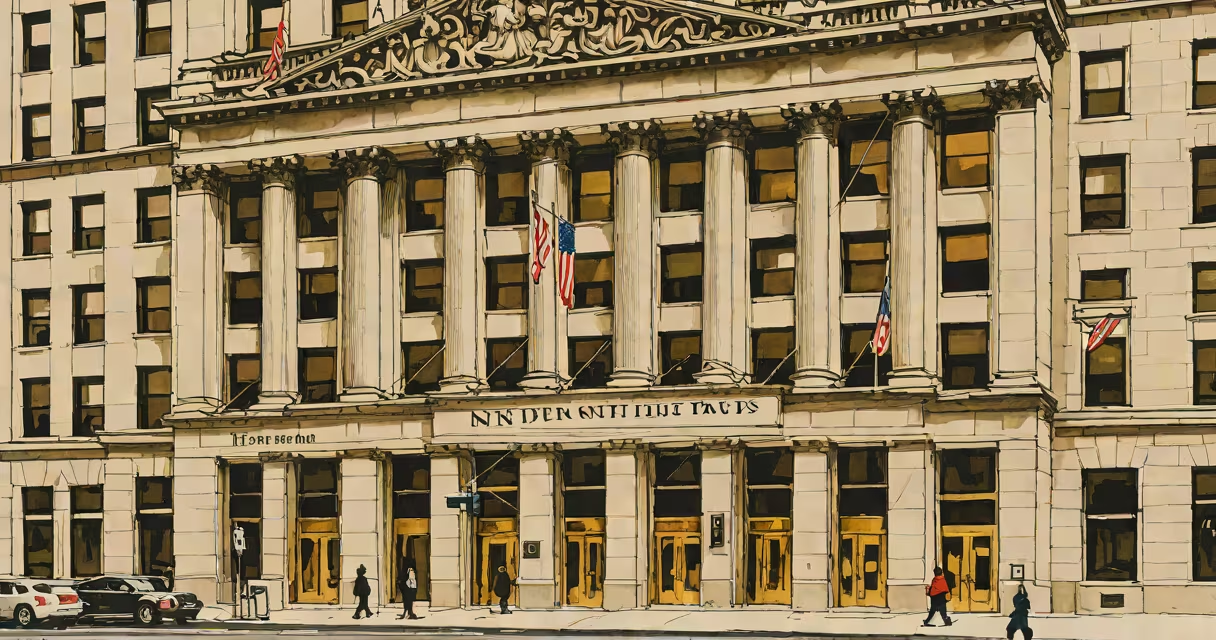
The New York Department of Financial Services (NYDFS) is the state agency responsible for regulating banks, insurance companies, credit unions, and other financial institutions operating in New York. It enforces financial laws, protects consumers, and ensures the stability of the state's financial system.
Established in 2011, NYDFS consolidated oversight previously split between multiple agencies. Its mandate includes licensing financial institutions, enforcing consumer protection laws, and managing the state's insurance market. The department operates under the authority of New York State law and reports to the Governor.
NYDFS has gained national attention for its strict cybersecurity regulations, particularly the 23 NYCRR 500 rule, which requires covered entities to implement specific data security measures. This rule applies to all financial services providers licensed in New York, including fintech firms, insurers, and payment processors.
NYDFS functions through a combination of regulatory enforcement, licensing, examinations, and public reporting. It conducts regular audits of financial institutions to verify compliance with state laws and internal policies. Institutions must submit annual reports detailing their risk management practices, financial health, and cybersecurity posture.
When violations occur, NYDFS can issue fines, revoke licenses, or impose corrective action plans. For example, in 2022, the department fined a major bank $1.5 million for failing to report suspicious transactions in a timely manner. These actions reinforce accountability and deter systemic risks.
NYDFS also maintains a public database of enforcement actions and disciplinary records. Consumers can search for complaints against financial institutions or professionals, such as insurance agents or mortgage brokers, through the department's online portal.
NYDFS oversees many financial activities and institutions. Key categories include:
For example, a New York-based crypto exchange must obtain a BitLicense from NYDFS before operating. This license requires background checks, capital reserves, and detailed operational disclosures. As of 2023, only 16 firms held active BitLicenses, reflecting the department's stringent approval process.
NYDFS's most influential rule is 23 NYCRR 500, enacted in 2017. This regulation requires all covered entities to:
These requirements apply to over 1,000 financial institutions across New York. A 2021 study by the New York State Office of the Comptroller found that 89% of regulated firms reported improved breach detection capabilities after adopting 23 NYCRR 500.
A common misconception is that NYDFS only regulates large institutions. In reality, small credit unions and independent insurance agents are also subject to oversight. For instance, a local community credit union with $50 million in assets must still conduct annual cyber audits and report findings to NYDFS.
NYDFS is often mistaken for federal regulators like the Federal Reserve or the Securities and Exchange Commission (SEC). While those agencies regulate national markets and securities, NYDFS focuses exclusively on New York-based financial activity. A firm licensed by the SEC may still need NYDFS approval to operate in-state.
Another frequent error is assuming that NYDFS only handles banking. The department also supervises alternative lenders, debt collectors, and mortgage servicers. In 2020, NYDFS issued guidance clarifying that peer-to-peer lending platforms must comply with anti-money laundering (AML) rules under the Bank Secrecy Act, even if they don't hold deposits.
One non-obvious fact: NYDFS does not have jurisdiction over private equity firms unless they are registered as investment advisers. A venture capital fund managing $200 million in assets, for example, must register with NYDFS only if it advises clients or collects fees. Otherwise, it falls under federal regulation.
In 2021, a New York-based insurance broker handling health coverage for 12,000 policyholders faced a phishing attack that exposed 3,400 customer records. The firm had not updated its email filtering software since 2019 and failed to train staff on recognizing social engineering attempts.
After the breach, NYDFS conducted a 45-day review. The department found that the company had not completed required annual cybersecurity assessments, violating 23 NYCRR 500. As a result, NYDFS mandated a $250,000 fine and ordered the firm to hire a third-party auditor to evaluate its security controls.
The broker implemented multi-factor authentication, encrypted all customer databases, and began quarterly training sessions. Six months later, NYDFS confirmed compliance and lifted the remediation order. This case illustrates how NYDFS uses enforcement to drive systemic improvements.
During my time reviewing regulatory filings for a fintech startup, I observed how NYDFS's application process demands precision. One rejected submission was due to a missing signature on the cybersecurity officer's certification form-a detail that delayed licensing by six weeks. Attention to procedural accuracy is critical.
The New York Department of Financial Services (NYDFS) is the primary regulator of financial institutions within New York State. It ensures consumer protection, financial stability, and compliance with both state and federal laws. Its cybersecurity rule, 23 NYCRR 500, sets a benchmark for data security across the financial sector.
Understanding what is NYDFS helps businesses, professionals, and consumers go through New York's complex financial field. Whether applying for a license, responding to a breach, or verifying a provider's credentials, NYDFS plays a central role in maintaining trust and transparency.