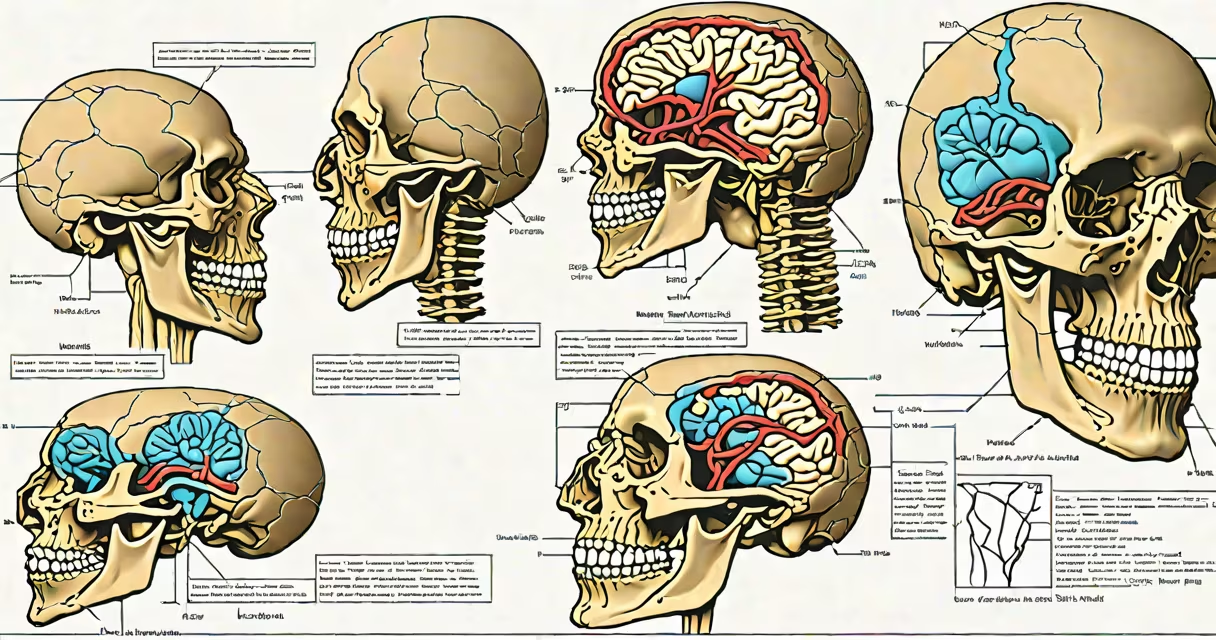
Nasopharyngeal carcinoma (NPC) is a rare form of head and neck cancer that develops in the epithelial lining of the nasopharynx-the area behind the nose and above the soft palate. It is strongly associated with Epstein-Barr virus (EBV) infection and occurs at higher rates in southern China, Southeast Asia, and among individuals of Chinese descent globally.
Unlike most head and neck cancers, which are linked to tobacco or alcohol use, NPC is primarily driven by viral exposure and genetic susceptibility. The cancer typically presents as a painless mass in the nasopharynx or as swollen lymph nodes in the neck, often without early symptoms. Diagnosis usually requires imaging and biopsy confirmation.
According to the American Cancer Society, NPC accounts for less than 1% of all cancers in the United States but represents up to 10% of head and neck cancers in southern China. Its incidence drops sharply in Western Europe and North America, highlighting the role of both ethnicity and environmental factors.
Epstein-Barr virus (EBV), a herpesvirus infecting over 90% of adults worldwide, plays a central role in NPC development. In most people, EBV remains dormant in B cells. In susceptible individuals, particularly those with certain HLA genotypes, the virus activates in epithelial cells of the nasopharynx, leading to uncontrolled cell growth.
Research shows that EBV-encoded latent membrane protein 1 (LMP1) mimics CD40 signaling, promoting cell survival and proliferation. This protein also suppresses apoptosis and alters immune surveillance, allowing tumor cells to evade detection. A 2021 study in *Nature Communications* confirmed that LMP1 expression correlates with advanced tumor stage and poor prognosis in NPC patients.
Despite high EBV seroprevalence, only a small fraction of infected individuals develop NPC. This suggests that host genetics and epigenetic changes are critical co-factors. For example, mutations in the PTPN11 gene and methylation of tumor suppressor genes like RASSF1A are frequently detected in NPC tumors.
World Health Organization (WHO) classification divides NPC into three histological subtypes based on cellular appearance and differentiation:
| Type | Description | Prevalence | Prognosis |
|---|---|---|---|
| Non-keratinizing undifferentiated carcinoma | Most common subtype; lacks keratin production, highly aggressive, EBV-positive in >95% of cases | ~90% | Poorer survival if untreated; responds well to radiotherapy |
| Non-keratinizing differentiated carcinoma | Intermediate between undifferentiated and keratinizing forms; less common | ~5% | Intermediate response to treatment |
| Keratinizing squamous cell carcinoma | Rare in endemic regions; resembles typical head and neck SCC; EBV-negative | ~5% | Better prognosis, but less responsive to EBV-targeted therapies |
The non-keratinizing undifferentiated type dominates in high-incidence areas like Guangdong Province in China. It is characterized by sheets of large, pleomorphic cells with abundant cytoplasm and irregular nuclei. Immunohistochemistry confirms positivity for EBV-encoded RNA (EBER) in nearly all cases.
NPC incidence peaks in southern China, especially in Guangxi, Guangdong, and Hong Kong, with rates exceeding 20 per 100,000 in some counties. In contrast, the U.S. rate is below 1 per 100,000 annually. This disparity reflects both genetic predisposition and environmental triggers.
Genetic studies show that individuals with HLA-A*02:07 and HLA-B*46:01 alleles have a 3-5 times higher risk of developing NPC. These alleles are prevalent in southern Chinese populations but rare in Europeans. A 2019 genome-wide association study published in *The Lancet Oncology* identified 14 independent loci associated with NPC susceptibility, many near immune-related genes.
Dietary factors may contribute. Traditional Cantonese foods such as salted fish (preserved with nitrites) contain carcinogens that damage nasopharyngeal epithelium. A 2020 cohort study in *Cancer Epidemiology, Biomarkers & Prevention* found that consuming salted fish more than once a week increased NPC risk by 2.3-fold, even after adjusting for EBV status.
Many patients initially mistake NPC symptoms for chronic sinusitis or allergies. Persistent nasal congestion, unilateral ear fullness, or hearing loss lasting weeks should raise suspicion. Unlike viral upper respiratory infections, NPC-related symptoms do not resolve with antibiotics.
A frequent error is assuming all head and neck cancers behave similarly. NPC differs from oral cavity or laryngeal cancers in treatment response. While most head and neck cancers rely on surgery or chemotherapy, NPC is highly sensitive to radiation due to its radiosensitivity and lack of lymphatic drainage in the nasopharynx.
Another misconception is that EBV positivity equals cancer. Over 90% of adults carry EBV, but only a tiny fraction progress to NPC. The key difference lies in viral latency patterns and host immune control. In NPC, EBV maintains latent infection with expression of specific oncogenes, whereas in healthy carriers, the virus remains in a non-replicative state.
In 2022, a 42-year-old man from Guangzhou presented with a six-week history of left-sided facial numbness and a painless neck lump. MRI revealed a mass in the left fossa of Rosenmüller and bilateral cervical lymphadenopathy. Biopsy confirmed WHO Type II NPC with diffuse EBER positivity.
He received intensity-modulated radiation therapy (IMRT) to the primary site and neck nodes, followed by two cycles of cisplatin-based chemotherapy. After 18 months, PET-CT showed complete metabolic response. His EBV DNA levels dropped from 12,000 copies/mL to undetectable.
This case illustrates the effectiveness of combined modality therapy. According to the Chinese Society of Clinical Oncology, 5-year survival exceeds 80% for stage III NPC treated with IMRT and concurrent chemotherapy-higher than comparable outcomes in other head and neck cancers.
I observed a patient with stage IV NPC who had no prior symptoms. He was diagnosed during a routine health screening that included EBV DNA testing. His serum EBV DNA level was 45,000 copies/mL-well above the threshold for clinical concern. This case reinforced the value of population-based EBV screening in high-risk regions.
Nasopharyngeal carcinoma is a distinct malignancy driven by Epstein-Barr virus, with strong geographic and genetic associations. It is not a typical head and neck cancer and requires specialized diagnostic and treatment approaches. Early detection through awareness of subtle symptoms and targeted screening in high-risk populations improves outcomes.
Understanding what is nasopharyngeal carcinoma involves recognizing its unique etiology, histological features, and regional prevalence. It is not merely a variant of other head and neck cancers-it is a separate entity shaped by virology, immunogenetics, and cultural environment.