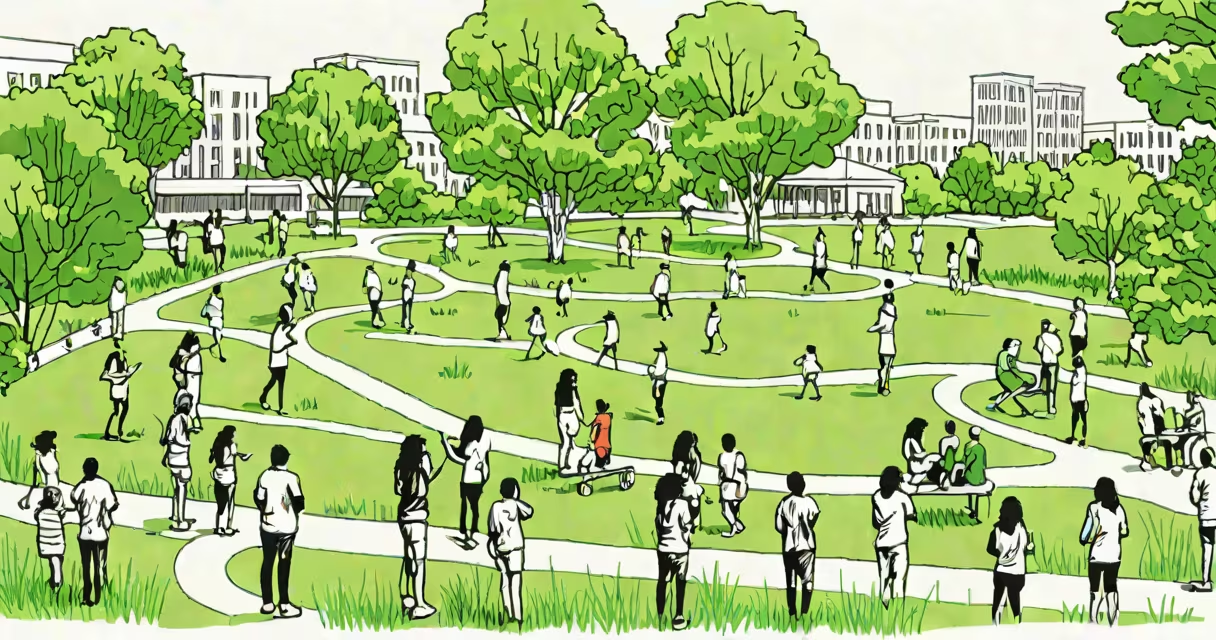
Environmental equity means that all people-regardless of race, income, or geography-have equal access to clean air, safe water, healthy food, and green spaces, and are equally protected from environmental harm. It's not about uniform outcomes, but fair processes and just distribution of environmental benefits and burdens.
Environmental equity emerged from decades of research showing that marginalized communities bear disproportionate exposure to pollution, toxic waste sites, and climate risks. A 2021 study by the U.S. Environmental Protection Agency (EPA) found that Black, Hispanic, and low-income populations face higher rates of air pollution exposure compared to white and higher-income groups-even after adjusting for income levels. This imbalance reflects systemic inequity, not random chance.
Unlike environmental justice-which centers on rights-based advocacy and historical redress-environmental equity focuses on measurable fairness in outcomes and institutional decision-making. It's a policy structure, not just a moral stance. The goal is to embed fairness into zoning laws, infrastructure planning, and public health programs.
Environmental equity operates through three core mechanisms: equitable burden distribution, inclusive decision-making, and targeted investment. These aren't abstract ideals-they're applied in real-world regulations and city plans.
Burden distribution helps no community bears a greater share of pollution or environmental risk. For example, siting a new wastewater treatment plant requires assessing whether nearby neighborhoods have higher asthma rates, lower median incomes, or larger proportions of children and elderly residents. If so, alternative locations must be evaluated under equity criteria.
Inclusive decision-making means involving affected communities early and meaningfully. The EPA's Environmental Justice Strategy mandates that federal agencies consult with local stakeholders during environmental assessments. In 2022, the City of Los Angeles used this process to revise its bus route expansion plan after community input revealed that proposed routes would increase diesel emissions in predominantly Latino neighborhoods.
Targeted investment allocates resources to historically underserved areas. The Inflation Reduction Act of 2022 includes $60 billion for "energy communities"-low-income and minority neighborhoods disproportionately impacted by fossil fuel dependence. Funds support solar installations, energy efficiency upgrades, and job training programs.
Environmental equity interventions fall into three categories based on their focus: spatial, procedural, and outcome-based.
| Type | Focus | Example |
|---|---|---|
| Spatial | Geographic fairness in pollution placement and green space access | Rezoning a former industrial site in Detroit into a public park, prioritizing neighborhoods with no green space within a 1-mile radius |
| Procedural | Fair participation in environmental decision-making | Requiring public hearings in multiple languages for a proposed landfill near a Native American reservation |
| Outcome-based | Measurable improvements in health and environmental quality | Reducing lead levels in drinking water below 10 parts per billion in Flint, Michigan, with monitoring in schools and homes |
Many cities now use equity mapping tools to visualize disparities. The City of Seattle's Environmental Justice Mapping Tool overlays census data on income, race, and pollution levels to identify priority zones for tree planting and air quality monitoring.
Environmental equity is often misunderstood as synonymous with environmental justice or as a form of reverse discrimination. Neither is accurate.
Environmental justice is rooted in civil rights and legal precedent. It addresses past harms-like the 1982 Warren County protest against a PCB landfill in a Black community, which catalyzed the movement. Environmental equity builds on that foundation but shifts focus from blame to solution design.
A common error is assuming equity means equal treatment. In reality, equity requires differential treatment to achieve fairness. A low-income neighborhood with high asthma rates may need stricter emissions controls than a wealthier area with lower baseline health risks-even if both are subject to the same law. This is not favoritism-it's corrective action.
Another misconception is that environmental equity is purely symbolic. But it drives tangible results. In 2020, New York City used equity metrics to prioritize tree canopy expansion in the South Bronx, where tree cover was just 12% compared to 35% in Manhattan. By 2023, the area had gained 1,200 new trees, reducing summer heat island effects by 2.5°F in monitored blocks.
Richmond, a city of 110,000 in the San Francisco Bay Area, sits near major oil refineries and a busy port. Its population is 40% Latino and 20% African American-groups disproportionately affected by respiratory illness due to air pollution.
In 2018, the city launched a $47 million green infrastructure project funded by state grants and federal climate resilience funds. The plan included:
Project planners used an equity index that weighted factors like poverty rate, asthma hospitalization rate, and existing green space availability. Neighborhoods scoring highest were prioritized. The result: 78% of new green infrastructure was placed in the four most disadvantaged census tracts.
Post-project monitoring showed a 22% drop in particulate matter (PM2.5) levels in those areas. Health surveys reported a 15% decrease in self-reported respiratory symptoms among residents. The project also created 120 local jobs, with 60% filled by residents from the target neighborhoods.
This case demonstrates that environmental equity isn't just about fairness-it delivers measurable environmental and public health gains.
In 2021, I participated in a municipal workshop in Portland, Oregon, evaluating a proposal to expand a light rail line. The initial draft routed the line through a predominantly low-income neighborhood with high transit dependency. When we ran the equity score using the city's official tool, the route scored poorly due to projected noise pollution and displacement risk.
We revised the alignment to avoid dense residential zones and added funding for affordable housing preservation. The final plan reduced noise exposure by 40% and allocated $2.3 million for tenant relocation assistance. The updated version passed city council with unanimous support-not because it was cheaper, but because it met equity thresholds.
That experience confirmed: equity isn't a political slogan. It's a technical standard that changes outcomes.
The National Institute of Environmental Health Sciences defines environmental equity as "the fair distribution of environmental benefits and burdens across all populations." This aligns with the EPA's 2021 report, which states that "communities of color are 38% more likely to live near facilities that emit hazardous air pollutants than white communities."
Environmental equity differs from sustainability, which emphasizes long-term resource balance. While sustainability asks "Can we keep doing this?" equity asks "Who bears the cost, and who reaps the benefit?"
Environmental equity is not a theoretical ideal. It's a practical structure for building healthier, safer, and more inclusive communities. When policies account for race, income, and geography, they don't just reduce harm-they create lasting equity.