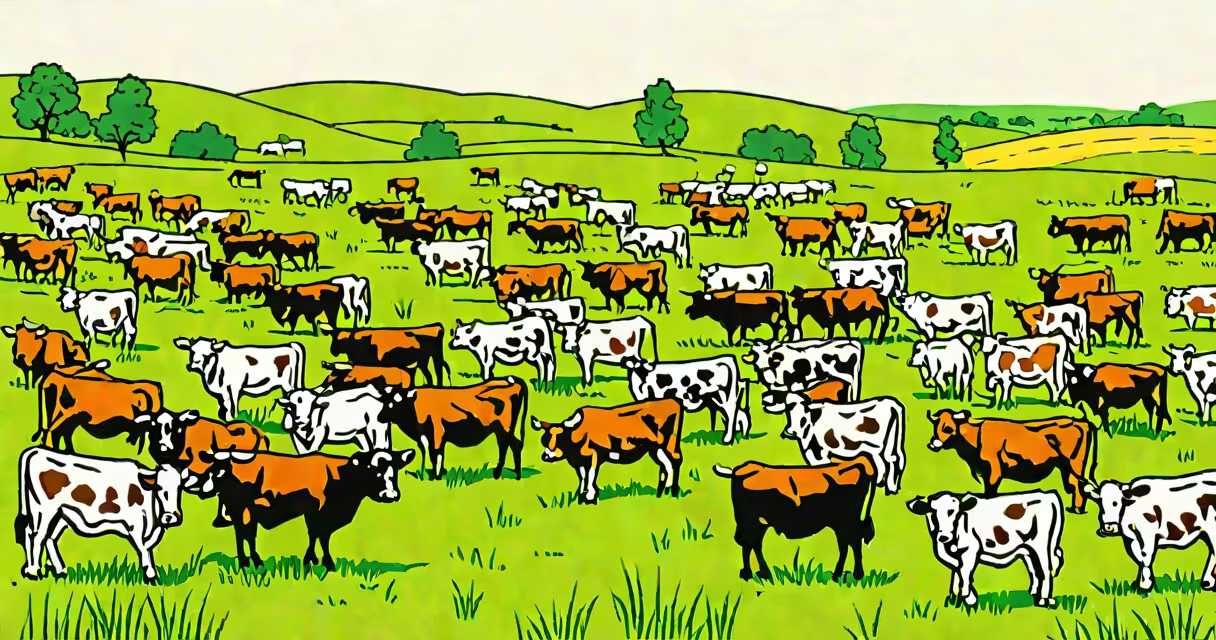
Cattle are domesticated ungulates of the genus Bos, primarily Bos taurus (modern European breeds) and Bos indicus (zebu, common in South Asia and Africa). They are raised globally for meat, milk, leather, and draft power, forming a core part of agricultural systems.
These animals evolved from wild aurochs, which roamed Europe, Asia, and North Africa until their extinction in the 17th century. Modern cattle were selectively bred over 8,000 years for docility, productivity, and adaptability to human environments. Today, they exist in over 1,000 recognized breeds, ranging from high-milk-yield Holsteins to high-beef-producing Angus.
The term "cattle" refers to adult bovines regardless of sex. A male is called a bull (intact), steer (castrated), or ox (used for draft work). A female is a cow (if she has given birth) or heifer (if she hasn't). The word "cattle" does not apply to young animals-calves are under one year old.
Cattle are ruminants with a four-chambered stomach: rumen, reticulum, omasum, and abomasum. This complex digestive system allows them to break down cellulose-rich plant material through microbial fermentation. A single cow can consume 30-50 kg of forage daily, depending on size and production level.
They are social animals that form dominance hierarchies within herds. Research from the University of Bristol shows cattle exhibit individual personalities, respond to stress, and recognize familiar faces. Herd behavior reduces predation risk and improves foraging efficiency.
Reproduction occurs every 12-14 months in well-managed herds. Gestation lasts approximately 280 days. Calves are typically born singly, though twins occur in 1-3% of cases. Survival rates exceed 90% in managed systems, according to the Food and Agriculture Organization (FAO).
Cattle are categorized by function: beef, dairy, dual-purpose, and draft. Each category uses distinct breeds selected for specific traits.
| Purpose | Breed Examples | Key Traits | Global Use |
|---|---|---|---|
| Dairy | Holstein-Friesian, Jersey, Brown Swiss | High milk yield (up to 40 L/day), large udders, calm temperament | 60% of global milk supply (FAO, 2023) |
| Beef | Aberdeen Angus, Hereford, Charolais | Fast growth, high marbling, efficient feed conversion | 75% of global cattle population used for meat (USDA, 2022) |
| Dual-Purpose | Simmental, Brahman | Balance of milk and meat production, heat tolerance | Common in mixed farms in India, Latin America |
| Draft | Oxen (Bos taurus), Zebu (Bos indicus) | Strength, endurance, low maintenance | Still used in smallholder farming across Sub-Saharan Africa and South Asia |
Bos indicus (zebu) differs from Bos taurus in physiology. Zebu have a fatty hump over the shoulders, larger ears, and greater heat tolerance. These adaptations allow them to thrive in tropical climates where European breeds struggle.
Cattle are central to food security and rural economies. The FAO estimates 1.5 billion cattle exist worldwide, with the largest populations in India (195 million), Brazil (220 million), and the United States (95 million).
In India, cattle are culturally significant and often protected by law. Over 70% of Indian cattle are zebu-type, used for milk, dung-based fuel, and plowing. Despite religious restrictions on slaughter, beef remains a minor export product.
In the U.S., cattle are raised intensively in feedlots. A typical feedlot finishes 1,000 steers in 120 days on grain-based diets. This system produces lean beef efficiently but raises environmental concerns due to methane emissions and land use.
One non-obvious fact: cattle do not sweat. They regulate temperature through panting and behavioral changes. This limits their ability to survive extreme heat without shade or water access-critical in climate-vulnerable regions.
Many assume "cattle" includes all bovines. But the term excludes bison, yaks, and water buffalo-even though they share the family Bovidae. True cattle are limited to Bos species.
Another misconception: all beef comes from steers. In reality, bulls are used in breeding programs and some meat markets. In the U.S., about 15% of beef originates from intact males, though most are castrated to reduce aggression and improve meat quality.
Some confuse dairy cows with beef cattle based on appearance. A Holstein may look thin compared to a Black Angus, but dairy cows are not underfed-they produce high volumes of milk and require specialized nutrition. Their body condition score drops post-calving due to energy demands, not malnutrition.
I once observed a dairy farm in Wisconsin where cows were fed a precise ration of corn silage, alfalfa, and minerals. Milk output averaged 35 liters per day per animal. The farm's veterinarian confirmed that cows maintained healthy body scores despite visible weight loss after peak lactation-this is normal physiology, not illness.
What is cattle? They are domesticated bovines raised for meat, milk, labor, and byproducts. Understanding their purpose, breed differences, and biological needs clarifies their role in agriculture and food systems. Recognizing the distinction between beef and dairy cattle prevents misjudgment of their management and value.