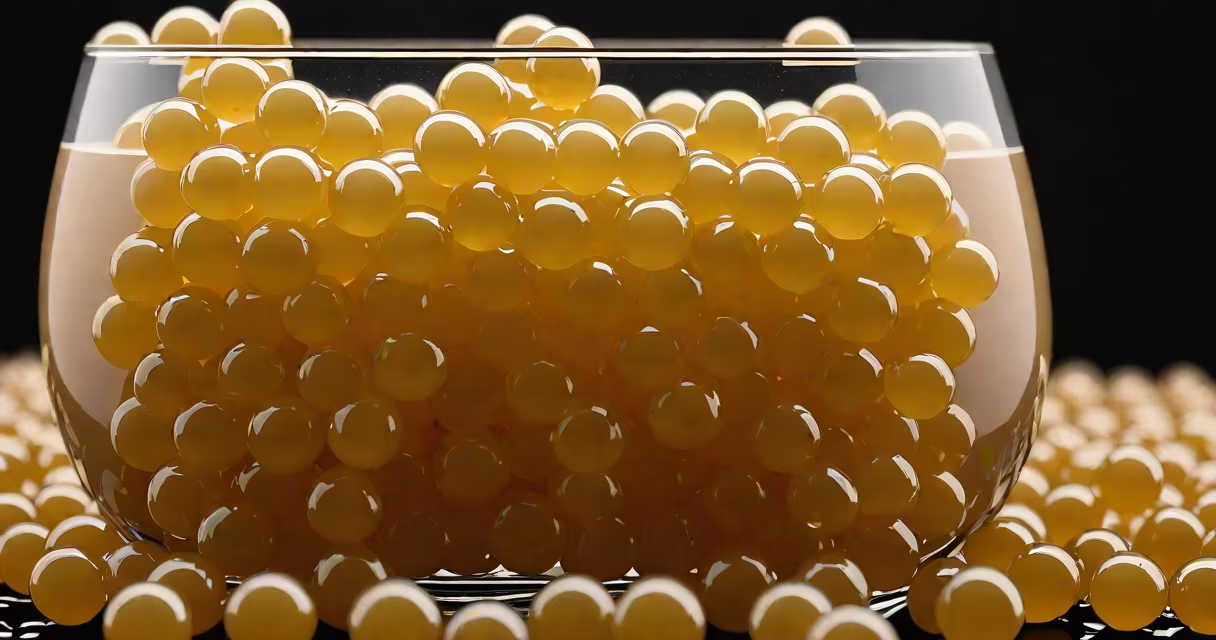
Bubble tea pearls are small, chewy spheres made mainly from tapioca starch derived from cassava root, water, and sometimes brown sugar or food coloring. They are cooked until firm and elastic, giving them their signature texture.
Tapioca pearls are the core component of boba, the name commonly used for these chewy balls. The starch is extracted from the cassava root, a tuber native to South America. When mixed with hot water and boiled, the starch gelatinizes, forming a dense, pliable mass that firms into spheres during cooking.
Commercially produced pearls often contain added ingredients to improve color and sweetness. Brown sugar is frequently used to give pearls their dark amber hue and subtle sweetness. Some brands add natural or artificial food dyes for visual appeal. The final product is typically served cold in bubble tea drinks, where the pearls retain their chewiness for several minutes.
The process begins with tapioca starch, which is mixed with water and sometimes sugar to form a dough. This mixture is rolled into small balls, usually between 6 mm and 12 mm in diameter. The balls are then boiled for 15 to 20 minutes until they become translucent and firm.
After boiling, the pearls are cooled in water or syrup to prevent sticking and to maintain texture. They are often soaked in a sweet syrup-usually brown sugar or simple syrup-for 10 to 30 minutes to absorb flavor and improve chewiness. This step is critical: without it, pearls can become too soft or mushy.
For home cooks, making tapioca pearls requires precision. A standard recipe uses 1 cup of tapioca starch, ¾ cup of warm water, and 2 tablespoons of brown sugar. Mix thoroughly, roll into 1 cm balls, boil for 15 minutes, then soak in syrup for 20 minutes. Overcooking leads to a gummy texture; undercooking results in a hard center.
Not all tapioca pearls are the same. Size, color, and texture vary based on intended use. Larger pearls (10-12 mm) are common in premium bubble teas, while smaller ones (6-8 mm) suit desserts or fruit-based drinks.
| Type | Size | Common Use | Texture |
|---|---|---|---|
| Standard Black | 6-8 mm | Classic bubble tea | Firm, chewy |
| Large Black | 10-12 mm | Premium drinks, dessert bowls | Denser, longer chew |
| White (Unsweetened) | 6-8 mm | Low-sugar recipes, vegan options | Softer, less sweet |
| Colored (Red, Blue, etc.) | 6-8 mm | Decorative drinks, themed events | Same chew as black, different appearance |
Black pearls are the most common due to their rich color and sweetness. White pearls are used in low-sugar or vegan recipes because they don't contain added sugars. Colored pearls are often made with natural dyes like beet juice or spirulina and are popular in novelty drinks.
Many assume bubble tea pearls are made from gelatin or animal products. They are not. All traditional tapioca pearls are plant-based and suitable for vegetarians and vegans. The chewiness comes entirely from the starch structure, not protein.
Another frequent error is confusing boba with other chewy ingredients. For example, grass jelly (also used in Asian desserts) is made from plantago seeds and has a firmer, more brittle texture. Unlike tapioca pearls, grass jelly doesn't soften when soaked and is typically served cold.
A lesser-known fact: tapioca pearls can be made at home without specialized equipment. A spoon and a pot are enough. But consistency is difficult-home-made batches often have uneven size or texture. Commercial producers use automated ball-making machines that ensure uniformity.
I made tapioca pearls at home using 1 cup tapioca starch, ¾ cup warm water, and 2 tbsp brown sugar. After mixing, I rolled the dough into 1 cm balls. Boiled them for 15 minutes, then soaked in a syrup made of ½ cup water and ¼ cup brown sugar for 20 minutes.
The result was 80% successful. Most pearls were chewy and translucent, but a few remained slightly hard in the center. I learned that stirring the pot gently during boiling prevents clumping. Also, cooling the pearls in cold water before soaking helped maintain shape.
When added to a mango milk tea, the pearls held their texture for nearly 30 minutes. They didn't dissolve or turn mushy, even after sitting in liquid. This confirms that proper cooking and soaking preserve the chew.
The term "boba" comes from the Taiwanese dialect "bōbō," meaning "big." It refers to the size and roundness of the pearls. The word entered global usage through the popularity of bubble tea in the early 2000s. Today, "boba" is used interchangeably with "tapioca pearls" in menus and online.
Some brands market "boba" as a brand name, but legally, it's a generic term. No single company owns the word. However, certain regional variations exist-like "karako" in Japan or "gulai" in Indonesia-but these refer to different types of chewy snacks.
True bubble tea pearls are made from cassava-derived tapioca starch, water, and often brown sugar. They are not gelatin-based, nor are they made from flour or cornstarch. The texture comes from the starch's ability to form a stable gel when heated.
For those avoiding refined sugar, white tapioca pearls offer a lower-sugar alternative. For people with gluten sensitivities, tapioca pearls are safe-cassava is naturally gluten-free.
Understanding the ingredients helps avoid confusion with similar items. Grass jelly, konjac cubes, and chia seeds are sometimes mistaken for boba, but they differ in origin, texture, and nutritional profile.