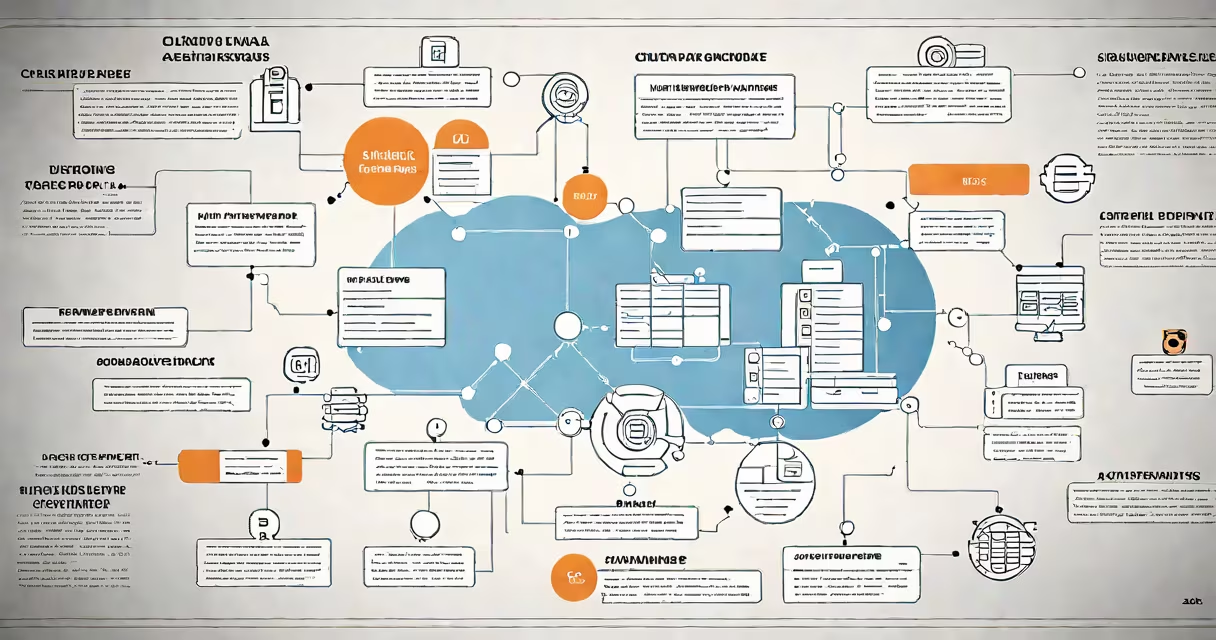
A quality assurance surveillance plan (QASP) is a documented strategy that defines how a government agency monitors a contractor's performance to ensure deliverables meet specified requirements. It establishes inspection points, evaluation criteria, and reporting procedures throughout a contract's lifecycle.
The QASP is required under Federal Acquisition Regulation (FAR) Part 46 for contracts exceeding $1 million involving performance-based service delivery. It ensures accountability by specifying what will be checked, when, and by whom. Without it, agencies lack a structured method to verify that contracted work meets technical, safety, and schedule expectations.
For example, in a $5 million IT infrastructure upgrade for a Department of Defense project, the QASP would detail weekly progress reviews, monthly system testing cycles, and quarterly audits of cybersecurity protocols. The plan identifies who conducts each check, what tools are used, and how deviations are reported and corrected.
The QASP functions as a living document integrated into the contract's execution phase. It begins with defining measurable performance objectives derived from the Statement of Work (SOW). These objectives are then mapped to specific surveillance activities-inspections, tests, reviews, or site visits-scheduled at key milestones.
Each surveillance activity includes a clear criterion for success. For instance, if a construction contract requires steel beams to withstand 50,000 psi tensile strength, the QASP specifies that a third-party lab test must be conducted on 5% of beams per batch, with results submitted within 48 hours. Failure to meet the threshold triggers a corrective action process.
Surveillance events are not random. They are scheduled based on risk levels. High-risk tasks-like software integration in defense systems-receive more frequent checks than low-risk ones, such as routine office supplies procurement. This risk-based approach prevents wasted oversight while maintaining control.
A valid QASP contains five core elements: performance requirements, surveillance methods, frequency, responsible personnel, and corrective action procedures. These components are tailored to the contract's complexity and duration.
| Type | Use Case | Frequency | Example |
|---|---|---|---|
| Performance-Based | Service contracts with measurable outcomes | Monthly or milestone-based | IT support team resolving 95% of tickets within 4 hours |
| Product-Based | Manufactured goods or equipment delivery | Pre-shipment, upon receipt, and post-installation | Testing 10% of medical devices for sterilization integrity |
| Process-Based | Ongoing operations requiring consistent adherence | Weekly or bi-weekly | Environmental monitoring at a wastewater treatment plant |
While all QASPs follow the same regulatory structure, their structure varies. A performance-based QASP focuses on outcomes rather than processes. It measures whether the result was achieved, not how it was done. A product-based QASP, by contrast, validates physical attributes through sampling and testing.
One common mistake is treating the QASP as a static checklist. In reality, it must evolve. When a contractor delivers a prototype that fails a stress test, the QASP must be updated to include additional testing cycles and revised acceptance thresholds. The document is not a one-time submission-it's a changing tool.
QASPs are mandatory in federal contracts governed by FAR 46.302. They apply to all prime contractors and subcontractors working on projects funded by the U.S. government. This includes defense, healthcare, transportation, and information technology sectors.
For example, in a $22 million contract to develop a new air traffic control system, the QASP outlined 14 verification events across six phases: design review, simulation testing, field trials, and operational readiness assessments. Each event had a defined pass/fail standard. When the initial simulation failed due to latency issues, the agency invoked the corrective action clause, forcing the contractor to revise the algorithm and retest.
Outside government contracting, private sector organizations use similar frameworks under ISO 9001 standards. However, they are not legally mandated in the same way. The difference lies in enforcement: a QASP failure in a federal contract can lead to termination, financial penalties, or debarment. In private industry, consequences are typically internal or contractual, not regulatory.
Many assume a QASP is synonymous with a quality control plan. They are not. Quality control (QC) focuses on detecting defects after production. QASP is about proactive monitoring during execution. QC finds problems; QASP prevents them.
Another misconception is that QASPs are solely the responsibility of the government. In practice, the contractor drafts the initial QASP with input from the contracting officer. The agency reviews and approves it before contract award. Once approved, both parties share accountability. The contractor executes the surveillance steps; the government verifies compliance.
A non-obvious distinction: the QASP does not replace the contract's technical specifications. It complements them. Specifications define *what* must be delivered. The QASP defines *how* compliance will be verified. One cannot function without the other.
During a 2021 audit of NASA's Artemis program contracts, the Government Accountability Office (GAO) found that 37% of QASPs lacked clear acceptance criteria. This led to disputes over whether deliverables met standards. The GAO recommended that all QASPs include quantifiable metrics tied to each surveillance activity. This finding underscores that vague language undermines the entire purpose of the plan.
I once observed a QASP fail during a military logistics contract because the surveillance frequency was misaligned with the project timeline. The plan called for inspections every 30 days, but the work was completed in 60 days. By the time the final review occurred, critical flaws in routing algorithms had gone undetected. The lesson: the QASP must reflect actual task durations and dependencies.
A quality assurance surveillance plan is a structured, enforceable method for ensuring contractors meet government performance standards. It is not optional for large federal contracts. It defines what will be monitored, how often, and what constitutes success. Its effectiveness hinges on specificity, risk-based planning, and continuous updating.