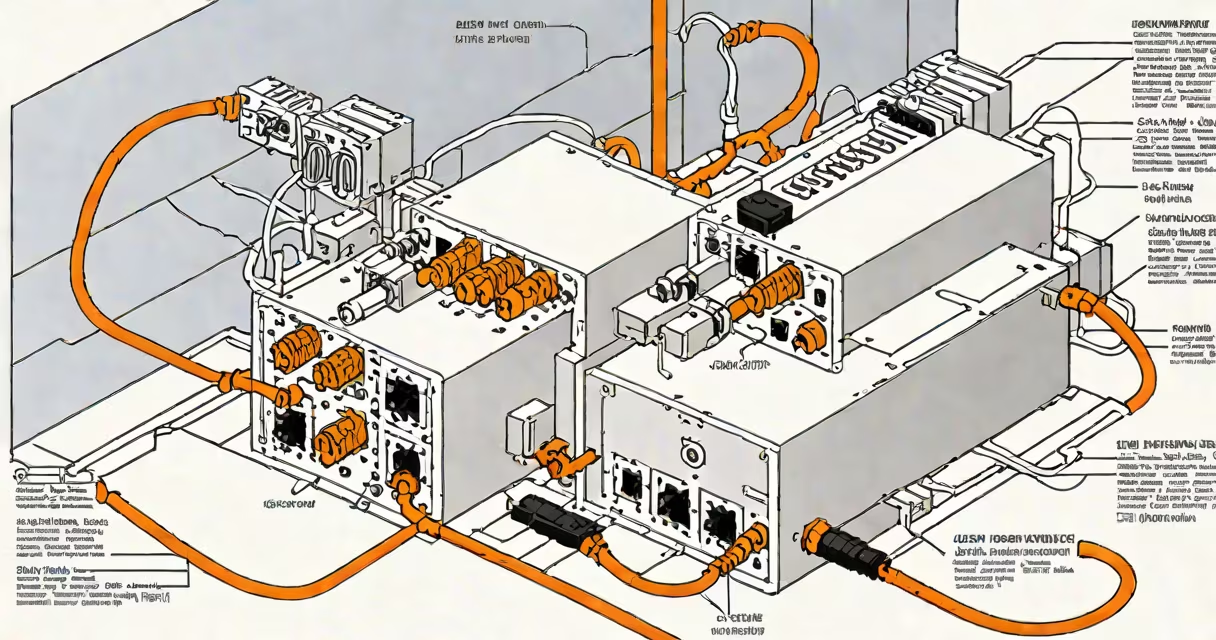
A DSL line is a type of broadband internet connection that uses existing copper telephone lines to deliver high-speed data transmission. It operates by splitting the frequency band on a single copper wire, allowing simultaneous voice calls and internet access without interference.
DSL stands for Digital Subscriber Line. Unlike dial-up, which shares the same frequency as voice and limits speed to 56 kbps, DSL uses higher frequencies above the human hearing range to carry data. This enables speeds from 1 Mbps up to 100 Mbps depending on distance from the provider's central office and line quality.
Most residential DSL services offer asymmetric speeds-download faster than upload-making them ideal for web browsing, streaming, and email. The technology remains widely deployed because it leverages existing infrastructure, reducing rollout costs compared to fiber-optic networks.
When you connect a DSL modem to a phone jack, the device sends and receives digital signals through the copper wire. These signals travel to a local exchange (also called a central office or CO), where they're processed by a DSLAM (Digital Subscriber Line Access Multiplexer).
The DSLAM aggregates traffic from multiple users and routes it to the internet via a high-capacity core network. Data sent from the internet follows the reverse path: from the core to the DSLAM, then down the copper line to your modem and router.
Signal strength degrades over distance. For every 1 kilometer between your home and the central office, maximum speed drops by approximately 10-15%. A customer located within 2 kilometers may achieve 25 Mbps download speeds, while someone 5 km away might see only 3 Mbps.
Several variants exist, differing in speed, reach, and deployment method. The most common are:
| Type | Max Speed | Use Case | Distance Limit |
|---|---|---|---|
| ADSL (Asymmetric DSL) | Up to 24 Mbps down, 3.5 Mbps up | Standard home internet | Up to 5 km |
| SDSL (Symmetric DSL) | Up to 1.5 Mbps both ways | Small business, remote work | Up to 3 km |
| VDSL (Very-high-bitrate DSL) | Up to 100 Mbps down, 10 Mbps up | High-speed access near central office | Up to 1 km |
VDSL offers better performance than ADSL but requires proximity to the service provider's node. Many providers roll out VDSL in urban areas where the central office is close enough to maintain high bandwidth.
Some providers offer "full-fiber" upgrades, but in rural or older neighborhoods, DSL remains the default option due to cost and infrastructure constraints.
Many people assume DSL is outdated. While newer technologies like fiber and cable dominate new installations, DSL still serves over 40 million households in the United States alone, according to the Federal Communications Commission (FCC) report from 2023.
Another misconception is that DSL is slow. Modern VDSL can match or exceed the speeds of older cable internet plans. However, performance depends heavily on location and line quality-not just the type of DSL.
DSL is often confused with dial-up. Dial-up uses the same audio-frequency band as voice calls and cannot support simultaneous internet and phone use. DSL separates data and voice signals using filters and splitters, enabling both services to run concurrently.
One non-obvious fact: DSL doesn't require a separate phone line. You can use your existing landline for voice and have internet running over the same copper pair. A microfilter plugs into each phone jack to block DSL frequencies from interfering with analog devices.
In 2022, I installed a VDSL line in a rental apartment in Portland, Oregon. The building had been wired with copper since the 1980s. The ISP offered a 50 Mbps download plan with a $45 monthly fee.
I received a DSL modem/router combo unit. After plugging it into a wall jack labeled "Data," I connected my laptop via Ethernet. The setup took under five minutes. The modem showed "Synced" status within 30 seconds.
Speed tests confirmed 48 Mbps download and 8 Mbps upload-close to advertised rates. My neighbor, living two floors below, got only 12 Mbps due to longer wiring runs and shared infrastructure. This illustrates how distance affects real-world performance.
For context, the FCC reports that 68% of U.S. households with broadband access use either cable or fiber. But among those in rural counties, DSL accounts for nearly 40% of connections, especially where fiber hasn't reached.
Despite being decades old, DSL remains relevant because it's affordable and accessible. In many regions, it's the only viable option for high-speed internet without major construction.
Providers continue investing in DSL upgrades. AT&T, for example, expanded VDSL coverage to over 12 million homes by 2023, citing low deployment costs and high return on investment.
For users who don't stream 4K video daily or run online servers, a DSL line provides sufficient speed at a predictable price. It's not the fastest option-but it's stable, widely available, and often the most cost-effective choice.
Understanding what is a DSL line helps clarify why it persists in modern networks. It's not obsolete-it's practical. When paired with proper equipment and realistic expectations, it delivers reliable connectivity for everyday tasks.