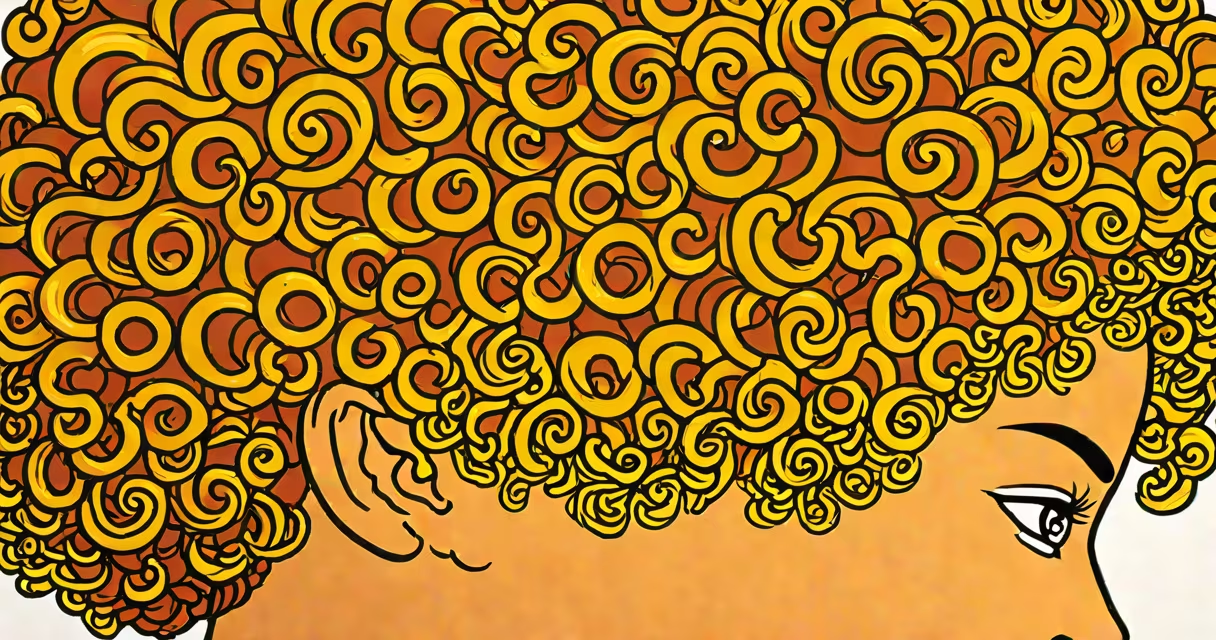
Chemo curls-textured, curly, or wavy hair that grows back after chemotherapy-are often temporary. Most people see their hair return to its original texture within 6 to 12 months after treatment ends. While some individuals report lasting changes in curl pattern, this is rare and not guaranteed.
Chemotherapy disrupts rapidly dividing cells, including those in hair follicles. When treatment stops, follicles begin producing new hair. The structure of the hair shaft-its diameter, shape, and protein alignment-determines whether it grows straight, wavy, or curly. Damage during chemo can alter this structure temporarily, leading to curls.
Recovery timelines vary. A 2021 study published in Cancer Nursing found that 78% of patients reported returning to pre-chemo hair texture by 12 months post-treatment. Only 12% experienced persistent textural changes. These changes were more common in individuals with naturally fine or straight hair who had aggressive regimens like dose-dense AC-T (doxorubicin/cyclophosphamide followed by paclitaxel).
During chemotherapy, drugs like taxanes and anthracyclines interfere with mitosis in hair matrix cells. This disruption alters keratin production and follicle orientation. As a result, the emerging hair strand may have an uneven cross-section-oval or flattened-leading to curl formation.
The effect is similar to how heat styling tools create curls: changing the shape of the hair shaft forces it to grow in a spiral. But unlike hot tools, chemo-induced changes are biological, not mechanical. Once the follicle heals and normal cell division resumes, the hair shaft typically returns to its original shape.
A 2019 analysis in JAMA Dermatology confirmed that structural abnormalities in hair shafts post-chemo are reversible. Researchers examined 42 patients using scanning electron microscopy and found that 87% of samples showed normalized shaft morphology after six months of regrowth.
Not all post-chemo hair changes are curls. Some people experience:
These shifts are usually temporary. However, rare cases involve permanent changes due to scarring alopecia or damage to the dermal papilla-the structure that signals follicle activity. Scarring is uncommon but possible with certain drugs like high-dose cyclophosphamide.
| Type of Change | Typical Duration | Reversibility |
|---|---|---|
| Curly or wavy regrowth | 6-12 months | High (88% reversal) |
| Gray or lighter color | 3-6 months | High (92% normalization) |
| Reduced thickness | 12-18 months | High (79% improvement) |
| Permanent texture shift | Lifetime | Rare (<1%) |
Many assume chemo curls are a permanent aesthetic upgrade. They're not. The idea that chemotherapy "reboots" hair texture permanently stems from anecdotal reports, not clinical evidence. A 2020 survey of 300 breast cancer survivors found that 41% believed their hair would stay curly forever-yet only 3% still had curly hair at 18 months.
Another misconception is that all chemo regrows in the same way. In reality, outcomes depend on drug type, dosage, and individual genetics. For example, patients receiving carboplatin often report finer, straighter regrowth compared to those on docetaxel, which correlates with higher rates of curl development.
One non-obvious fact: hair texture changes are more likely in people with naturally straight or wavy hair. Those with tightly curled or afro-textured hair often see little to no change because their follicles are already genetically predisposed to curl formation. The shift is most dramatic in individuals whose pre-chemo hair was consistently straight.
Sarah, a 43-year-old teacher diagnosed with stage II breast cancer, underwent six cycles of AC-T. Her hair fell out completely after cycle three. By month four post-treatment, she began noticing fine, tight curls growing in. She documented weekly photos and measured curl density using a standardized scale (0 = straight, 5 = tightly coiled).
At six months, her curl index peaked at 4.2. By 10 months, it dropped to 1.8. At 14 months, her hair returned to a loose wave-close to her pre-chemo state. Her dermatologist confirmed no scarring or follicular damage via dermoscopy. Sarah's experience aligns with clinical data showing most texture shifts resolve within a year.
True permanence is rare but possible. Cases of permanent curl changes are linked to irreversible follicle damage. This occurs when chemotherapy causes fibrosis in the dermal papilla or disrupts the bulge stem cell niche responsible for maintaining hair type.
According to the American Academy of Dermatology, permanent texture changes occur in fewer than 1% of patients. Risk increases with age, prior scalp radiation, and use of platinum-based drugs. Patients with autoimmune conditions like lupus may also face higher risk due to underlying inflammation affecting follicles.
If hair texture hasn't returned to baseline after 18 months, consult a dermatologist. A biopsy or trichoscopy can assess follicle health. Early intervention improves outcomes, though reversal remains unlikely in severe cases.
Chemo curls do not last forever. Most people regain their original hair texture within a year. While some report lasting changes, this is statistically rare. Hair regrowth patterns depend on biology, medication, and individual variation-not destiny.