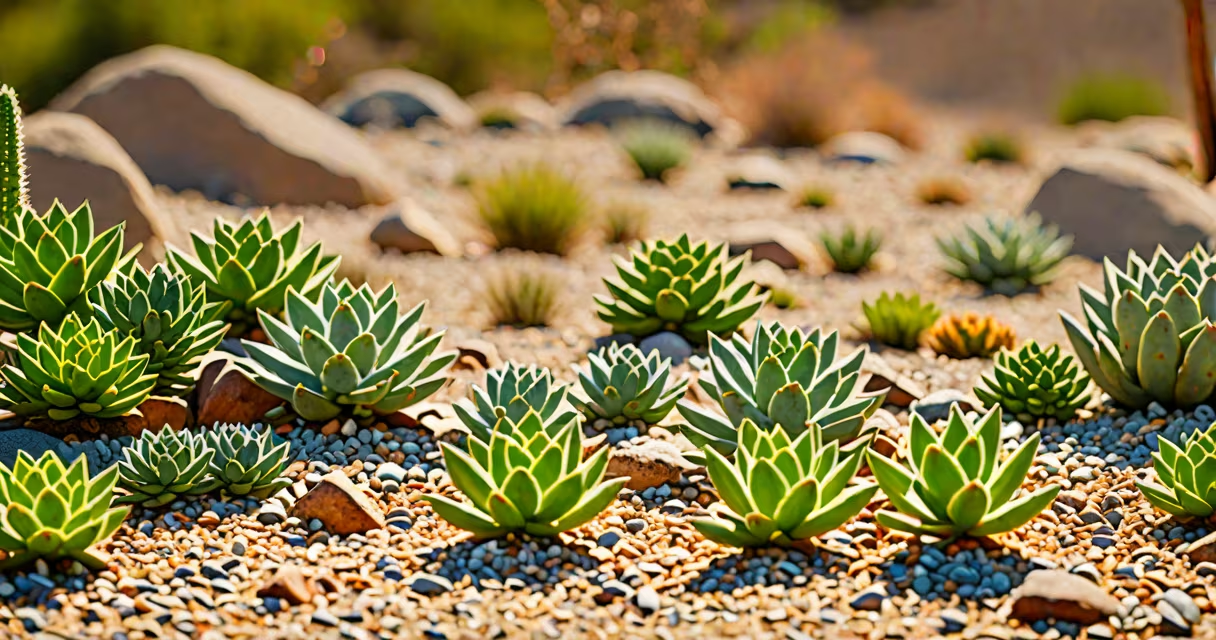
Xeriscape refers to a field design approach that uses drought-tolerant plants, efficient irrigation, and soil management to reduce outdoor water use. It's not about barren desert scenes-it's about creating functional, attractive yards that survive with little supplemental watering.
The term comes from Greek "xeros," meaning dry, and "scape," short for field. It was developed in the 1980s by the Denver Water Department to address water scarcity in arid regions. The goal wasn't just conservation-it was to make beautiful, low-maintenance yards that didn't rely on constant watering.
When properly implemented, xeriscaping cuts residential outdoor water use by 50% to 60%, according to the Environmental Protection Agency (EPA). This isn't theoretical-cities like Phoenix and Albuquerque have seen measurable reductions in municipal water demand since promoting xeriscaping through rebates and public education campaigns.
Xeriscape relies on seven core principles that work together to minimize water dependency. These aren't optional steps-they're proven components of effective design.
First, proper planning and design. A successful xeriscape starts with a site analysis: sun exposure, soil type, slope, and drainage patterns. You can't choose the right plants without knowing where they'll grow. For example, clay soil holds water longer than sandy soil, so plant selection must match moisture retention.
Second, soil improvement. Even drought-tolerant plants need good root development. Amending soil with organic matter increases water-holding capacity and nutrient availability. A study by Colorado State University found that adding compost improved infiltration rates by 40% in compacted soils.
Third, practical turf areas. Not all lawns are equal. Xeriscaping doesn't eliminate grass entirely-it limits turf to small, high-traffic zones. Using native grasses like buffalo grass (Buchloe dactyloides) reduces mowing and watering needs. Buffalo grass uses 70% less water than Kentucky bluegrass.
Xeriscapes use specific plant categories based on water needs. The most effective designs group plants by hydrozone-areas with similar water requirements.
| Plant Type | Water Needs | Examples | Best Use |
|---|---|---|---|
| Low-water | Minimal irrigation | Succulents, yucca, agave | Rock gardens, borders |
| Moderate-water | Occasional watering | Penstemon, lavender, Russian sage | Flower beds, accent planting |
| High-water | Regular irrigation | Native wildflowers, ornamental grasses | Wet zones near downspouts |
Native plants are central to xeriscaping. They evolved in local climates and require less maintenance. For example, California poppies (Eschscholzia californica) bloom reliably in dry summers and attract pollinators. They need no summer watering once established.
A common mistake is assuming all cacti and succulents are low-maintenance. Some species, like the Christmas cactus (Schlumbergera), require consistent moisture and won't survive in hot, dry conditions. Always verify regional suitability.
Xeriscaping is widely adopted in arid and semi-arid regions. States like Arizona, New Mexico, Nevada, and parts of Texas lead in implementation due to prolonged droughts and growing urban populations.
Municipalities offer rebates for replacing lawns with xeriscapes. In Las Vegas, residents can receive up to $3 per square foot for removing turf and installing drought-tolerant landscaping. Since 2015, the city has removed over 100 million square feet of lawn through this program.
Commercial properties also benefit. Retail centers in Tucson have reduced irrigation costs by 65% after switching to xeriscaped parking islands and median strips. Maintenance labor hours dropped by 40% annually.
One non-obvious fact: xeriscaping improves stormwater runoff control. When soil is healthy and covered with vegetation, rainwater infiltrates rather than washing away topsoil. A 2021 study by the University of California Cooperative Extension showed that xeriscaped plots reduced surface runoff by 58% compared to traditional lawns during heavy rainfall events.
Many people think xeriscaping means a yard filled with rocks and cacti. That's a stereotype. A well-designed xeriscape includes texture, color, and seasonal interest. Think of it as a naturalistic garden using native materials.
Another misconception is that xeriscaping is only for dry climates. It applies anywhere with seasonal droughts or water restrictions. In the Pacific Northwest, cities like Portland have promoted xeriscaping to prepare for projected summer dry spells under climate change models.
Some confuse xeriscaping with mulching or ground cover. While mulch helps retain moisture, it's only one part of the system. True xeriscaping integrates plant selection, soil prep, and irrigation efficiency.
I once installed a xeriscape in my own yard in southern Colorado. I replaced 200 sq ft of fescue lawn with a mix of sedum, yarrow, and creeping thyme. After the first year, water usage dropped from 12,000 gallons annually to 4,500. The space still supports bees and birds. It's not barren-it's alive.
Traditional landscaping often prioritizes aesthetics over sustainability. Lawns dominate front yards, even in places where rainfall averages less than 10 inches per year. This creates a mismatch between design and environment.
Consider a typical suburban yard in Albuquerque: 5,000 sq ft of turf, two sprinkler zones running daily in summer, and no native plants. Annual water use: ~30,000 gallons. Maintenance: weekly mowing, fertilizing, and weed control.
Now apply xeriscape principles: replace 3,000 sq ft of turf with native shrubs, gravel pathways, and drought-tolerant perennials. Install drip irrigation with a rain sensor. Water use drops to ~10,000 gallons. Mowing frequency falls from weekly to once per month.
This shift isn't just about saving water-it's about reducing environmental impact. Lawn mowers emit more pollutants per hour than cars, according to the EPA. Reducing mowing frequency lowers carbon emissions and noise pollution.
Start with a site assessment. Note sun/shade patterns, wind exposure, and soil type. Test your soil pH and texture. Then map out hydrozones-group plants by water needs.
Choose plants adapted to your USDA hardiness zone. Use local nurseries that specialize in native species. Avoid invasive exotics like ice plant (Delosperma spp.), which can spread rapidly and displace native flora.
Install smart irrigation. Drip systems deliver water directly to roots. Pair them with weather-based controllers that adjust schedules based on rainfall and temperature. A single controller can save 20% more water than manual timers.
What does xeriscape mean? It means designing landscapes that work with nature, not against it. It's not about sacrifice-it's about smarter choices that conserve water, support biodiversity, and create lasting beauty.