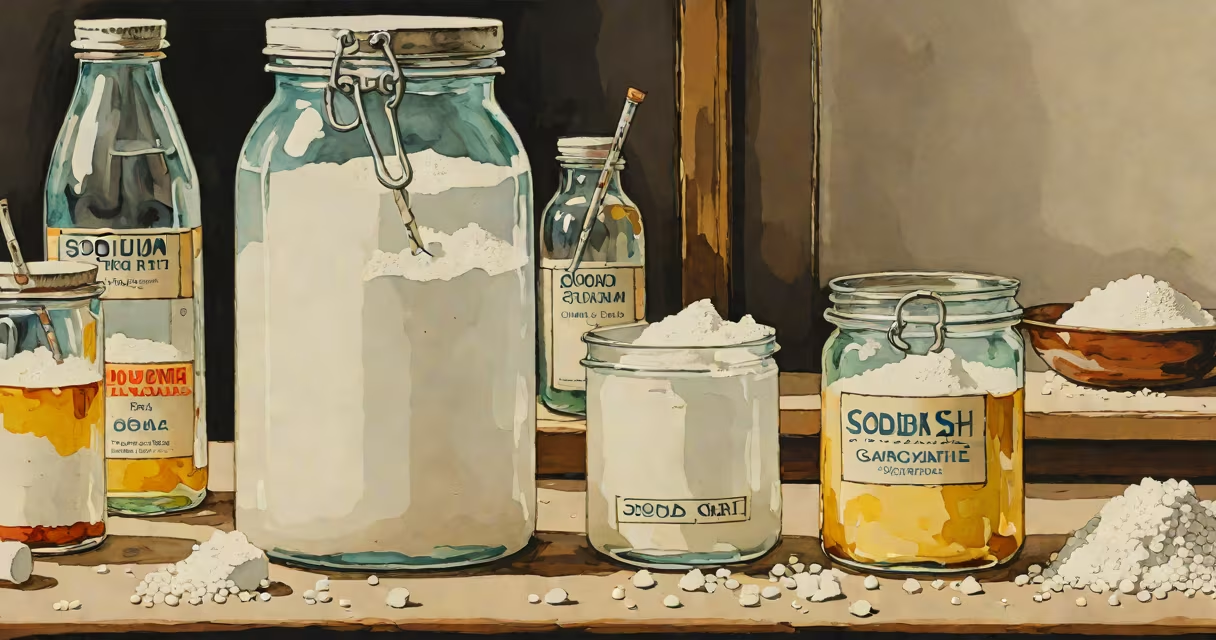
Soda ash, chemically known as sodium carbonate, is a white, water-soluble powder used to raise pH levels, soften water, and act as a buffering agent in industrial and household applications. It's a foundational chemical in glassmaking, detergent formulation, and water treatment.
Soda ash functions by releasing carbonate ions in water, which increase alkalinity. This raises the pH of solutions, making them less acidic. The higher pH disrupts grease and oil molecules, allowing them to detach from surfaces during cleaning. It also prevents calcium and magnesium ions in hard water from interfering with soap performance.
Manufactured primarily through the Solvay process, soda ash is produced at scale in facilities like those operated by OxyChem and Tata Chemicals. Global production exceeds 40 million metric tons annually, with major output centers in China, India, and the United States. Its low cost and high effectiveness make it indispensable in large-scale processes.
In laundry detergents, soda ash enhances the action of surfactants by maintaining a high pH environment. This allows enzymes and other cleaning agents to work efficiently. Without soda ash, hard water minerals would bind to soap, forming scum and reducing cleaning efficiency.
In glass manufacturing, soda ash lowers the melting point of silica sand. Pure silica melts at around 1,700°C, but adding soda ash reduces the required temperature to approximately 1,400°C. This energy saving makes commercial glass production feasible. For every ton of flat glass produced, about 200 kg of soda ash is used.
A real-world example is the production of float glass used in windows. Molten silica is mixed with soda ash and limestone in a furnace. The resulting mixture is floated on molten tin to form a perfectly flat surface. Without soda ash, this process would require more energy and produce lower-quality glass.
Soda ash exists in multiple forms based on particle size and purity. The most common are light and dense grades, differing in bulk density and flow characteristics.
| Type | Bulk Density (kg/m³) | Primary Use | Source |
|---|---|---|---|
| Light soda ash | 500-600 | Detergent additives, water softening | Solvay |
| Dense soda ash | 800-1,000 | Glass and chemical manufacturing | Chemtrec |
Light soda ash is preferred in detergents due to its better solubility and lower dusting. Dense soda ash is used in high-temperature processes where consistent flow and minimal handling loss are critical.
Soda ash is often mistaken for baking soda (sodium bicarbonate). While both are alkaline and used in cleaning, they differ in chemical structure and strength. Baking soda has a pH of about 8.3, while soda ash reaches pH 11.5 in solution. This difference makes soda ash far more effective at breaking down grease but also more corrosive to skin and metals.
Another confusion arises from the name "soda." Soda ash is not related to carbonated beverages. The term "soda" in chemistry dates to the 18th century and refers to alkali salts derived from plant ashes. Modern soda ash is synthetic, not extracted from wood ash.
A lesser-known fact: soda ash is used in the production of sodium silicate, a compound used in adhesives and fireproofing materials. This secondary application underscores its role as a building block in chemical synthesis.
In a municipal wastewater treatment plant in California, soda ash is injected into effluent streams to neutralize acidic runoff from industrial zones. A typical dosage is 1.5 kg per 1,000 liters of wastewater. This maintains pH between 7.5 and 8.5, preventing corrosion in pipes and ensuring compliance with discharge regulations.
Without soda ash, the pH would drop below 6.0 in some areas, harming aquatic life and violating EPA standards. The plant processes 50 million gallons daily, using 75 tons of soda ash monthly. This usage demonstrates how a single chemical enables environmental protection at scale.
Soda ash is classified as a hazardous material under OSHA guidelines. It causes irritation to eyes, skin, and respiratory tract. Prolonged exposure can lead to dermatitis or bronchial inflammation. Workers handling it wear gloves, goggles, and respirators.
I once observed a spill during a lab tour at a chemical distributor. A 25 kg bag ruptured, scattering fine powder across a concrete floor. Within minutes, the area had visible white residue. The cleanup team used wet mops and neutralizing agents to prevent airborne dispersion. Even small spills require immediate containment due to the risk of inhalation.
For home users, avoid mixing soda ash with chlorine-based cleaners. The reaction produces toxic chloramine gas. Always store in sealed containers away from moisture and acids.
Soda ash is sometimes confused with washing soda, which is another name for sodium carbonate. They are identical in composition. However, "washing soda" is a marketing term used in retail, while "soda ash" is the technical name.
It is not the same as caustic soda (sodium hydroxide). Caustic soda is stronger, with a pH of 14, and is used in drain cleaners and paper pulping. Mixing soda ash with caustic soda can cause violent reactions, especially in concentrated solutions.
Soda ash plays a important role in modern industry and household products. Its ability to control pH and improve cleaning power makes it irreplaceable in detergents, glassmaking, and environmental management. Understanding its function prevents misuse and supports safe handling.