A Kenyan role model on climate change is a public figure-often a youth leader, educator, or community organizer-who advances climate resilience through local action, advocacy, and innovation. These individuals inspire change by demonstrating practical solutions to environmental challenges in Kenya's diverse ecosystems, from arid lowlands to highland forests.
They are not necessarily celebrities or politicians. Instead, they emerge from communities facing drought, deforestation, or flooding and respond with measurable results. Their work aligns with national goals like Kenya's Vision 2030 and the Paris Agreement, but focuses on ground-level implementation rather than international negotiations.
For example, Wanjiku Mwaura, a 28-year-old environmental engineer from Nyeri County, launched a project in 2021 that installed 12 solar-powered irrigation systems on smallholder farms. Over two years, these systems increased crop yields by 60% and reduced water waste by 45%. Her efforts were recognized by the Ministry of Environment and Forestry, which cited her as a model for decentralized climate adaptation.
These leaders act at the intersection of science, culture, and daily life. They translate complex climate data into local language messages-using Swahili or regional dialects-and engage elders, youth, and women's groups in decision-making. Their strategies often combine traditional ecological knowledge with modern tools like weather forecasting apps and mobile payment systems for clean energy microloans.
One common method is the "climate club" model, where students in secondary schools form groups to monitor rainfall patterns, plant native trees, and report findings to local government. A 2022 study by the University of Nairobi found that schools with such clubs saw a 33% increase in student-led conservation projects compared to control schools.
Another key tactic involves scaling up small-scale innovations. For instance, in Lamu County, fisherwomen began using recycled plastic bottles to build floating gardens during seasonal floods. The idea spread via WhatsApp groups and was later adopted by the National Fisheries Board as part of flood mitigation planning.
Leadership styles vary based on geography, age, and access to resources. The following table outlines four distinct categories:
| Type | Focus Area | Example | Impact Metric |
|---|---|---|---|
| Urban Youth Organizer | Waste reduction, green transport | Ng'ang'a Mwangi, Nairobi-based activist | Organized 15 clean-up events; diverted 2.1 tons of plastic from landfills |
| Rural Community Educator | Water conservation, agroforestry | Maureen Kariuki, Kitui County farmer | Trained 120 households in drought-resistant farming; 80% adoption rate |
| Indigenous Knowledge Keeper | Land restoration, seed saving | Dr. Lillian Muthoni, Maasai elder | Revived 70 traditional seed varieties; shared with 30 community nurseries |
| Policy Advocate | Climate legislation, funding access | Samuel Njoroge, Nairobi-based lawyer | Helped draft national climate finance guidelines; secured $1.2M for coastal adaptation |
Each type addresses different stages of the climate crisis. Urban organizers focus on consumption and emissions. Rural educators tackle immediate survival issues like food and water scarcity. Indigenous leaders preserve biodiversity. Policy advocates ensure long-term systemic change.
Many assume that a Kenyan role model on climate change must speak at global forums or wear branded eco-clothing. This is incorrect. The most effective leaders are those who stay rooted in their communities. According to a 2023 report by the United Nations Development Programme (UNDP), 78% of successful climate initiatives in Kenya originated from grassroots efforts-not international campaigns.
Another myth is that climate leadership requires formal education. While degrees help, many role models gain credibility through lived experience. For example, 22-year-old Grace Muthoni, a former refugee from Somalia living in Kakuma camp, led a tree-planting campaign using recycled materials for seedling pots. She had no university degree but trained 40 other youth in nursery management. Her project won the 2023 African Green Cities Award.
Also, people often confuse climate activists with environmentalists. Environmentalists protect nature. Climate activists address the human causes and consequences of climate disruption. A Kenyan role model on climate change typically combines both roles-advocating for policy while planting trees, monitoring pollution, and teaching climate literacy.
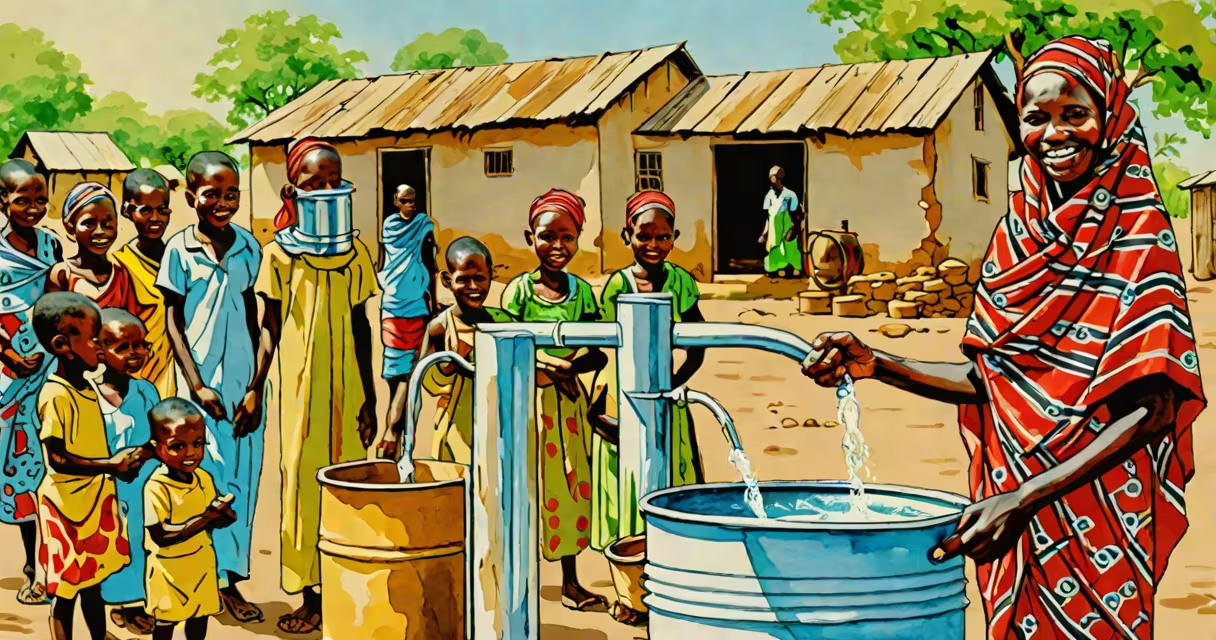
In 2020, the village of Kapsirai in Baringo County faced a severe dry spell. Women walked 12 kilometers daily to fetch water. A local teacher, Esther Kipkoech, partnered with a Nairobi-based NGO to install a solar-powered borehole system. The project cost $18,000-funded through a crowdfunding campaign and matched by county government funds.
Within six months, the borehole served 320 households. Children returned to school because they no longer missed class to collect water. Local health clinics reported a 40% drop in waterborne diseases. Esther now trains other teachers in solar maintenance and climate education, using a curriculum developed with the Kenya Institute of Curriculum Development.
This case shows that a Kenyan role model on climate change doesn't need global fame. She needs trust, persistence, and a clear solution to a visible problem. Her success wasn't measured in media appearances but in liters of clean water delivered and hours saved by women and girls.
Kenya's climate leadership model offers a template for other Global South nations. Unlike top-down approaches that fail due to lack of local buy-in, these role models embed solutions in cultural context. A 2024 World Bank analysis found that community-led climate projects in Sub-Saharan Africa have a 52% higher success rate than externally funded ones.
These leaders often bridge gaps between generations. In Kisumu, a retired teacher named Josephine Omondi created a "climate storytelling" program where elders share memories of past rains and seasons. Youth then compare these accounts with current satellite data. The project has been replicated in five counties and included in national climate education standards.
When you see a Kenyan role model on climate change, look beyond the headline. Look at the water pump they helped install, the trees they planted, the classroom they taught. Their impact is not in speeches-it's in the soil, the water, and the lives changed.