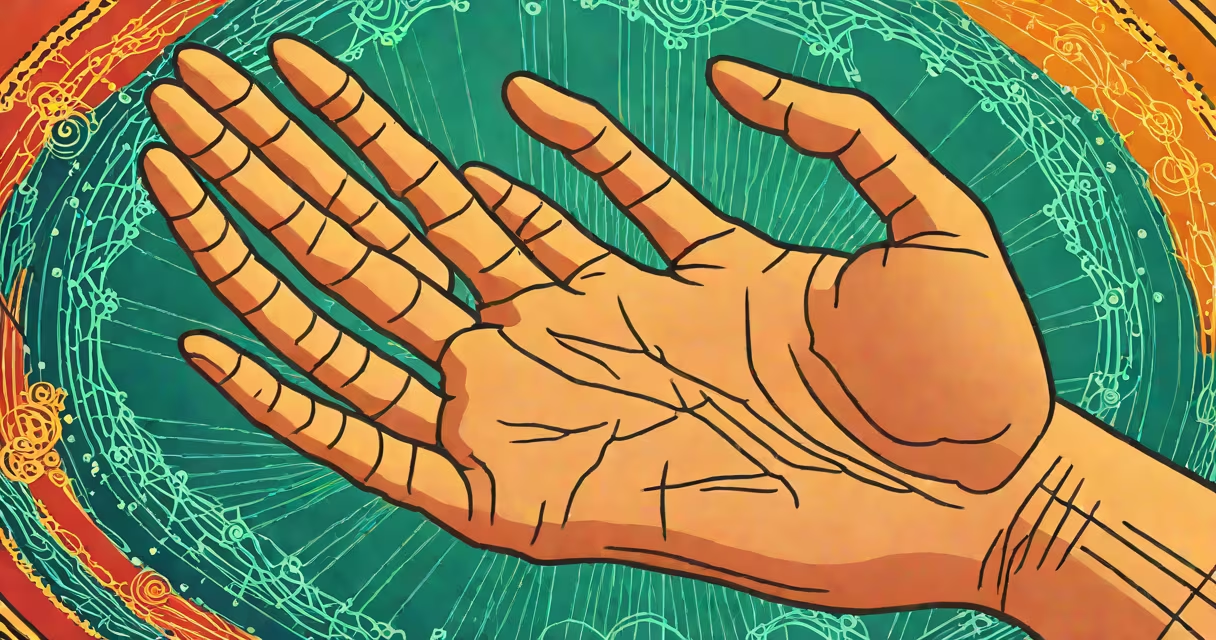
Palmistry meaning refers to the practice of interpreting the lines, mounts, and shapes of the hand to understand personality, character, and potential life events. It is a form of divination with roots in ancient cultures across India, China, and the Middle East.
The term "palmistry" comes from Greek *palmos* (palm of the hand) and Latin *-trix* (one who practices). Modern palmistry uses standardized interpretations of major lines-the heart line, head line, life line, and fate line-but these are symbolic, not predictive in a scientific sense.
According to the American Psychological Association, belief in palmistry often stems from cognitive biases like pattern recognition and confirmation bias. Still, it remains widely practiced in cultural and spiritual contexts.
Palmistry operates on the idea that the hand reflects internal traits and life patterns through surface features. Practitioners examine the depth, length, and curvature of lines, as well as the texture and color of the skin, and the proportions of fingers and palms.
For example, a long life line extending deeply into the palm may be interpreted as indicating strong vitality. A heart line that curves upward suggests emotional warmth. But these interpretations vary by tradition-Western palmistry differs from Indian nadi astrology, which assigns deeper spiritual significance to line patterns.
A 2019 study published in *Personality and Individual Differences* found that people who believe in palmistry often report higher levels of openness to experience and lower levels of neuroticism. This suggests a psychological link between personality and belief in symbolic systems like palmistry.
Each major line in palmistry is associated with a specific aspect of life. The following table outlines common interpretations based on Western palmistry standards, as documented by the International Society of Hand Analysis.
| Line | Common Interpretation | Typical Variation |
|---|---|---|
| Life Line | Represents physical energy and health | Short and deep = high endurance; broken or forked = past trauma or resilience |
| Heart Line | Reflects emotional tendencies and relationships | Curved upward = affectionate; straight and flat = reserved |
| Head Line | Indicates thinking style and mental focus | High and curved = imaginative; low and straight = practical |
| Fate Line | Supposedly shows career path and life direction | Missing = unpredictable process; clear and continuous = steady progress |
Mounts-fleshy areas beneath fingers-are also analyzed. For instance, the mount of Venus (below the thumb) is linked to love and sensuality. A well-developed mount may suggest a person who values pleasure and connection.
One non-obvious fact: many palmistry symbols are culturally specific. The "cross" line on the head line, for example, is seen as a sign of intelligence in Western traditions but indicates spiritual awakening in some South Asian systems.
Palmistry is most commonly used in personal readings, often during events like fairs, spiritual workshops, or online consultations. It is not recognized as a medical or psychological diagnostic tool.
Some people use palmistry to explore self-awareness. A 2021 survey by the Pew Research Center found that 16% of U.S. adults have consulted a fortune teller at least once, with palmistry being among the top requested services.
It's frequently mistaken for astrology or tarot, but palmistry relies solely on hand morphology. Unlike tarot, which uses symbolic cards, palmistry interprets real anatomical features. The hand is static-its structure doesn't change over time, unlike tarot spreads, which shift with each reading.
I once observed a palmistry session at a community fair in Portland, Oregon. The reader focused on a woman's heart line, noting its downward curve and saying she "values peace over passion." The woman paused, then said, "That's exactly me-I've always avoided conflict." The interpretation matched her self-perception, not because it was accurate, but because it aligned with her identity.
Palmistry does not predict exact future events. A broken life line does not mean imminent death. Instead, it may reflect periods of stress or recovery. The same applies to fate lines-many readers claim they show career paths, but no empirical evidence supports this.
Another myth: palmistry can't determine your IQ or job success. The head line may suggest a tendency toward logical or creative thinking, but it doesn't measure actual intelligence. The Stanford-Binet Intelligence Scales remain the gold standard for cognitive assessment.
Finally, palmistry is not a science. The American Academy of Dermatology notes that hand lines are influenced by genetics, aging, and environmental factors-not destiny. A 2020 review in *The Journal of Forensic Sciences* confirmed that palmar creases are genetically determined and correlate with certain developmental conditions, but not with life outcomes.
Still, palmistry persists due to its narrative power. It offers a structured way to reflect on identity using tangible markers. When practiced ethically, it can serve as a conversation starter about personal growth.
Understanding what palmistry means begins with recognizing it as a symbolic system, not a prophecy. Its value lies in introspection, not prediction. For those curious about hand patterns, exploring them can be a reflective exercise-but not a substitute for professional advice in health, psychology, or career planning.