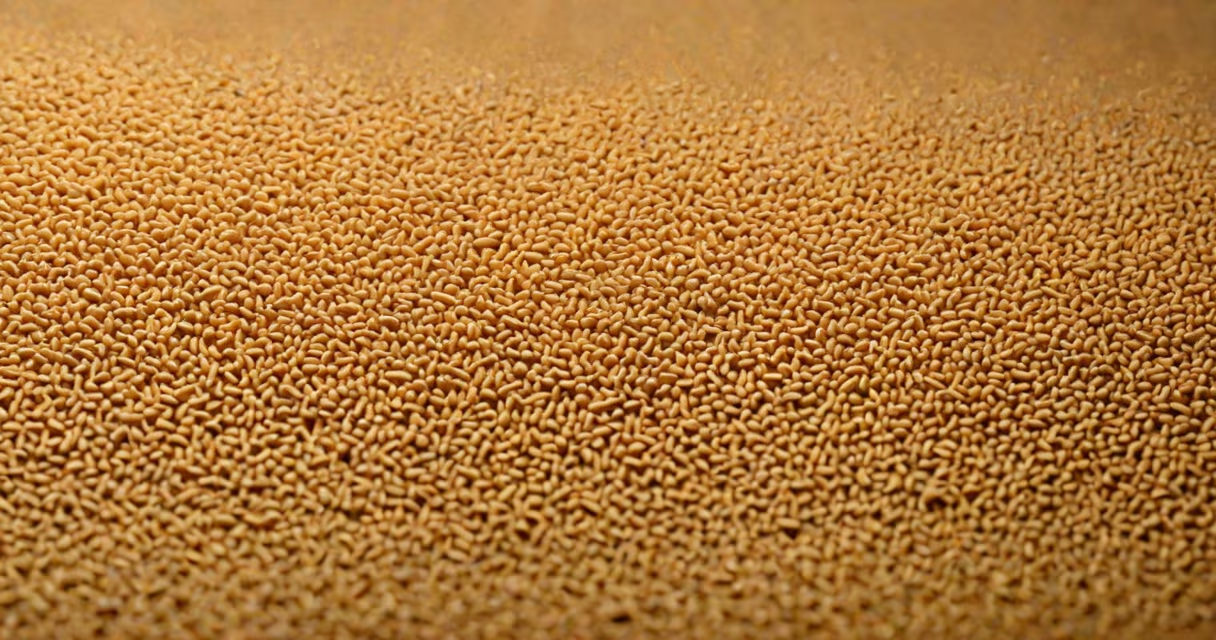
MDF stands for medium-density fiberboard-a manufactured wood panel made from compressed wood fibers bonded with resin under heat and pressure. It's not a natural wood species but a composite material designed for consistent performance in construction and furniture.
MDF is produced by breaking down hardwood or softwood residuals into wood fibers, mixing them with synthetic resins, and pressing the mixture into panels under high temperature and pressure. The result is a uniform, dense material with minimal grain and no knots-ideal for applications requiring a smooth finish.
Unlike solid wood, which varies in density and texture, MDF offers predictable dimensions and resistance to warping. Its consistency makes it preferred in precision work such as molding, trim, and CNC routing. It's widely used in cabinetry, shelving, and interior millwork where a flat, paintable surface is essential.
MDF begins with raw wood waste-sawdust, shavings, and wood residues from lumber mills. These materials are ground into fine fibers, then mixed with urea-formaldehyde resin and wax. The blend is dried, pressed into large sheets, and cured at temperatures exceeding 160°C (320°F).
The process results in a panel with a density between 600 and 800 kg/m³-higher than particle board (typically 400-600 kg/m³) but lower than hardboard (over 800 kg/m³). This middle range gives MDF its name and defines its structural behavior: it holds screws well, resists splitting, and accepts paint or veneer evenly.
Because MDF lacks natural grain, it doesn't shrink or swell with humidity changes as much as solid wood. However, it absorbs moisture readily if exposed to water. Once wet, it swells and loses strength-so it shouldn't be used outdoors or in high-moisture areas like bathrooms unless sealed properly.
MDF comes in several grades tailored to specific uses:
| Type | Density (kg/m³) | Best For | Common Applications |
|---|---|---|---|
| Standard MDF | 600-800 | Interior projects | Furniture frames, shelves, door cores |
| High-Density MDF (HDF) | 800-1000 | Heavy-duty surfaces | Countertops, flooring underlayment, soundproofing |
| Moisture-Resistant MDF | 600-800 | Bathrooms, kitchens | Wet-area cabinets, vanities (when sealed) |
Standard MDF dominates home improvement stores and cabinet shops. It's ideal for painted surfaces because it takes primer and paint uniformly without blotching. HDF is used in commercial settings where durability matters-like retail display cases or industrial shelving.
Moisture-resistant MDF includes additives that reduce water absorption. It's not waterproof but lasts longer in humid environments. Still, it must be sealed on all edges and faces to prevent swelling.
MDF is common in mass-produced furniture. A $120 IKEA bookshelf, for example, uses MDF for its flat panels and painted finish. The material allows manufacturers to produce consistent parts at scale without relying on natural wood variation.
It's also standard in architectural millwork. Interior doors often have MDF cores with a thin hardwood veneer on the face. This combination provides rigidity while keeping costs low. Cabinetmakers use MDF for drawer fronts, backs, and internal dividers.
However, MDF is unsuitable for load-bearing structures. It won't support heavy weight like solid oak or plywood. Using MDF for a kitchen countertop without reinforcement leads to sagging over time. Similarly, it's not recommended for outdoor decks or window sills exposed to rain.
MDF is frequently mistaken for particle board. Both are engineered wood products, but they differ in composition and performance. Particle board is made from coarse wood particles and less resin, making it weaker and more prone to chipping.
When cut, MDF produces a clean, smooth edge. Particle board tends to fray and splinter. MDF also handles screw withdrawal better-screws hold tighter in MDF than in particle board. This difference affects durability in furniture joints.
A key distinction many overlook: MDF emits formaldehyde during manufacturing and can continue releasing trace amounts over time. According to the U.S. Environmental Protection Agency (EPA), MDF may exceed indoor air quality limits if used in poorly ventilated spaces. Low-emission MDF (FSC-certified or CARB-compliant) reduces this risk.
For context, the California Air Resources Board (CARB) sets formaldehyde emission standards for building materials. Panels labeled "CARB Phase 2 Compliant" meet strict limits-less than 0.05 ppm. Always check for this label when buying MDF for indoor use.
I built a 6-foot-long desk using ¾-inch MDF for the top and ½-inch MDF for the frame. After sanding and applying two coats of primer, I painted it matte black. The surface stayed flat and even-no patchiness. When I ran a router along the edge, the cut was clean, with no tear-out.
But after six months, I noticed slight swelling around the edges where the desk met the wall. Moisture had seeped through gaps. I learned to seal all edges with waterproof tape and polyurethane before painting. Now, the desk remains stable in my climate-controlled home office.
MDF means medium-density fiberboard-an engineered wood panel made from compressed wood fibers and resin. It's not a natural wood type but a manufactured alternative used in furniture, cabinetry, and interior construction. Its smooth, uniform surface enables consistent finishes and precise machining. While not suitable for outdoor or high-moisture zones, MDF excels in controlled indoor environments.