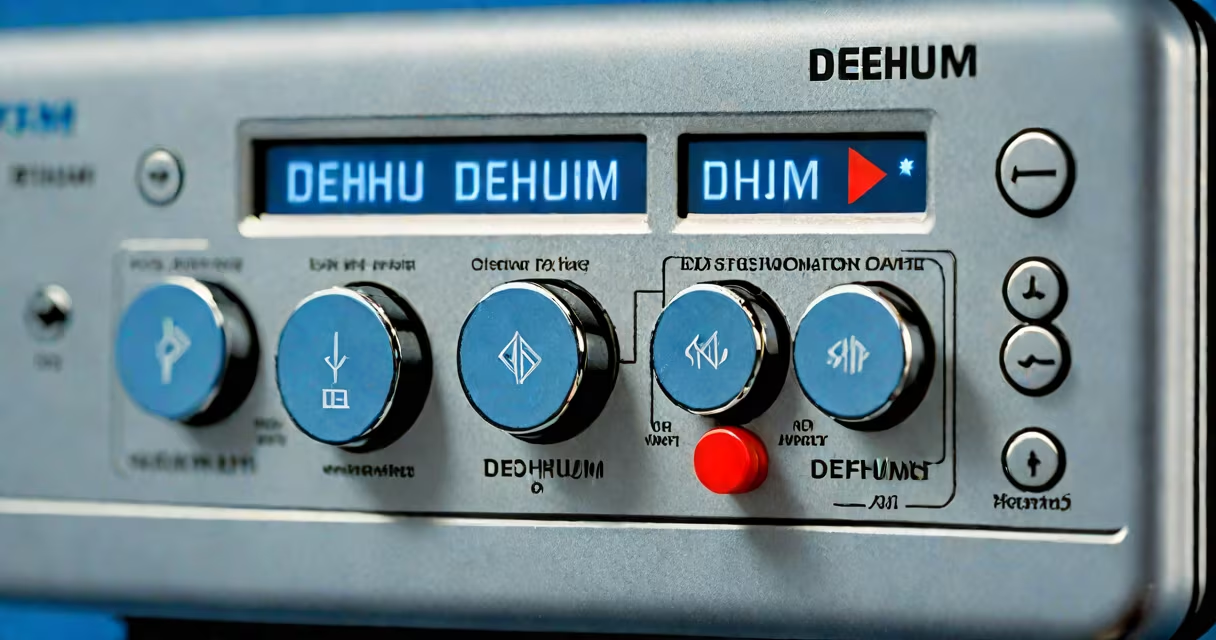
"Dehum" on an air conditioner stands for dehumidification mode - a setting that reduces indoor humidity by drawing moisture from the air while running the fan and compressor at low levels. It's designed to improve comfort in damp environments without lowering room temperature.
Unlike cooling mode, which lowers air temperature using refrigerant, dehum mode focuses solely on moisture removal. The unit runs the compressor intermittently to condense water vapor on the evaporator coil, then drains it through a drip pan. This process keeps the air drier and less sticky, especially during high-humidity seasons like summer or monsoon periods.
For example, in a 75°F (24°C) room with 70% relative humidity, enabling dehum mode can reduce moisture levels to around 50% without dropping the temperature. This makes the space feel cooler even if the thermostat remains unchanged. According to the U.S. Department of Energy, maintaining indoor humidity between 40% and 60% improves respiratory comfort and reduces mold growth risk.
The system activates the indoor fan and cycles the compressor on and off based on sensor feedback. When the compressor runs, cold refrigerant flows through the evaporator coil, cooling the air passing over it. Moisture in the air condenses into liquid and collects in a drain tray. Once drained, the fan continues running to circulate dry air.
Because the compressor operates briefly and at reduced capacity, energy use stays lower than in cooling mode. A 2022 study by the American Society of Heating, Refrigerating, and Air-Conditioning Engineers (ASHRAE) found that dehum mode consumes about 30% less electricity than standard cooling in humid conditions.
Modern units use humidity sensors to adjust cycle frequency automatically. If the sensor detects rising humidity, the unit increases run time slightly until target levels are met. This prevents overcooling and maintains consistent indoor air quality.
While most residential ACs offer a single dehumidification function, some models include variations based on design and climate zone:
| Mode Type | How It Works | Best For |
|---|---|---|
| Standard Dehum | Compressor runs intermittently; fan runs continuously | High-humidity days with mild temperatures |
| Smart Dehum | Uses AI to predict humidity spikes and adjusts cycles | Rooms prone to sudden moisture changes (e.g., bathrooms, basements) |
| Low-Cool Dehum | Combines minimal cooling with dehumidification | Warm, humid climates where cooling isn't needed |
For instance, a 13,000 BTU split-system AC with smart dehum features can detect morning dew formation in a basement and begin drying the air before humidity reaches 65%. This proactive adjustment helps prevent musty odors and dust mite proliferation.
Many users assume dehum mode cools the room like regular AC. That's incorrect. The temperature drop is typically under 2°F (1°C) due to limited compressor runtime. If you expect a 10°F (5.5°C) drop, you're likely using cooling mode instead.
Another misunderstanding is that dehum mode replaces a standalone dehumidifier. While effective in moderate humidity, it cannot match the output of dedicated units. A typical portable dehumidifier extracts 20-30 pints of water per day; most ACs manage only 5-10 pints, depending on model and ambient conditions.
A key distinction: dehum mode doesn't remove airborne allergens or pathogens. It only reduces moisture. To address mold spores or pet dander, pair it with a HEPA filter or UV-C light system. The EPA notes that reducing humidity below 60% cuts mold growth by up to 80%, but doesn't eliminate existing spores.
Use dehum mode when humidity exceeds 60% and the room feels sticky or clammy. Ideal scenarios include:
I've used dehum mode in my home office during late spring. After a week of rain, the room felt heavy and my glasses fogged up when I walked in. Switching to dehum mode reduced humidity from 72% to 54% within four hours. The air felt noticeably lighter, and no further fogging occurred.
For optimal results, set the target humidity level between 45% and 55%. Most smart ACs allow manual input via app or remote. Avoid setting it too low - below 40% - as dry air can irritate mucous membranes and increase static electricity.
"Dehum" and "Dry" are often used interchangeably, but they aren't always identical. In many brands, "Dry" mode is a broader term that may include additional functions such as automatic fan speed adjustment or energy-saving sleep timers.
For example, Mitsubishi Electric's "Dry" mode includes a 30-minute auto-shutdown feature and fan-only operation after initial dehumidification. This prevents noise and unnecessary power draw. In contrast, some LG models label their version "Dehum" and limit it to basic moisture control with no automation.
Set your AC to dehum mode when humidity is above 60% and the temperature is above 70°F (21°C). Avoid using it in winter unless indoor moisture is high - it can cause condensation on cold surfaces and promote mold.
Regular maintenance matters. Clean the drain tray monthly and inspect the condensate hose for clogs. A blocked drain can cause water overflow and damage to walls or floors. The National Association of Home Builders recommends checking drainage systems at least twice a year.
Understanding what dehum means on your air conditioner helps you use it correctly. It's not a substitute for cooling, nor a replacement for a dedicated dehumidifier. But in the right conditions, it's a quiet, efficient way to improve indoor air quality and comfort.