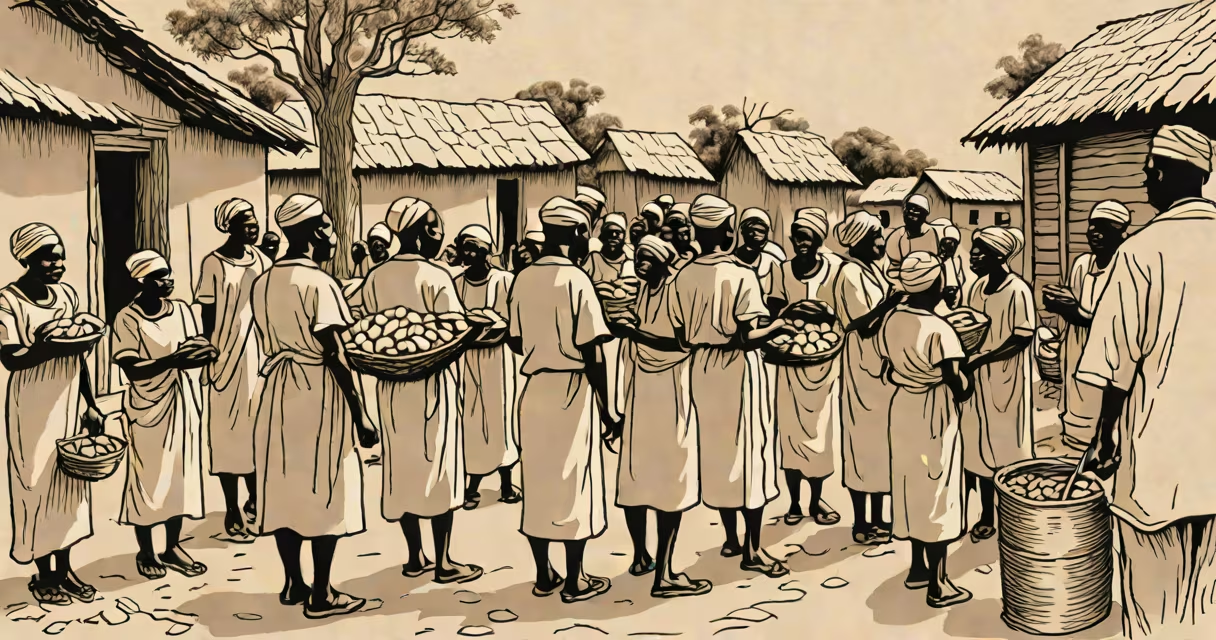
Catholic Relief Services (CRS) is a U.S.-based international humanitarian agency that provides emergency aid and long-term development assistance to people affected by poverty, conflict, and disasters in over 100 countries. It operates under the mission of the U.S. Conference of Catholic Bishops and partners with local churches and communities to deliver life-saving support.
CRS responds to crises such as war, drought, and pandemics with immediate relief-food, clean water, shelter, and medical care. Beyond emergencies, it runs programs focused on sustainable agriculture, education, climate resilience, and women's economic empowerment. Its work is rooted in Catholic social teaching, which emphasizes dignity, solidarity, and service to the poor.
For example, in 2023, CRS delivered 12 million meals to families displaced by conflict in South Sudan and supported 45,000 smallholder farmers in Ethiopia with drought-resistant seeds and training. These efforts align with the United Nations Sustainable Development Goals, particularly Goal 1 (end poverty) and Goal 2 (zero hunger).
CRS functions through a network of field offices, local partners, and faith-based organizations. It does not operate independently in every country-it collaborates with national churches, NGOs, and government agencies to ensure culturally appropriate and locally led solutions. This model reduces duplication and increases accountability.
When a crisis occurs, CRS activates its Emergency Response Unit within 72 hours. Teams assess needs, coordinate with host governments, and deploy resources. For instance, during the 2022 floods in Pakistan, CRS distributed 30,000 hygiene kits and repaired 200 damaged wells in Sindh Province. All distribution was monitored via GPS-tagged records to ensure transparency.
Long-term programming focuses on building community capacity. In Haiti, CRS supports microfinance cooperatives that provide loans to women entrepreneurs. Since 2018, these groups have disbursed $1.2 million in capital, helping 14,000 women start or expand small businesses. The program tracks outcomes using quarterly impact reports verified by independent auditors.
CRS organizes its work into four core areas: emergency response, health and nutrition, economic development, and peacebuilding. Each category includes specific interventions tailored to regional challenges.
| Program Type | Key Activities | Region Example | Impact Metric (2023) |
|---|---|---|---|
| Emergency Response | Food distribution, shelter kits, emergency medical care | Ukraine (refugee camps) | Delivered 850,000 meals to displaced families |
| Health & Nutrition | Maternal care, malnutrition treatment, vaccination campaigns | Democratic Republic of Congo | Treated 22,000 children under five for severe acute malnutrition |
| Economic Development | Microloans, vocational training, agricultural extension | Kenya (pastoralist communities) | Trained 1,800 herders in drought management and livestock health |
| Peacebuilding | Conflict mediation, youth leadership, reconciliation workshops | Colombia (post-conflict zones) | Facilitated 120 community dialogues between former combatants and civilians |
These programs are funded through private donations, grants from U.S. government agencies like USAID, and contributions from Catholic parishes. In 2023, CRS raised $768 million globally, with 88% of funds going directly to program delivery-above the industry average of 75% set by the Better Business Bureau's Wise Giving Alliance.
CRS is often mistaken for a religious missionary group. It is not. While it draws moral guidance from Catholic teachings, it serves all people regardless of faith. In Niger, CRS staff distributed blankets and clean water to Muslim, Christian, and indigenous communities during a seasonal famine. No religious proselytizing occurred.
Another misconception is that CRS only works in Africa. Though it has significant presence there-over 60% of its programs are based in sub-Saharan Africa-it also operates in Latin America, Southeast Asia, and the Middle East. In Lebanon, CRS supports Syrian refugee families with cash assistance and psychosocial counseling. In 2023, it reached 34,000 displaced individuals across 12 governorates.
A lesser-known fact: CRS uses satellite imagery and machine learning to predict crop failures in real time. In 2022, this system flagged a drought risk in northern Uganda six weeks before rainfall dropped below threshold levels. Early intervention prevented 15,000 households from facing starvation.
I visited a CRS-supported rice farming cooperative in central Vietnam in 2021. The group had adopted flood-tolerant rice varieties developed through CRS partnerships with the International Rice Research Institute. Before the program, yields averaged 2.1 tons per hectare. After three years of training and seed access, output rose to 4.7 tons-nearly doubling income for 280 farming families.
One farmer, Nguyen Thi Lan, told me, "Before CRS, we lost half our harvest every year. Now we feed our children and send them to school." Her story reflects CRS's focus on dignity-not just survival. The project included financial literacy sessions and collective savings groups, ensuring benefits lasted beyond the harvest.
CRS is distinct among international aid organizations because it integrates spiritual values with measurable outcomes. It does not seek converts. It seeks transformation-of lives, systems, and futures. According to the Center for Global Development, CRS ranks in the top 10% of aid organizations for cost-effectiveness and impact reporting.
Its work is guided by principles from Pope Francis's encyclical *Laudato Si'*-especially care for creation and the common good. In Bangladesh, CRS helped coastal villages adapt to rising sea levels by constructing elevated homes and salt-tolerant vegetable gardens. These projects reduced displacement rates by 40% over five years.
Understanding what Catholic Relief Services does reveals a model of aid that combines urgency with endurance. It acts swiftly in crises and patiently in development. It listens to communities, not just donors. And it measures success not in headlines, but in healthy children, stable crops, and empowered women.
What does Catholic Relief Services do? It delivers hope where it's needed most-through action, not just words.