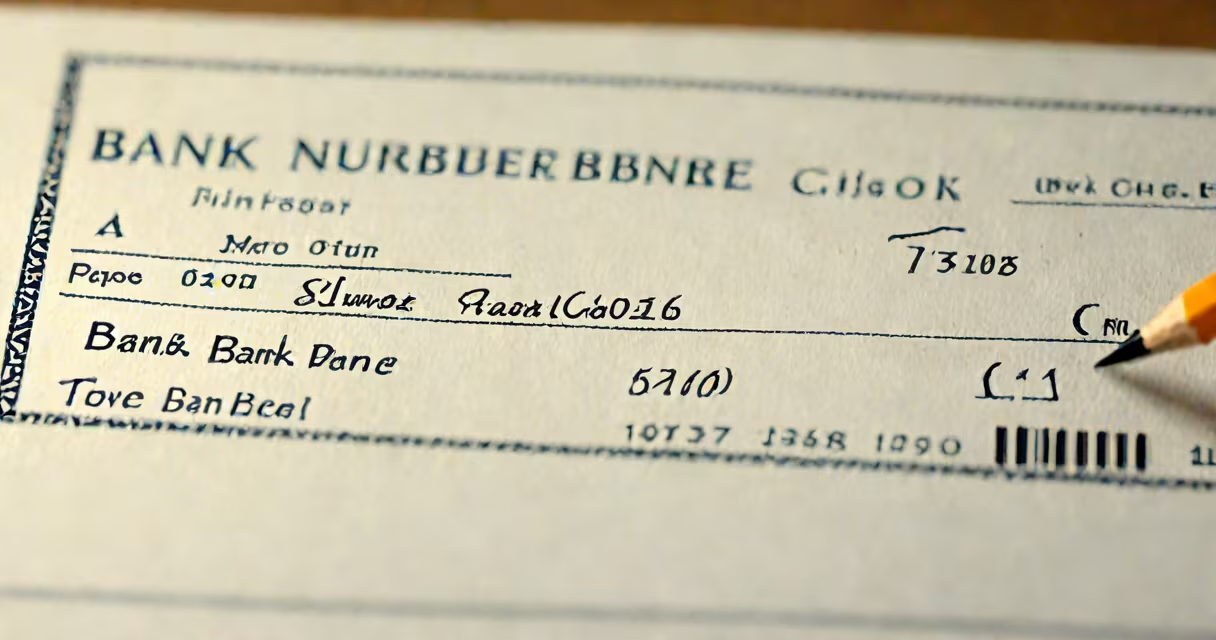
A bank routing number is a nine-digit code that identifies a specific financial institution in the United States. It enables accurate processing of checks, direct deposits, wire transfers, and Automated Clearing House (ACH) transactions. The number ensures funds move between the correct banks and accounts.
Routing numbers are issued by the American Bankers Association (ABA) and are standardized across the U.S. banking system. They appear on paper checks, online banking portals, and payment forms. Without a valid routing number, electronic transfers may fail or be delayed.
For example, if you set up a direct deposit for your paycheck, your employer uses your bank's routing number and your account number to send funds electronically. The receiving bank verifies both numbers before crediting your account. A mismatch in either number results in a failed transaction.
Routing numbers operate within the U.S. payment infrastructure, primarily through the Federal Reserve's Fedwire system and the ACH network. When a check is deposited, the routing number directs the transaction to the correct bank's correspondent account. This process happens in seconds during electronic clearance.
Each routing number corresponds to a single financial institution, not a branch. For instance, all branches of Wells Fargo in California share the same routing number, even though they're located in different cities. This standardization prevents confusion and streamlines nationwide transfers.
When a bank processes a check, it reads the routing number from the magnetic ink character recognition (MICR) line at the bottom of the check. The MICR line includes the routing number, account number, and check number. This line is scanned by high-speed readers at clearinghouses.
There are two primary types of routing numbers used in the U.S.:
| Type | Use Case | Format | Example |
|---|---|---|---|
| Check Routing Number | Manual and electronic check processing | Nine digits, starts with 0-3 | 111000025 |
| Wire Transfer Routing Number | Domestic wire transfers via Fedwire | Nine digits, starts with 0-3 | 111000025 |
| ACH Routing Number | Direct deposits, bill payments, ACH transfers | Nine digits, starts with 0-3 | 111000025 |
All routing numbers begin with digits 0-3 and are assigned based on geographic region and institution type. Numbers starting with 0-3 are typically used by commercial banks. Credit unions often use numbers starting with 2-3, while savings institutions may use 1-2.
Some institutions use multiple routing numbers for different purposes. For example, a bank might assign one routing number for domestic wire transfers and another for international wires. These are listed on official bank documents and can be verified via the ABA's public database.
Many people confuse routing numbers with account numbers. The routing number identifies the bank; the account number identifies your individual account. Both are required for most transactions. Entering the wrong account number causes funds to go to the wrong person, even if the routing number is correct.
Another frequent error is assuming routing numbers are unique to branches. They are not. All branches of a national bank use the same routing number. You cannot determine a bank's location solely from its routing number. For example, the routing number 111000025 belongs to Wells Fargo and applies to every branch in the U.S., regardless of state.
Some users believe routing numbers are interchangeable between banks. This is false. Using a routing number from a different institution results in a rejected transaction. Even small differences in digits cause failure. A typo in the last digit can redirect funds to a completely different bank.
Suppose you start a new job and need to set up direct deposit for your salary. Your employer asks for your bank's routing number and your account number. You provide:
Your employer sends the payment through the ACH network using these details. The receiving bank validates both numbers against its internal records. If the routing number is correct and the account number matches the name on file, the deposit clears within 1-2 business days.
If you accidentally enter 111000026 instead of 111000025, the transaction fails. The funds return to your employer's account, and you must correct the information. This highlights why accuracy matters.
Routing numbers do not change unless a bank merges, closes, or undergoes a structural reorganization. Once assigned, they remain in use indefinitely. Some routing numbers have been in circulation since the 1970s.
The ABA maintains a searchable directory of routing numbers at aba.com. This resource allows users to verify a routing number's validity and associated institution. It's especially useful when setting up recurring payments or verifying a new bank's credentials.
Not all banks use the same routing number for online and mobile services. Some institutions issue separate routing numbers for domestic and international wire transfers. Always confirm the correct number with your bank's customer service or official website.
I once helped a client reconcile a $2,000 deposit that never arrived. After checking the transaction logs, we discovered the routing number was off by one digit. The funds were sent to a credit union in Oregon instead of the intended bank in Texas. Correcting the number resolved the issue within 48 hours.
For clarity, always confirm routing numbers through official channels. Never rely on third-party websites or unverified sources. A single incorrect digit can lead to lost funds or delays.
Knowing what a bank routing number means ensures accurate, timely transactions. It's not just a sequence of digits-it's a critical component of the U.S. financial system.