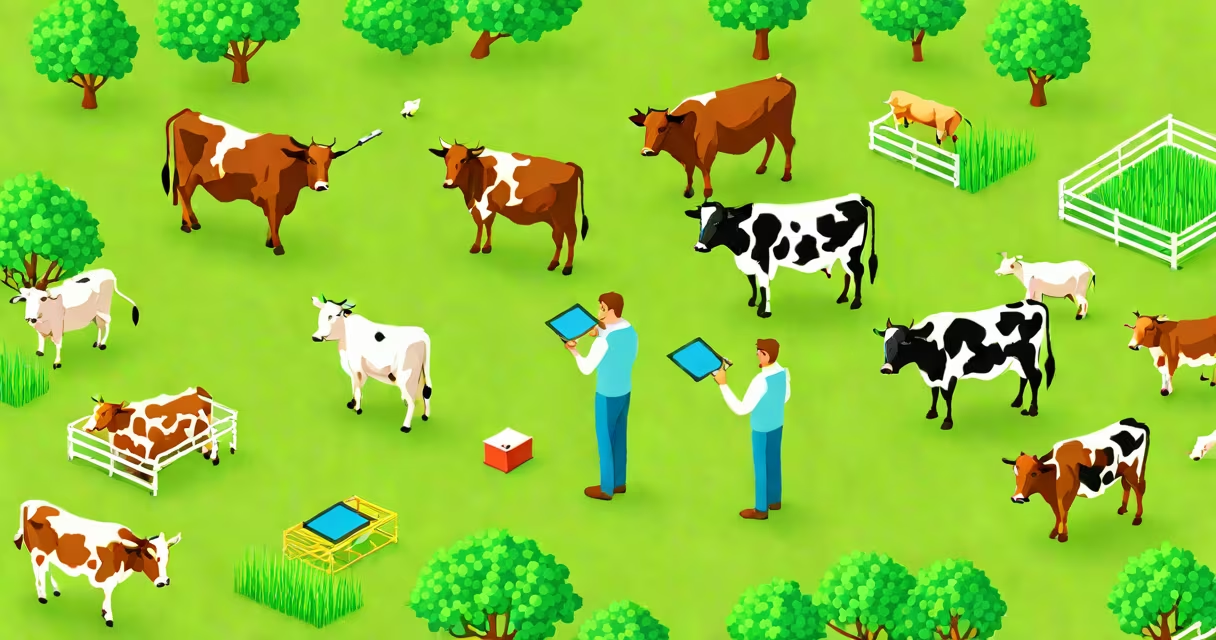
Animal science applies biology, chemistry, and engineering to improve livestock health, productivity, and sustainability in food production. It combines lab research with fieldwork to solve real-world challenges in raising animals for meat, milk, eggs, and fiber.
At its core, animal science studies how animals grow, reproduce, and respond to their environment. Scientists analyze feed efficiency, disease resistance, and genetic traits to increase output while reducing environmental impact. This work supports global food security by ensuring safe, affordable animal products.
For example, researchers at the University of California, Davis developed a feed additive that reduces methane emissions from dairy cows by 30%. The compound targets gut microbes responsible for methane formation, lowering greenhouse gas output without affecting milk yield. This study, published in Frontiers in Sustainable Food Systems, shows how animal science tackles climate change at the farm level.
Animal scientists design experiments to test variables like diet, housing, and breeding. They collect data on growth rates, fertility, immune response, and behavior. Results inform decisions about how to raise animals more efficiently and humanely.
Field trials often run over multiple seasons. A study on beef cattle in Texas measured weight gain across four different rations. Researchers tracked daily intake, body condition scores, and blood metabolites. After 120 days, the group fed a high-fiber, low-grain diet gained 15% less weight but had lower incidence of acidosis-a digestive disorder linked to grain-heavy diets.
Lab analysis complements field observations. Blood samples are tested for hormone levels, nutrient absorption, and inflammation markers. DNA sequencing identifies genetic variants associated with disease resistance or higher milk yield. These tools allow precise selection of breeding stock and targeted interventions.
Animal science spans several specialized fields. Each focuses on a different aspect of animal production and welfare.
| Type | Focus Area | Real-World Application |
|---|---|---|
| Nutrition | Diet formulation and metabolic response | Designing feeds that maximize growth with minimal waste |
| Reproduction | Fertility, embryo transfer, AI techniques | Increasing calf survival rates in beef herds |
| Behavior & Welfare | Stress indicators, enrichment strategies | Reducing aggression in poultry through lighting and space design |
| Genetics | Marker-assisted selection, genomic prediction | Identifying pigs resistant to porcine reproductive and respiratory syndrome (PRRS) |
| Physiology | Thermoregulation, lactation efficiency | Optimizing cooling systems for dairy cows in hot climates |
One lesser-known fact: animal scientists often work with non-traditional species. For instance, researchers at the USDA's Agricultural Research Service study alpacas and llamas for sustainable fiber production in arid regions. Their findings inform grazing models that prevent soil erosion and support smallholder farmers.
Many assume animal science is solely about maximizing output. That's incorrect. Modern animal science balances productivity with ethical standards and environmental stewardship.
For example, the practice of tail docking in pigs was once common to reduce tail biting. But research from the University of Guelph showed that tail docking causes chronic pain and increases stress-related behaviors. Today, animal scientists promote alternative solutions-like enriched housing and early socialization-to prevent injuries without surgical intervention.
Another confusion: animal science is not synonymous with veterinary medicine. While both involve animal health, veterinarians treat individual animals. Animal scientists study populations and systems. A vet might prescribe antibiotics for a sick cow. An animal scientist investigates why infection rates rise in certain barn designs and recommends structural changes.
I once visited a swine research facility in Iowa where a team monitored pig behavior using AI-powered cameras. They detected subtle shifts in movement patterns that signaled illness before symptoms appeared. This early warning system reduced antibiotic use by 40% over two years. The project combined animal science with data analytics-proof that the field evolves beyond traditional methods.
Animal science drives innovation in commercial farms, government agencies, and private companies. Major applications include:
According to the National Institute of Food and Agriculture (NIFA), animal science research contributed to a 22% reduction in feed conversion ratios across U.S. livestock operations between 2010 and 2020. This improvement means less feed is needed per pound of meat produced-lowering costs and resource use.
When people ask, "What does animal science do?" they're often seeking clarity on its role in food systems. The answer lies in measurable outcomes: healthier animals, safer food, lower emissions, and better farm economics. It's not about pushing animals harder-it's about working smarter.
Understanding what animal science does helps demystify modern food production. It's not magic. It's science applied to living systems-with clear goals: efficiency, ethics, and resilience.