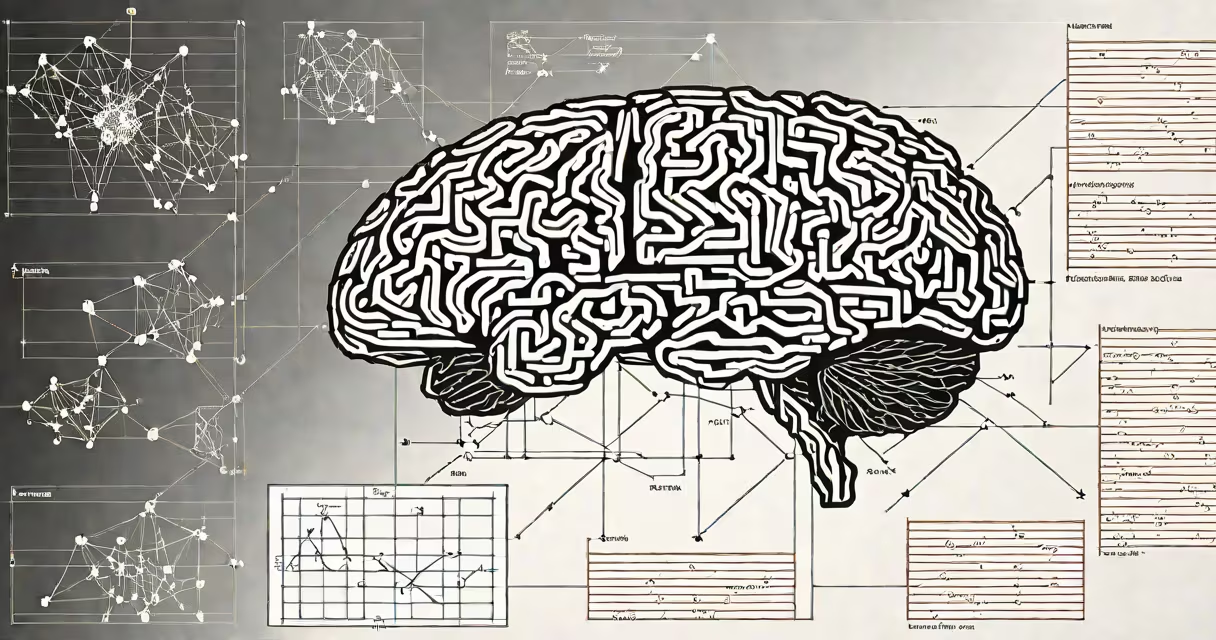
Cognitive meaning in psychology refers to how individuals mentally represent concepts, words, and experiences based on internal processes like memory, perception, and reasoning. It's not just about dictionary definitions-it's about how the mind constructs understanding through context, experience, and neural patterns.
This concept lies at the core of cognitive science, bridging linguistics, neuroscience, and psychology. Unlike surface-level definitions, cognitive meaning reflects how people actually interpret language and ideas in real time. For example, when someone hears "apple," their brain doesn't just retrieve a visual image-it activates memories of taste, texture, past experiences, and cultural associations.
According to the American Psychological Association, cognitive meaning emerges from the interaction between sensory input, stored knowledge, and current goals. This process occurs rapidly and often unconsciously. A 2021 study published in *Cognitive Science* showed that people recognize words faster when they align with existing mental models-proving that meaning isn't static but changing.
The mind builds meaning by linking new information to prior knowledge. When you hear "dog," your brain accesses a network of related data: barking sounds, fur texture, emotional responses, even specific breeds you've encountered. This integration happens across multiple brain regions, including the temporal lobe for language and the prefrontal cortex for context evaluation.
Research using fMRI scans shows that different people activate slightly different neural pathways when processing the same word. One person might associate "home" with family photos, another with a childhood house. These individual differences show that cognitive meaning is both shared and personal.
A key mechanism behind this is semantic memory-the long-term storage of facts and general knowledge. Unlike episodic memory (which stores personal events), semantic memory holds abstract concepts like "justice" or "freedom." It allows us to understand words without needing to relive the moment we learned them.
Cognitive meaning isn't uniform. It varies depending on context, culture, and individual history. The following table outlines major categories:
| Type | Description | Example |
|---|---|---|
| Conceptual | Meaning derived from category membership and defining features. | "A triangle has three sides." |
| Contextual | Meaning shaped by situation, environment, or conversation flow. | "That's cool" can mean approval or sarcasm depending on tone. |
| Emotional | Meaning influenced by personal feelings or affective states. | "Mother" may evoke warmth for some, stress for others. |
| Metaphorical | Meaning constructed through analogies or symbolic comparisons. | "Time is money" implies urgency and value. |
These types aren't mutually exclusive. Most word meanings involve a blend-like how "light" can refer to weight (conceptual), a lamp (contextual), a feeling of joy (emotional), or a metaphor for enlightenment (metaphorical).
Cognitive meaning underpins communication, learning, and problem-solving. In education, teachers use familiar concepts to explain new ones-such as comparing electrical circuits to water flow in pipes. This leverages existing cognitive frameworks to reduce mental load.
In clinical settings, therapists assess cognitive meaning to diagnose disorders. For instance, a patient who describes "being trapped" in metaphors about prison may be expressing anxiety or depression. Clinicians analyze not just what is said, but how it's framed-revealing deeper mental states.
Artificial intelligence systems rely on cognitive meaning models to interpret human language. Natural language processing tools trained on large datasets learn statistical patterns of word usage-but fail when context shifts. Real understanding requires something closer to human cognition.
Cognitive meaning is often mistaken for dictionary meaning or linguistic semantics. Dictionary definitions list formal criteria ("a dog is a domesticated carnivore of the species Canis lupus familiaris"). But cognitive meaning includes everything else: the smell of a dog, the sound of its bark, the feeling of petting it.
Another misconception is that cognitive meaning is purely subjective. While personal experience shapes interpretation, research shows consistent patterns across cultures. For example, the concept of "mother" universally involves caregiving roles-even though expressions of motherhood vary widely.
A lesser-known but critical point: cognitive meaning isn't always accurate. People can hold false beliefs that feel deeply meaningful. A 2019 study in *Journal of Experimental Psychology: General* found that individuals maintain incorrect mental models of common objects (like how a refrigerator works) because they don't observe internal mechanisms. The meaning feels real even when it's flawed.
Consider the word "freedom." A dictionary defines it as "the power or right to act, speak, or think without hindrance." But cognitive meaning goes beyond that.
For a teenager in a restrictive household, "freedom" might trigger images of late-night outings, independence from parents, and autonomy over decisions. Their brain activates reward centers linked to novelty and risk-taking.
For a political activist, "freedom" may evoke images of protests, constitutional rights, and historical struggles. Neural scans show increased activity in areas tied to moral reasoning and social identity.
For someone recovering from trauma, "freedom" might bring up fear-associated with abandonment or loss of safety. The same word triggers defensive responses in the amygdala.
This single term demonstrates how cognitive meaning integrates emotion, memory, culture, and biology. It's not one fixed idea-it's a changing web of mental representations.
I once observed a group of college students discussing climate change. One student used the phrase "we're running out of time." To most, this was a call to action. But one participant paused, then said, "I think of it as a countdown clock-like in a movie." His mental model wasn't environmental urgency but cinematic tension. That difference changed how he processed solutions: he focused on dramatic interventions rather than gradual policy changes.
This moment revealed how cognitive meaning influences decision-making. Two people hearing the same phrase can arrive at different conclusions based on internal representations.
Cognitive meaning in psychology is not a passive reflection of reality. It's an active construction shaped by the brain's architecture, life experience, and immediate context. It explains why two people can hear the same sentence and walk away with entirely different understandings.