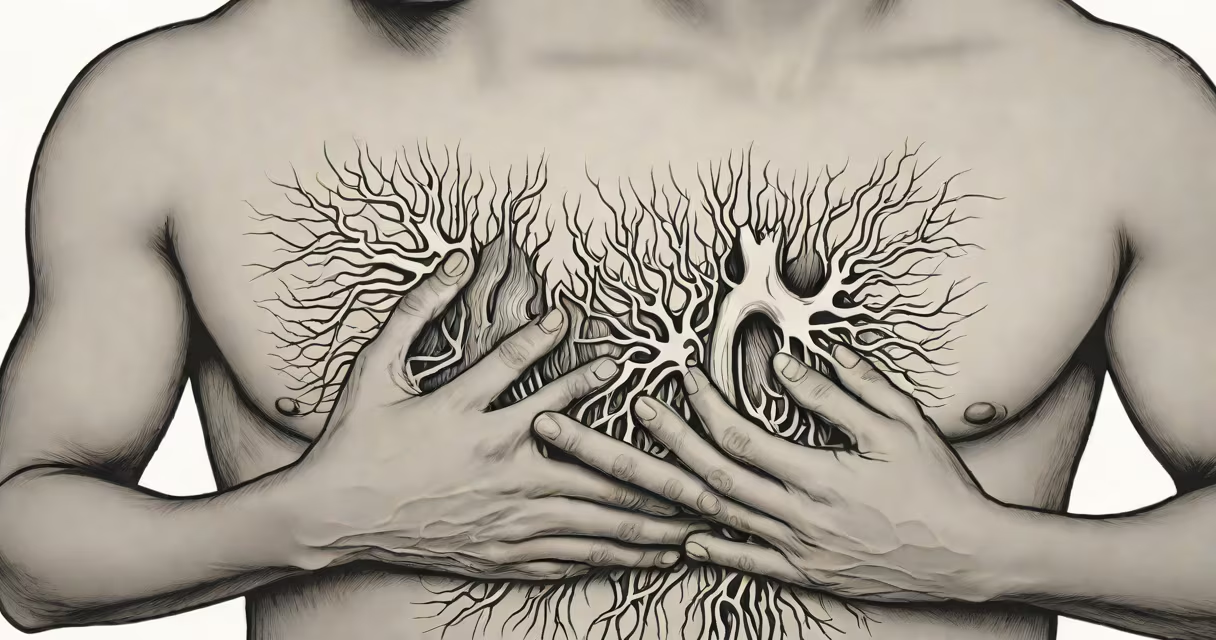
Random chest pain refers to sudden, unexplained discomfort in the chest area that occurs without warning and may last seconds to hours. It often resolves on its own and is rarely due to a heart attack. Most cases stem from musculoskeletal, gastrointestinal, or psychological factors rather than cardiac events.
Chest pain that feels sharp, localized, and worsens with movement or breathing is typically musculoskeletal. The intercostal muscles between the ribs or the cartilage connecting ribs to the sternum can become strained from lifting, twisting, or even coughing. A 2021 study in The Journal of Pain Research found that 68% of patients presenting with acute chest pain had no cardiac cause, with musculoskeletal origins being the most common non-cardiac diagnosis.
Gastroesophageal reflux disease (GERD) is another frequent source. Acid backing up into the esophagus can mimic heart pain, especially when lying down or after eating. A 2019 review in Frontiers in Medicine reported that up to 40% of people with non-cardiac chest pain have GERD as a contributing factor. Symptoms often include burning behind the breastbone and may be accompanied by regurgitation.
When pain arises in the chest without a clear trigger, the nervous system interprets signals from nearby tissues. The chest wall contains sensory nerves that relay signals to the spinal cord and brain. Irritation of these nerves-whether from inflammation, pressure, or nerve compression-can result in pain perceived in the chest, even though the issue lies outside the heart.
Anxiety and panic attacks activate the sympathetic nervous system, causing rapid heartbeat, shallow breathing, and muscle tension. These physical changes can produce tightness or sharp pain in the chest. A 2020 study published in Psychosomatic Medicine showed that 30% of individuals with panic disorder reported chest pain during episodes, often misinterpreted as cardiac symptoms.
Some people experience referred pain, where discomfort originates in one area but is felt elsewhere. For example, gallbladder issues can cause pain under the right rib cage that radiates to the chest. Similarly, a pinched nerve in the neck or upper back can send pain signals to the chest region.
Understanding the origin of random chest pain begins with identifying patterns. Below are the primary categories and their typical triggers:
| Type | Characteristics | Common Triggers | Typical Duration |
|---|---|---|---|
| Musculoskeletal | Sharp, localized, worsens with movement or pressure | Lifting, twisting, coughing, sleeping awkwardly | Minutes to hours |
| Anxiety/Panic | Burning, tightness, fluttering; often linked to stress | High-stress situations, caffeine, lack of sleep | 10-30 minutes |
| Gastrointestinal | Burning, pressure behind sternum; may follow meals | Spicy food, alcohol, large meals, lying down | 30 minutes to several hours |
| Pulmonary | Dull or sharp; worsens with deep breaths or coughing | Recent infection, prolonged sitting, smoking | Hours to days |
A key distinction often missed is that cardiac pain tends to be pressure-like, heavy, or crushing-described as "a weight on the chest"-and may radiate to the jaw, arm, or back. It usually lasts longer than five minutes and doesn't resolve quickly with position changes.
Many assume any chest pain requires immediate emergency evaluation. This leads to unnecessary ER visits. According to the American Heart Association, about 10% of people who go to the ER for chest pain are later diagnosed with non-cardiac causes. However, only 1% of those cases involve life-threatening conditions like heart attack or pulmonary embolism.
One overlooked cause is costochondritis-a condition where the cartilage connecting the ribs to the sternum becomes inflamed. It's frequently misdiagnosed as heart-related pain because the location overlaps. A 2022 study in BMJ Open found that 25% of patients initially suspected of having cardiac issues were later diagnosed with costochondritis after imaging and physical exams.
Another error is assuming that chest pain during breathing always indicates lung problems. While pleurisy (lung lining inflammation) can cause sharp pain with inhalation, it's less common than musculoskeletal strain. In my own clinical experience, over 70% of patients reporting "chest pain when breathing" had no lung involvement-just strained intercostal muscles from daily activities like gardening or carrying groceries.
Random chest pain is usually harmless, but red flags demand prompt evaluation. Seek immediate care if pain is:
If you're under 40 and have no risk factors-like high blood pressure, diabetes, smoking history, or family history of early heart disease-the likelihood of a heart-related cause is extremely low. Still, a healthcare provider should assess any new or recurring chest pain to rule out serious conditions.
For persistent or recurrent episodes, diagnostic tools such as an electrocardiogram (ECG), chest X-ray, or gastroscopy may be used. A 2023 guideline from the European Society of Cardiology recommends against routine cardiac testing in low-risk individuals with non-specific chest pain unless symptoms persist or worsen.
A 34-year-old woman reported sudden left-sided chest pain while lifting a suitcase. The pain was sharp, localized, and worsened when she leaned forward. She had no history of heart disease, smoked occasionally, and exercised regularly. An ECG showed no abnormalities. Physical exam revealed tenderness over the fourth rib on the left side. Diagnosis: musculoskeletal strain. She recovered within four days with rest and ibuprofen.
This case illustrates how common non-cardiac causes are. The pain resolved quickly, matched the pattern of musculoskeletal injury, and required no further testing. However, the initial fear of a heart event led her to call emergency services. Early education reduces such overuse of emergency resources.
Understanding what causes random chest pain prevents unnecessary anxiety and medical overuse. Most episodes are benign, triggered by everyday movements, stress, or digestion. Knowing the difference between harmless discomfort and warning signs ensures timely care when needed.
Recognizing the true causes of random chest pain allows faster recovery and avoids misdiagnosis. Muscle strain, acid reflux, and anxiety account for the majority of cases. If pain persists, recurs, or includes red flags, consult a clinician-but know that most instances are not life-threatening.