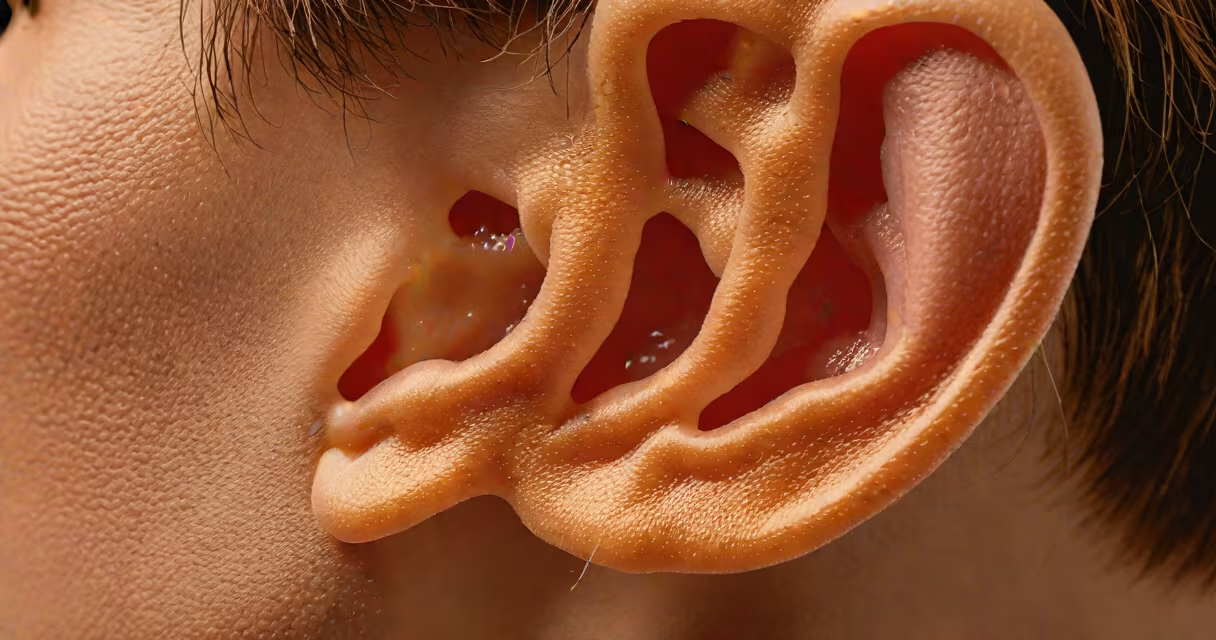
Ear popping happens when the Eustachian tube opens to balance pressure between your middle ear and the outside air. This usually feels like a sudden "pop" or "crack" in the ear, often accompanied by a sensation of fullness or relief.
The Eustachian tube connects the middle ear to the back of the nose and throat. Normally closed, it opens briefly during swallowing, yawning, or chewing to release trapped air or fluid. When pressure builds-such as during airplane descent or mountain driving-the tube opens to equalize pressure, causing the pop.
This process is normal and typically resolves within seconds. However, persistent popping, especially with pain, muffled hearing, or discharge, may indicate an underlying issue like infection, allergies, or Eustachian tube dysfunction.
Sound travels through the outer ear, vibrates the eardrum, and moves through the middle ear bones to the inner ear. The middle ear is a small air-filled cavity behind the eardrum. Pressure inside this space must match the external atmosphere for clear hearing and comfort.
When you ascend or descend quickly-like in an elevator, airplane, or car climbing hills-air pressure changes faster than the Eustachian tube can adjust. This creates a pressure imbalance. The resulting sensation of fullness or muffled hearing triggers the need to pop.
Swallowing or yawning stretches the muscles around the Eustachian tube, opening it slightly. Air rushes in or out, equalizing pressure and producing the characteristic pop. This is why people chew gum or swallow during takeoff and landing on flights.
Ear popping most frequently occurs during rapid altitude shifts. A study published in Frontiers in Neurology notes that 60-70% of air travelers report ear discomfort due to pressure changes, with popping being the most common relief mechanism (Kumar et al., 2021).
Other frequent causes include:
People with anatomical differences-such as shorter or narrower Eustachian tubes-may struggle more with pressure equalization. Children are particularly prone because their tubes are smaller and more horizontal.
Not all popping is the same. The sound, timing, and accompanying symptoms can point to different conditions.
| Pop Type | Timing | Common Cause | Red Flag Symptoms |
|---|---|---|---|
| Normal pop | Occasional, brief | Altitude change, swallowing | None |
| Repetitive popping | Multiple times daily | Chronic congestion, Eustachian tube dysfunction | Pain, hearing loss, fluid drainage |
| Clicking or crackling | Intermittent, sometimes rhythmic | Muscle spasms (e.g., tensor tympani) | Discomfort, dizziness |
| Unilateral pop | One-sided only | Earwax impaction, otitis media | Fever, severe pain, discharge |
A non-obvious distinction: clicking sounds are often misdiagnosed as ear popping. True popping involves pressure equalization. Clicking may stem from muscle contractions in the middle ear, such as the stapedius or tensor tympani muscles. These are usually harmless but can signal hyperacusis or rare neurological conditions.
While occasional popping is routine, certain patterns suggest medical evaluation. Persistent popping with muffled hearing lasting more than 48 hours may indicate fluid buildup behind the eardrum-a condition called otitis media with effusion.
According to the American Academy of Otolaryngology-Head and Neck Surgery (AAO-HNS), chronic Eustachian tube dysfunction affects about 1 in 10 adults and is linked to recurrent ear infections, hearing loss, and balance issues. It's more common in smokers and those with seasonal allergies.
I once observed a patient who reported daily ear popping while working in a high-altitude office. Despite normal hearing tests, MRI revealed mild Eustachian tube inflammation. After using nasal steroids and practicing autoinflation techniques, symptoms resolved in six weeks.
If popping is frequent, painful, or accompanied by discharge, fever, or hearing loss, consult a healthcare provider. Self-care strategies include:
Many assume ear popping always means an ear infection. That's incorrect. Infections cause pain, fever, and discharge-not just popping. Popping without other symptoms is usually benign.
Another myth: "Popping your ears too much damages them." There's no evidence that normal popping harms the ear. Overuse of forceful maneuvers like the Valsalva can cause barotrauma, but gentle efforts pose no risk.
Ear popping is a natural response to pressure changes. It's a sign the body is working correctly. When it becomes frequent, painful, or unrelieved, it may indicate a treatable condition. Understanding the difference between normal and abnormal popping helps avoid unnecessary worry and guides timely care.