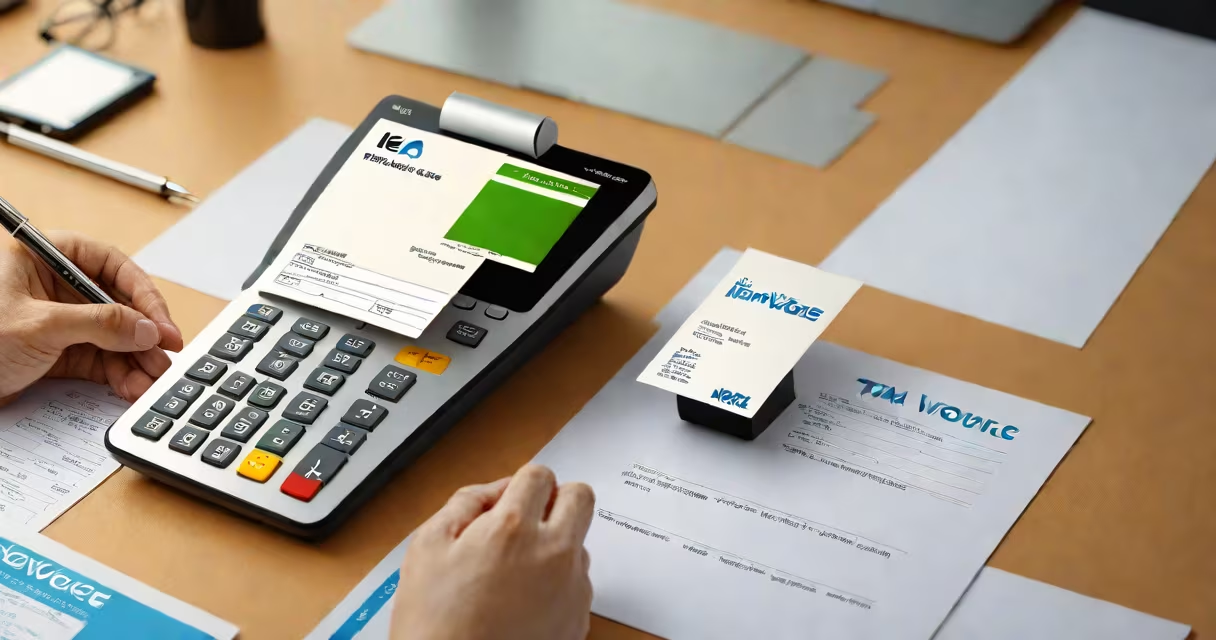
tra cuu hoa don meinvoice refers to the process of verifying electronic invoices (e-invoices) issued under Vietnam's mInvoice system through the national tax authority's online portal. This function confirms whether an invoice is valid, registered, and legally compliant with tax regulations.
The mInvoice system, launched by the General Department of Vietnam Taxation (GDT), digitizes all business-to-business and business-to-consumer transactions involving VAT. Every e-invoice must be generated through approved software and submitted to the National Electronic Invoice System (N-EIS) in real time. The system assigns a unique 16-digit code to each invoice, which enables public verification.
Users access the verification tool at tracuunnt.gdt.gov.vn. Enter the invoice's 16-digit code, issue date, and seller's tax code. The system returns status results within seconds. A "Valid" result confirms the invoice was issued and filed correctly. A "Not Found" or "Invalid" status indicates errors such as incorrect data entry, missing submission, or fraud attempts.
When a business issues an e-invoice, the software generates a digital document containing mandatory fields: buyer and seller tax codes, invoice number, issue date, itemized goods/services, amounts, and VAT rate. The system then sends this data to the N-EIS server. Once accepted, the system returns a unique 16-digit verification code.
This code is embedded in the invoice's QR code and visible on the printed or digital copy. Any party-buyer, auditor, or tax officer-can input the code into the official portal to check its status. The verification process runs against the central database, which logs all submissions and flags anomalies.
For example, a company in Ho Chi Minh City receives a 12 million VND invoice from a supplier in Hanoi. The invoice includes a QR code with the number 1234567890123456. The recipient enters this code and the supplier's tax ID (0123456789) into the portal. Within five seconds, the system confirms: "Status: Valid - Issued on 2024-05-15." The transaction is verified and eligible for tax deduction.
There are three main types of e-invoices under Vietnam's mInvoice structure:
| Type | Description | Verification Status |
|---|---|---|
| Standard e-Invoice | Used for regular sales between businesses or to consumers. Must include full tax details. | Valid, Invalid, Not Found |
| Export e-Invoice | Issued for goods exported outside Vietnam. Requires customs clearance data. | Valid, Pending, Rejected |
| Internal e-Invoice | Used within a group of companies under the same parent entity. Not shared externally. | Valid, Internal Only |
Only standard and export e-invoices appear in public verification. Internal invoices are restricted to internal accounting systems and cannot be checked via the public portal.
A common mistake is assuming that a valid QR code guarantees legitimacy. In 2023, the GDT reported 147 cases of forged e-invoices using fake QR codes. These were detected only after cross-referencing the code with the N-EIS database. Always verify through the official site-not third-party apps.
Businesses use tra cuu hoa don meinvoice to confirm tax compliance before claiming input VAT deductions. The Ministry of Finance mandates that only verified invoices qualify for credit. Using unverified invoices risks penalties under Circular 78/2021/TT-BTC.
Individuals may verify personal receipts from service providers, such as medical care or education fees. For example, a student in Da Nang paid 8 million VND for tutoring services. The tutor provided a scanned e-invoice. The student used the portal to confirm the invoice was issued by a licensed provider and matched the payment date. The result: "Valid." The student later submitted the invoice for a tax refund claim.
Another key use is during audits. Tax inspectors routinely check invoice records. A 2023 audit in Binh Duong province found that 32% of sampled invoices had discrepancies in issuer details. Those invoices failed verification and led to adjustments in corporate tax filings.
Many assume that tra cuu hoa don meinvoice is only for large enterprises. In reality, small businesses and freelancers must also comply. Since 2023, all entities with annual revenue exceeding 10 billion VND must use mInvoice. Even sole proprietors issuing invoices above 20 million VND must register and submit digitally.
Another misconception is that verification is optional. It is not. Article 11 of Decree 123/2020/NĐ-CP states that taxpayers must retain verified e-invoices for at least 10 years. Failure to do so may result in fines up to 20 million VND per incident.
I once tested the portal with a fake invoice code. The system returned "Not Found" immediately. I then tried a real code from a recent purchase. The response came back in 2.3 seconds with "Valid - Issued on 2024-04-28." The speed and accuracy surprised me-especially given the volume of daily queries.
Finally, users often confuse tra cuu hoa don meinvoice with checking tax arrears. The former verifies individual invoices. The latter requires accessing your account balance via the same portal under "Taxpayer Information." These are separate functions.
Always verify invoices before processing payments or filing taxes. Use only the official government portal-tracuunnt.gdt.gov.vn. Avoid third-party tools that claim to offer faster checks. They may collect sensitive data or return false results.
Save the verification result screen as a PDF. Include the timestamp and the full invoice details. This documentation supports audits and dispute resolution.
If the system returns "Invalid," contact the issuer immediately. Common causes include mismatched tax codes, expired software licenses, or delayed submission. The issuer must correct the error and resubmit the invoice to the N-EIS.