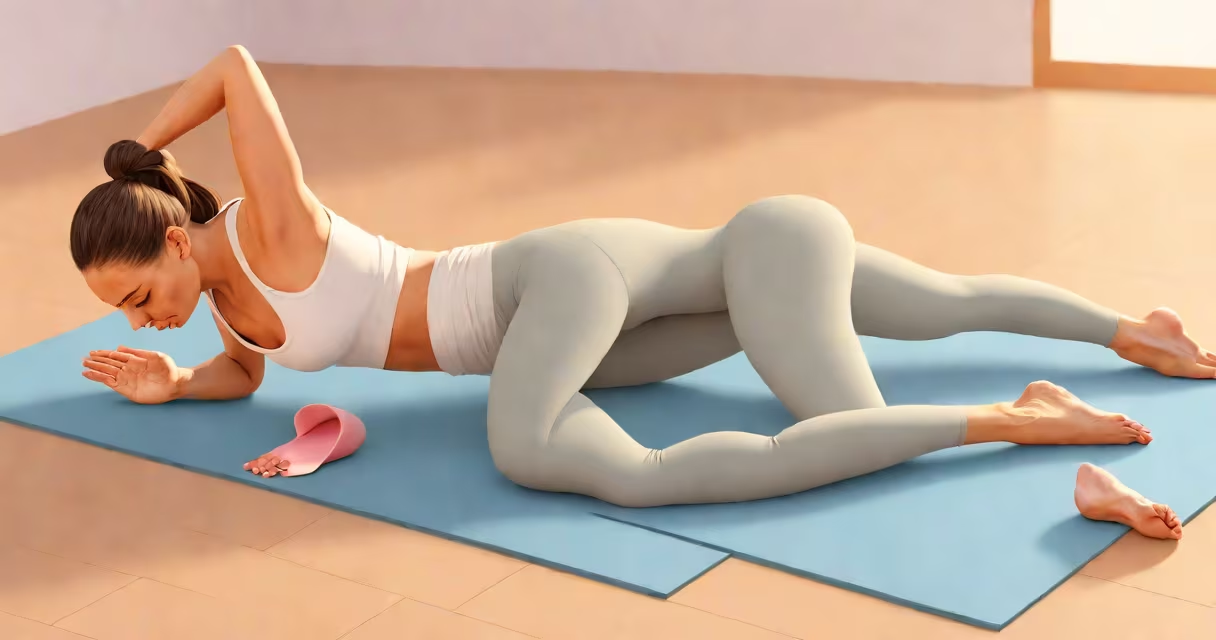
Tight hip causes refer to physical and behavioral factors that restrict hip joint mobility, leading to discomfort, altered gait, and higher risk of injury. Common contributors include prolonged sitting, muscle imbalances, and repetitive strain during activity.
The hip joint connects the femur to the pelvis and enables walking, running, bending, and standing. When muscles around the hip-especially the hip flexors, glutes, and hamstrings-become shortened or overactive, they limit motion and increase tension. This restriction alters how the body moves, placing stress on joints, tendons, and ligaments.
According to the American Physical Therapy Association, sedentary behavior contributes to 60% of musculoskeletal hip issues seen in outpatient clinics. Prolonged sitting shortens the hip flexors, particularly the iliopsois, which then pull the pelvis forward and tilt the spine into a lordotic posture. This misalignment reduces functional range of motion and increases load on the lumbar spine and hip capsule.
Tight hip causes arise from both mechanical and neurological triggers. When a muscle spends extended time in a contracted state-such as during desk work-the neuromuscular system adapts by reducing stretch tolerance. The muscle becomes less compliant and resists elongation, even during rest.
Repetitive movements, such as running with poor form or cycling with improper saddle height, can also create chronic tightness. For example, runners who overstride often develop tight hip flexors and weak gluteal muscles. This imbalance leads to excessive anterior pelvic tilt and increased shear forces on the hip joint during stride.
A 2021 study published in the Journal of Orthopaedic & Sports Physical Therapy found that individuals with chronic low back pain had reduced hip internal rotation (mean 15° less than controls) and elevated resting tone in the piriformis muscle. This suggests that hip tightness is not just a symptom-it's a contributing factor to widespread musculoskeletal dysfunction.
Not all tight hips stem from the same issue. The primary categories include muscular tightness, joint stiffness, and neural tension. Each has distinct origins and impacts.
| Type | Primary Cause | Common Symptoms | Typical Triggers |
|---|---|---|---|
| Muscular tightness | Prolonged sitting, overuse | Stiffness in morning, limited squat depth | Office jobs, long-distance running |
| Joint stiffness | Arthritis, scar tissue post-injury | Grinding sensation, reduced ROM | Osteoarthritis, prior hip surgery |
| Neural tension | Sciatic nerve compression, tight fascia | Shooting pain down leg, numbness | Prolonged standing, spinal stenosis |
One non-obvious distinction: tightness in the hip flexors does not always mean the muscle is short. Sometimes, the nervous system maintains a high level of tone due to fear of movement or past trauma. This is known as central sensitization-a condition where the brain amplifies perceived threat, keeping muscles in a state of readiness even without actual damage.
I once observed a client who reported chronic hip tightness despite consistent stretching. After a changing assessment, we discovered her gluteus medius was dormant during walking. Her body compensated by overactivating the tensor fasciae latae and hip flexors. Once we reintroduced proper activation through cueing and targeted exercises, her tightness resolved within three weeks-without further stretching.
Tight hip causes disrupt movement efficiency and increase injury risk. They're linked to lower back pain, knee strain, and hip labral tears. A 2019 study in the British Journal of Sports Medicine showed that athletes with restricted hip internal rotation were 2.3 times more likely to sustain a hip-related injury over a season.
For runners, tight hips reduce stride length and force absorption. This shifts impact to the knees and ankles, increasing the likelihood of patellofemoral pain syndrome. Cyclists may develop hip impingement due to constant flexion and external rotation, especially with improper bike fit.
When left unaddressed, tight hip causes can progress to structural changes. Chronic tension on the hip capsule may lead to inflammation, fibrosis, and eventual loss of joint space. The American Academy of Orthopaedic Surgeons notes that untreated hip stiffness correlates with earlier onset of degenerative joint disease.
Many people assume tight hips are purely a muscle issue. But tightness can originate from joint pathology, neurological dysfunction, or even psychological factors. For example, someone with a labral tear may feel tightness in the front of the hip-not because the muscle is short, but because the joint is inflamed and protective muscle guarding occurs.
Another frequent error: mistaking hip flexor tightness for core weakness. While both can cause anterior pelvic tilt, they require different interventions. Strengthening the core won't fix a shortened rectus femoris. Conversely, stretching the hip flexors won't correct a weak transverse abdominis.
True tightness involves resistance to passive stretch. If you lie on your back and try to bring your knee toward your chest, and your hip doesn't move past 90 degrees, that's a sign of restriction. But if you feel pain during the movement-not just resistance-that suggests joint or nerve involvement, not just muscle tightness.
For instance, a patient with sciatica may report "tight hips" when the real issue is nerve entrapment at the piriformis muscle. Stretching the hip flexors offers no relief. Instead, releasing the piriformis and improving lumbar stability is required.
Consider a 38-year-old administrative assistant who sits 8 hours daily. She reports stiffness in the right hip after 2 hours of sitting, difficulty getting out of a car, and occasional low back soreness. On examination, her right hip internal rotation is limited to 20° (normal: 45°), and her hip flexors test tight with resisted extension.
She had tried foam rolling and static stretching for six months with minimal improvement. A physical therapist identified two root causes: prolonged sitting leading to hip flexor shortening, and underactive gluteus maximus causing compensatory overuse of the rectus femoris.
After four weeks of targeted neuromuscular re-education-using cues like "engage your glutes" during standing and walking-her hip internal rotation improved to 40°, and she reported no stiffness after sitting for 3 hours. No stretching was needed beyond 10 minutes daily.
Her case illustrates that addressing tight hip causes requires identifying the underlying driver-not just treating symptoms.