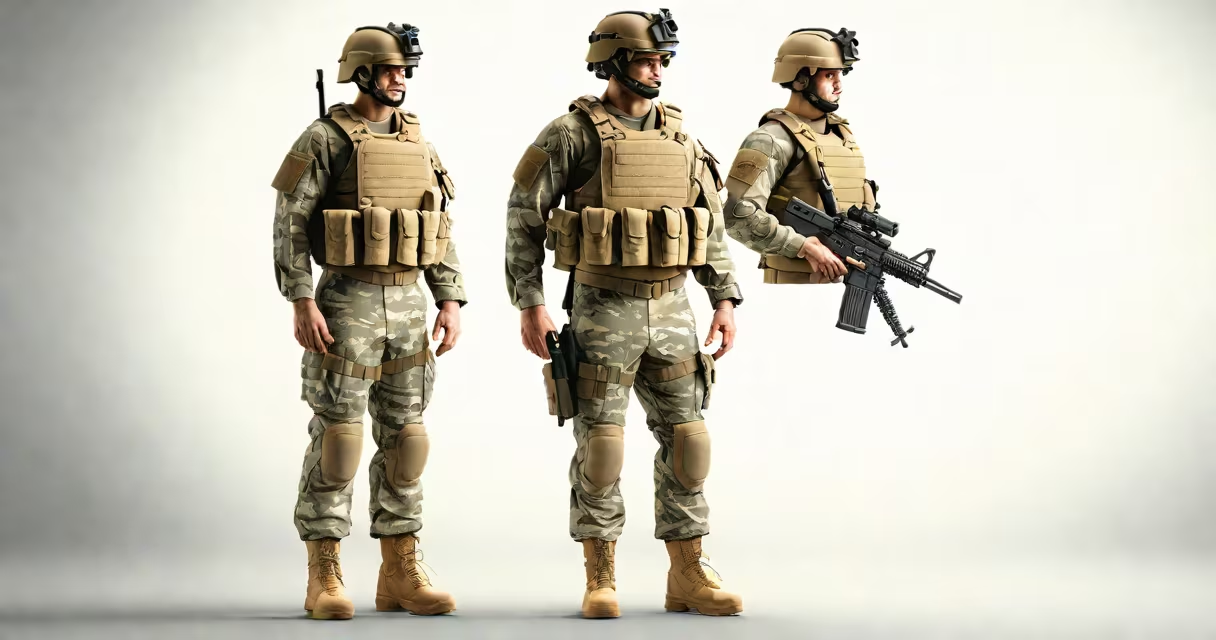
"Stood down" means temporarily removing someone from active duty or responsibility, usually due to safety risks, an ongoing investigation, or a change in operational priorities. The term applies in military, emergency response, and corporate environments where personnel are reassigned or paused from tasks.
In practice, "stood down" signals a pause in action. It is not a punishment or termination. Instead, it reflects a decision by leadership to halt operations or suspend roles until conditions improve or decisions are made. For example, a fire crew may be stood down after a dangerous shift ends, or a security officer may be stood down during a review of a misconduct report.
The phrase originates in military and maritime contexts where commands are issued to stop actions. Over time, it spread to industrial safety, aviation, and corporate settings. Its core meaning remains consistent: a temporary halt under authority, not a permanent end.
When someone is stood down, they are officially relieved of their current duties. They remain employed or assigned but are not permitted to perform specific tasks. Access to equipment, facilities, or decision-making authority may be restricted.
For example, in a hospital setting, a nurse might be stood down after a patient safety incident is reported. The supervisor halts the nurse's shifts pending an internal review. The nurse is still on staff and receives pay, but cannot work until cleared.
Similarly, in the U.S. Navy, a ship's crew may be stood down during a port inspection. All operational functions cease until the inspection team completes their assessment. This prevents unauthorized activity during a formal evaluation.
While the core idea stays the same, the application varies by field. The following table outlines common usage scenarios:
| Context | Reason for Stand-Down | Duration | Outcome |
|---|---|---|---|
| Military | Combat risk, investigation, reassignment | Hours to weeks | Return to duty or reassignment |
| Emergency Services | After-action review, fatigue, safety breach | Shifts to days | Re-evaluation before return |
| Corporate | Internal audit, policy violation, restructuring | Days to months | Reinstatement, transfer, or separation |
| Aviation | Pilot error, mechanical failure, weather | Hours to flight cycle | Grounded until clearance |
Each context uses "stood down" to denote a controlled pause. In aviation, for instance, a pilot may be stood down after a near-miss event. The Federal Aviation Administration (FAA) requires such pauses during safety investigations to prevent recurrence.
A key distinction: being stood down is not the same as being suspended or fired. Suspension implies disciplinary action, while standing down is often precautionary. A firefighter stood down after a call involving a structural collapse is not punished-it's a safety measure.
Many people confuse "stood down" with "dismissed" or "fired." These are different. Dismissal ends employment. Standing down does not. An employee stood down remains on the payroll and retains benefits unless otherwise stated.
Another misconception is that "stood down" always means a failure. Not true. In high-risk environments, standing down is a proactive safety tool. According to the National Institute for Occupational Safety and Health (NIOSH), 68% of workplace incidents in construction were preceded by a failure to stand down during hazardous conditions.
Even in sports, the term appears. A referee may be stood down during a match if a conflict of interest arises. The official is removed from the game but not banned from future assignments. This preserves integrity without penalizing the individual.
After two fatal crashes, the FAA grounded all Boeing 737 MAX aircraft worldwide. Pilots operating the model were stood down from flying the aircraft. This was not a personal penalty-it was a systemic pause based on safety findings.
According to the FAA's final report, the grounding lasted 20 months. During that time, pilots underwent additional training and simulator sessions. When the aircraft returned to service, pilots were re-certified before resuming flights. The stand-down was essential to rebuilding trust and ensuring compliance with updated protocols.
This case shows that "stood down" is not a failure-it's a necessary pause. It allows time for review, repair, and revalidation. Without it, systems would operate under unresolved risk.
I once observed a police department stand down a patrol unit after a citizen complaint about excessive force. The officers were not arrested or disciplined. They were removed from duty while internal affairs reviewed video footage and witness statements. After three days, the lead officer was cleared and returned to patrol. The stand-down protected both public trust and officer rights.
"Stood down" is often mistaken for similar phrases. Here's how they differ:
Only "stood down" implies a temporary, authority-driven pause. It is not punitive and does not require a formal hearing to initiate.
Understanding "stood down meaning" helps clarify authority decisions in crisis, safety, and organizational management. It's not a sign of failure-it's a mechanism for control, safety, and accountability.