The phrase "some animals are more equal than others" describes the unequal treatment of species based on human perceptions of value, utility, or emotional appeal-where certain animals receive disproportionate protection, research attention, and moral consideration compared to others, despite all sharing biological sentience.
This idea originates not from science but from political allegory. George Orwell's 1945 novel *Animal Farm* uses the phrase to expose hypocrisy in socialist ideals, where pigs gradually dominate and rewrite equality to serve their own interests. The line became a cultural shorthand for systemic bias-especially in how humans assign worth to living beings.
In reality, the statement reflects measurable patterns in conservation, scientific funding, and public policy. For example, polar bears receive global media coverage and climate action campaigns, while lesser-known species like the endangered Philippine forest turtle face extinction with minimal international attention. This imbalance is not accidental-it stems from how humans categorize animals by charisma, familiarity, and perceived utility.
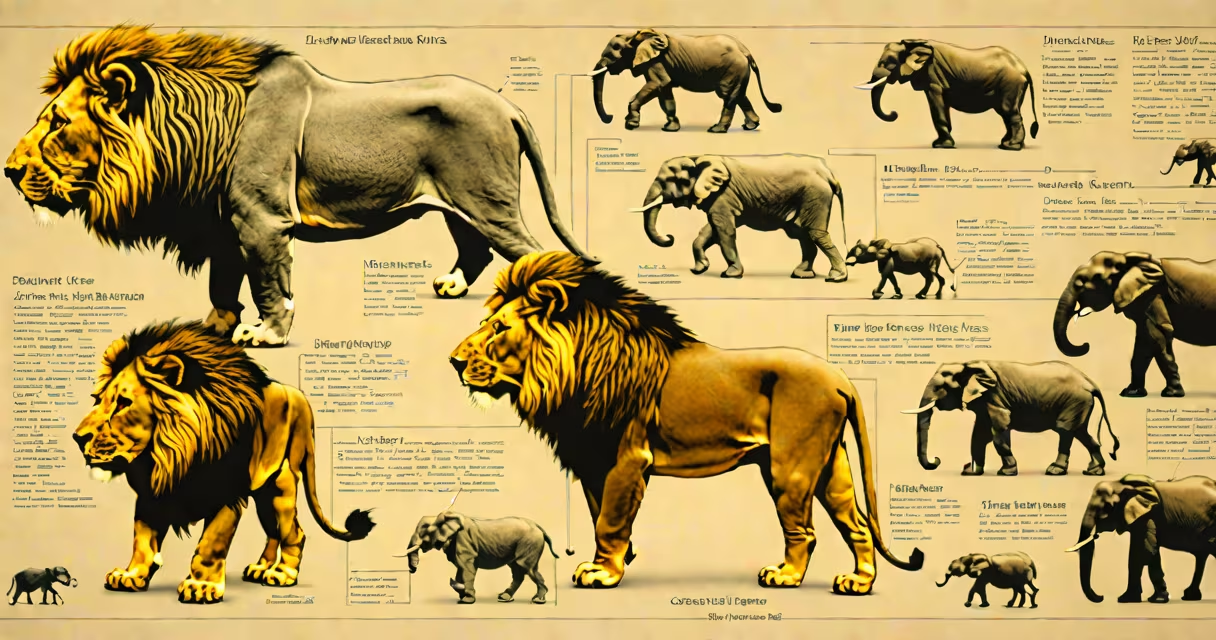
Animals deemed "charismatic megafauna"-large, visually striking mammals such as pandas, tigers, and elephants-receive 90% of conservation funding despite making up less than 1% of known vertebrate species. A 2021 study published in *Conservation Biology* found that species with faces resembling humans (e.g., primates, big cats) attract 60% more donations and media coverage than those without.
Research priorities follow similar patterns. A 2023 analysis of NIH-funded biomedical studies revealed that rodents (mice and rats) accounted for 92% of vertebrate animal research, even though they represent less than 0.1% of mammal diversity. Meanwhile, reptiles and amphibians-critical to system health-received less than 1% of funding, despite high extinction rates.
Even in legal frameworks, unequal treatment persists. The U.S. Endangered Species Act protects species listed under federal criteria, but only 38% of listed animals are invertebrates or fish-species that lack the emotional appeal of bears or eagles. The act's focus on iconic species shapes policy, not ecological necessity.
Three distinct forms of bias shape how animals are treated across domains:
| Type | Definition | Example |
|---|---|---|
| Charisma Bias | Preference for animals with human-like features or appeal | Pandas receive 3x more conservation funding than similarly endangered birds |
| Utility Bias | Higher value assigned to animals useful to humans | Cattle receive more welfare legislation than wild deer, despite similar pain perception |
| Visibility Bias | Greater attention given to animals frequently seen or reported | Sharks are overrepresented in media as dangerous, despite low attack rates |
These biases aren't neutral-they distort resource allocation, influence legislation, and affect how we define moral responsibility toward non-humans.
Many assume that "some animals are more equal than others" implies that all animals are inherently unequal. That's incorrect. The phrase critiques human behavior, not biology. All vertebrates share basic neural structures for pain and fear. A 2020 review in *Nature Neuroscience* confirmed that fish, birds, and mammals process distress through similar brain pathways, indicating comparable capacity for suffering.
Another myth is that conservation prioritization is purely emotional. While emotion drives funding, the selection process includes objective metrics like population decline rate and habitat loss. But even those metrics are influenced by visibility-species with satellite tracking or frequent field reports get faster listings.
A key correction: the inequality isn't about species being "better" or "worse." It's about human psychology. We're wired to respond to faces, movement, and familiar forms. This doesn't make us immoral-it makes us predictable. And that predictability reveals flaws in systems meant to protect life.
The vaquita, a small porpoise native to Mexico's Gulf of California, is the most endangered marine mammal. Fewer than 10 individuals remain. Despite this, it receives far less public attention than the similarly imperiled African elephant, which has 400,000 individuals left but garners millions in global conservation support.
Why? The vaquita lacks a recognizable face, lives in remote waters, and has no symbolic role in culture. Its plight is overshadowed by charismatic species. In contrast, elephants appear in children's books, documentaries, and advertising-making them easier to mobilize around.
When the Mexican government banned gillnets responsible for vaquita bycatch, enforcement failed due to lack of political will and economic pressure. Local fishermen depend on the nets for income. The solution required balancing human livelihoods with animal survival-a challenge that gains urgency only when the animal is culturally visible.
I once visited a marine sanctuary in Baja California where staff showed me a video of a vaquita calf struggling in a net. The footage was never released publicly. "People don't care," said one biologist. "They care about whales, lions, pandas. Not this tiny creature hiding in the dark."
Recognizing that "some animals are more equal than others" isn't a call to abandon the system-it's a demand to fix it. Ethical frameworks like the Cambridge Declaration on Consciousness affirm that many animals experience pain and pleasure. If we accept that, then unequal protection becomes ethically unsustainable.
Some organizations are testing solutions. The Global Wildlife Conservation's "Search for Lost Species" campaign focuses on 25 critically endangered animals previously overlooked. One result: the rediscovery of the Kihansi spray toad in Tanzania led to a $1.2 million recovery effort-funded largely because of media attention after its rediscovery.
Still, progress remains uneven. A 2022 report from the International Union for Conservation of Nature (IUCN) noted that 40% of threatened species have no dedicated conservation program. Most of these are insects, amphibians, and small mammals-species that lack the visual and emotional impact of larger animals.
True equity in animal treatment requires shifting from emotional appeal to evidence-based priority setting. This means investing in monitoring tools, expanding citizen science networks, and funding research on non-charismatic species. It also means reforming how we fund and communicate conservation.
"Some animals are more equal than others" is not a statement of fact-it's a mirror. It shows how human values, not biology, determine whose life matters. Addressing this imbalance demands awareness, policy reform, and a willingness to care for creatures we don't understand or see.
Understanding this changing helps clarify why some species vanish quietly while others become global icons. It also underscores the urgent need to build systems that protect all life-not just the ones we love.