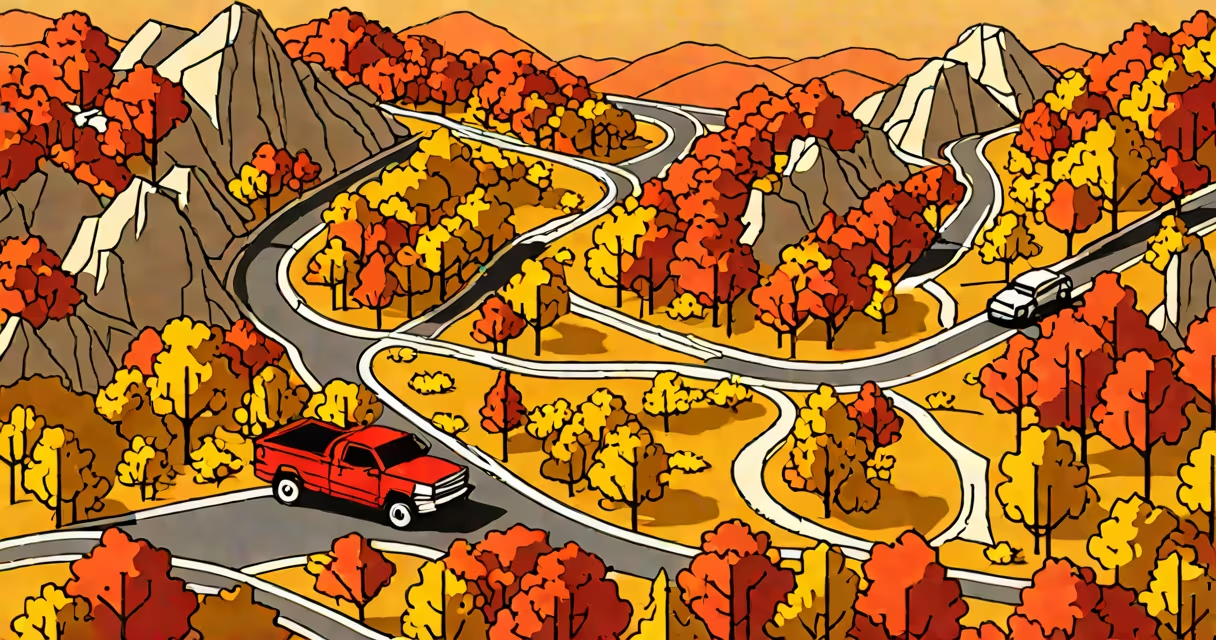
Simple road trips are short, low-budget journeys that prioritize scenery, spontaneity, and minimal planning. They typically last one to three days and cover 200 to 500 miles, often using public roads rather than highways. These trips emphasize discovery over itinerary precision.
They require little preparation beyond a vehicle, basic supplies, and a map or GPS. Unlike complex travel plans, simple road trips allow for last-minute changes, unexpected detours, and unplanned stops at roadside diners, state parks, or small-town festivals. The goal is not to reach a destination but to enjoy the drive itself.
According to the U.S. Department of Transportation, 62% of Americans took a road trip in 2023, with 44% choosing routes under 300 miles. This reflects a growing preference for accessible, low-stress travel. Simple road trips fit that trend perfectly.
These trips rely on flexible timing and minimal infrastructure. You start with a general direction-north, south, east, or west-and choose a route based on terrain, weather, and personal interest. A common method is using free tools like Google Maps' "Explore" feature or the National Park Service's interactive trail maps to identify scenic byways.
For example, a simple road trip from Asheville, North Carolina, to the Great Smoky Mountains National Park takes about 1.5 hours. The route follows State Route 25, which winds through dense forests and past waterfalls. You don't need a reservation, a detailed schedule, or even a packed bag-just a jacket, snacks, and a camera.
Many drivers use apps like Gaia GPS or AllTrails to track elevation, trail access, and off-road options. These tools show real-time conditions, such as road closures due to storms or deer crossings. In 2022, the Federal Highway Administration reported that 18% of rural road incidents were caused by wildlife-making awareness important during planning.
Simple road trips fall into four categories based on distance, terrain, and purpose:
| Type | Distance | Terrain | Best For | Example Route |
|---|---|---|---|---|
| Urban Loop | Under 100 miles | Paved city streets and suburban roads | Weekend exploration, food tours | Chicago to Milwaukee via I-94 |
| Scenic Byway | 150-300 miles | Rural roads, mountains, lakes | Nature views, photography | Blue Ridge Parkway from VA to NC |
| Desert Cross | 300-500 miles | Gravel, sand, dry washes | Off-grid adventure, solitude | Arizona's Route 66 from Flagstaff to Kingman |
| Coastal Run | 200-400 miles | Cliffside roads, coastal curves | Ocean views, beach towns | California's Highway 1 from Santa Cruz to Big Sur |
Each type demands different gear. Urban loops need only a phone and a charged battery. Coastal runs require spare tires and emergency flares. Desert cross trips demand water (one gallon per person per day) and a satellite communicator.
A key misconception is that simple road trips require a vintage car or a van. The National Automobile Dealers Association reports that 78% of road trippers use vehicles less than five years old. Most are compact sedans or SUVs with average fuel economy. A 2023 study by AAA found that the average cost per mile for a passenger car is $0.62-under $200 for a 300-mile trip.
Simple road trips are most popular in spring and early fall. Data from the U.S. Travel Association shows 56% of travelers chose September for their trips in 2023, citing mild temperatures and fewer crowds. Popular regions include the Pacific Northwest, New England, and the Southwest.
For example, the stretch of Highway 101 between San Francisco and Mendocino County offers redwood groves, ocean bluffs, and artisan cheese farms. Drivers stop at the tiny town of Fort Bragg to visit the world's largest wooden handcar museum. No reservations needed. Just pull over, walk around, and move on.
Another common reason is mental health. A 2022 study published in *The Journal of Environmental Psychology* found that spending 90 minutes in nature reduced cortisol levels by 20%. Simple road trips provide that exposure without requiring overnight stays or expensive accommodations.
I once drove from Portland to Crater Lake National Park in a rental hatchback. I left at 6 a.m., stopped at a farmer's market in Ashland for peaches and coffee, and arrived at the lake just as the sun hit the caldera. No plan. No schedule. I sat on a rock for 45 minutes watching steam rise from the water. That moment was the entire point.
People often confuse simple road trips with long-distance expeditions. The difference lies in intent and scale. A simple road trip doesn't aim to cross states or climb peaks. It aims to see something new while feeling free.
Another error is assuming all scenic roads are safe. The Federal Motor Carrier Safety Administration notes that 14% of fatal crashes on mountain roads occur on curves with visibility under 100 feet. Always check road condition reports before departure. Use the FMCSA's Road Condition Dashboard or state DOT websites.
Finally, many assume that simplicity means no planning. But smart simplicity includes checking weather, packing layers, and confirming cell service. The National Weather Service recommends carrying a NOAA weather radio for remote areas. Even a simple trip can turn dangerous if thunderstorms roll in unexpectedly.
Simple road trips are not just about getting somewhere. They're about the moments between points A and B-the smell of pine after rain, the sound of a train whistle at dusk, the sudden sight of a deer crossing the road. They're accessible, affordable, and deeply human.
Start with a single day, a single route, and a single destination. Let the road decide what happens next. You'll find more than scenery-you'll find space.