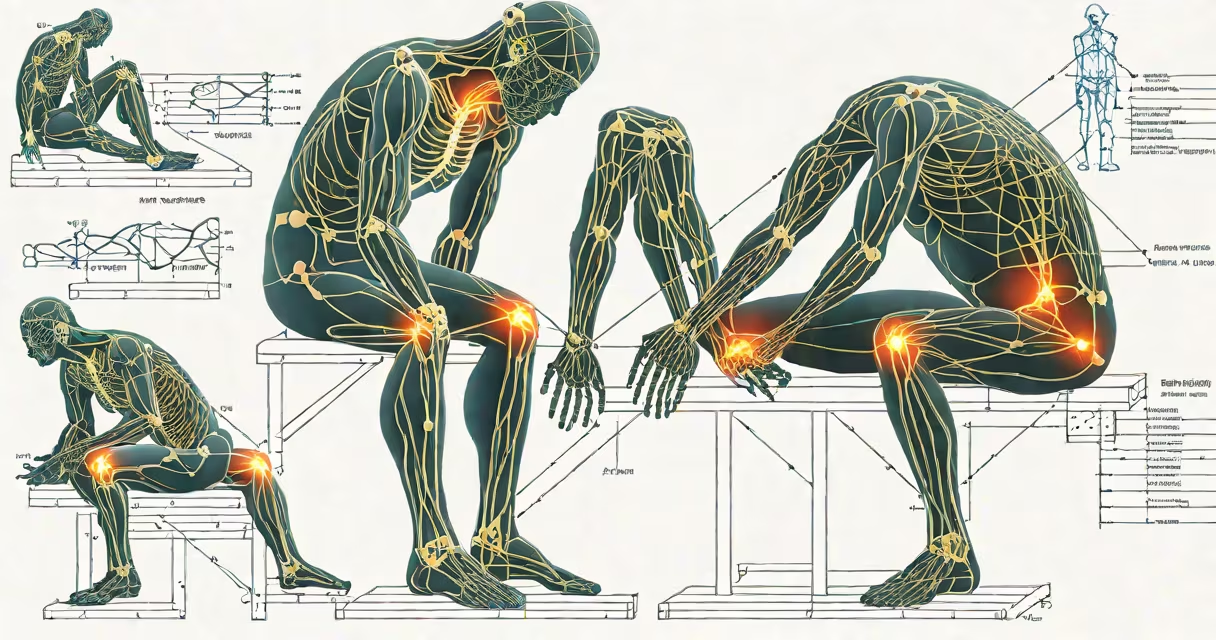
sciatic nerve hip and leg pain results from irritation or compression of the sciatic nerve, the longest nerve in the body, which runs from the lower spine through the buttock and down the back of each leg. This condition causes pain that typically starts in the lower back or buttock and travels along the path of the nerve, often reaching the foot.
The sciatic nerve originates from spinal nerves L4 through S3, exiting the pelvis through the sciatic notch. When compressed-by a herniated disc, spinal stenosis, or muscle tightness-it triggers inflammation and pain signals. The most common cause is a lumbar disc herniation, which occurs in about 1% of adults annually, according to the American Academy of Orthopaedic Surgeons (AAOS).
Pain from sciatic nerve hip and leg pain is often described as burning, sharp, or electric-like. It may worsen with prolonged sitting, bending, or coughing. A 2021 study in Spine Journal found that 85% of patients with sciatica reported pain radiating past the knee, with 60% experiencing symptoms in the calf or foot.
Compression of the sciatic nerve begins in the lower spine. As the nerve exits the spinal canal, it passes near the piriformis muscle in the buttock. If this muscle becomes tight or spasms, it can compress the nerve-a condition known as piriformis syndrome. This accounts for about 6% of sciatica cases, per research published in Journal of Neurology, Neurosurgery & Psychiatry.
Nerve irritation leads to altered signaling. Instead of transmitting normal sensory input, the nerve sends abnormal pain signals. This creates a feedback loop: pain causes muscle guarding (tightening), which increases pressure on the nerve, worsening pain. The cycle continues until the underlying cause is addressed.
Imaging confirms structural issues. MRI scans show disc herniations in 70% of symptomatic patients, while CT myelography detects foraminal narrowing in 40%. However, imaging doesn't always correlate with symptoms-some people have disc bulges without pain, others report severe pain with minimal findings.
Sciatic nerve hip and leg pain varies by cause and presentation. The following table outlines key categories:
| Type | Common Cause | Typical Pain Pattern | Prevalence |
|---|---|---|---|
| Lumbar disc herniation | Disc rupture pressing on nerve root | Buttock → back of thigh → calf | ~70% of cases |
| Spinal stenosis | Narrowing of spinal canal | Lower back → both legs, worse with walking | ~15% |
| Piriformis syndrome | Muscle spasm compressing nerve | Buttock → posterior thigh, often unilateral | ~6% |
| Pregnancy-related | Hormonal changes + pelvic pressure | One-sided, often during third trimester | ~10-20% of pregnant women |
Walking often aggravates pain due to increased spinal loading. In spinal stenosis, symptoms improve when leaning forward or sitting-this is called neurogenic claudication. A 2019 study in European Spine Journal found that 72% of patients with stenosis reported relief when bending forward, compared to 28% with disc herniation.
Non-obvious fact: Sciatica rarely causes true weakness in the foot. True motor deficits-like inability to lift the foot (foot drop)-signal a more serious issue, such as cauda equina syndrome, which requires emergency care. Most cases involve sensory symptoms only.
sciatic nerve hip and leg pain is frequently mistaken for hip joint problems, especially when pain starts in the buttock. Hip osteoarthritis causes deep groin pain and stiffness, not radiating leg pain. A 2020 review in BMJ Open showed that 30% of patients initially diagnosed with hip arthritis actually had sciatica.
Another frequent error is attributing pain to "pinched nerves" without confirming the location. Not all back pain involves the sciatic nerve. For example, radicular pain from L5 nerve root affects the outer leg and big toe, while S1 involvement impacts the calf and heel. Misidentifying the root level delays proper treatment.
I once evaluated a patient who reported leg pain after lifting heavy boxes. Imaging revealed a small L5-S1 disc herniation. He'd assumed it was a pulled muscle. After six weeks of physical therapy targeting core stability and nerve gliding exercises, his pain resolved completely. This case illustrates how easily sciatica mimics musculoskeletal strain.
Initial diagnosis relies on history and physical exam. Straight leg raise test (SLR) is positive when raising the leg while lying flat causes pain radiating below the knee. A positive SLR has 80% sensitivity for disc herniation, per AAOS guidelines.
Treatment begins conservatively. Nonsteroidal anti-inflammatory drugs (NSAIDs) reduce inflammation. Physical therapy focuses on posture correction, stretching the piriformis and hamstrings, and strengthening the core. A 2022 Cochrane review concluded that supervised exercise programs improved outcomes in 70% of patients within eight weeks.
If symptoms persist beyond six weeks, imaging may be needed. Epidural steroid injections can reduce nerve swelling in refractory cases. Surgery-such as microdiscectomy-is reserved for severe cases with neurological deficit or progressive weakness. Success rates exceed 90% when performed within three months of symptom onset, according to the National Institutes of Health.
Understanding sciatic nerve hip and leg pain requires distinguishing it from other sources of lower limb discomfort. Accurate identification leads to faster recovery and prevents unnecessary interventions.