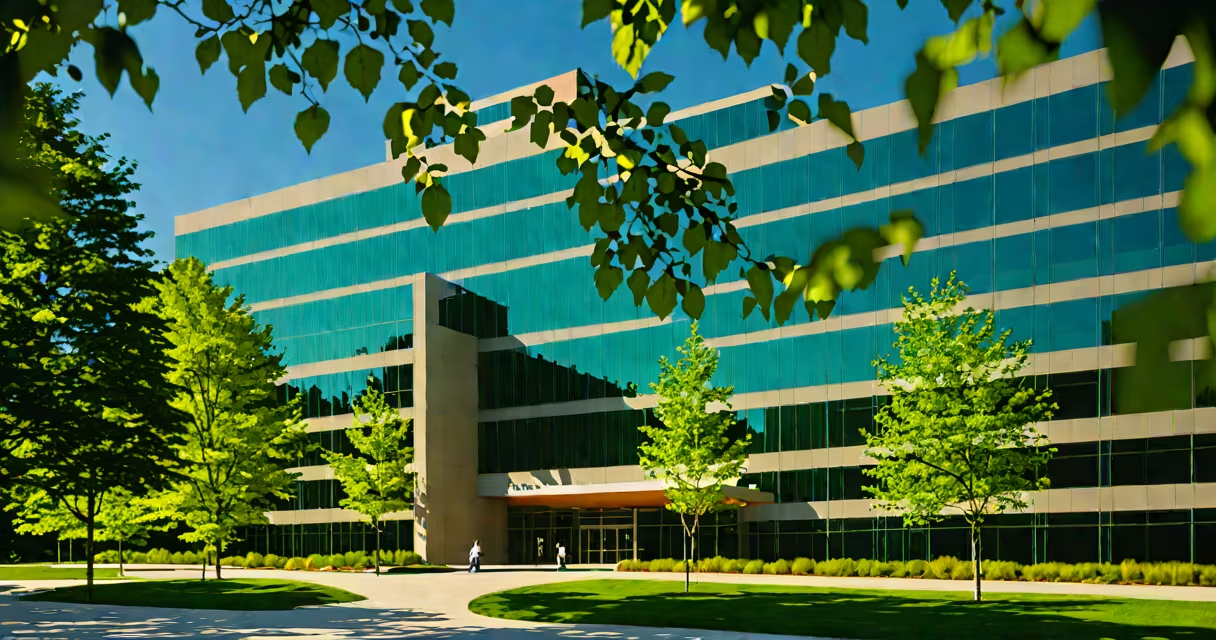
The Rogel Cancer Center is a National Cancer Institute-designated complete cancer center located at the University of Michigan in Ann Arbor. It integrates patient care, research, and education to advance cancer prevention, diagnosis, and treatment.
As one of only 72 NCI-recognized complete centers in the United States, Rogel meets rigorous standards for scientific excellence, innovation, and translational impact. The center focuses on reducing cancer incidence and mortality through interdisciplinary collaboration among clinicians, scientists, and public health experts.
It operates under the umbrella of the University of Michigan Health System and serves patients from across Michigan and beyond. Its mission includes delivering personalized care while advancing clinical research that leads to new therapies and improved outcomes.
Rogel Cancer Center functions as a hub connecting clinical oncology, laboratory science, and population health. Patients receive care through specialized clinics tailored to specific cancer types-such as breast, prostate, lung, and hematologic malignancies-each led by multidisciplinary teams.
Each team includes medical oncologists, radiation oncologists, surgeons, pathologists, genetic counselors, and supportive care specialists. Treatment plans are developed using molecular profiling of tumors, which identifies genetic mutations driving cancer growth. This enables targeted therapy selection based on individual tumor biology.
For example, a patient with metastatic melanoma may undergo genomic sequencing of their tumor tissue. If a BRAF V600E mutation is detected, they qualify for FDA-approved BRAF inhibitors like vemurafenib. Rogel's clinical trial program offers access to investigational agents not available elsewhere, including immunotherapies and combination regimens.
The center comprises multiple divisions focused on distinct aspects of cancer care:
Research at Rogel spans basic science to phase III clinical trials. The center houses over 150 principal investigators supported by $180 million in annual federal funding, primarily from the National Institutes of Health (NIH).
A key infrastructure component is the Rogel Cancer Center Biorepository, which stores over 200,000 biospecimens collected from patients undergoing treatment. These samples support long-term studies on biomarkers, drug resistance, and survivorship.
Rogel Cancer Center categorizes its programs by disease site and therapeutic approach. The following table outlines major program areas and their primary focus:
| Program Area | Primary Focus | Notable Initiative |
|---|---|---|
| Breast Cancer | Early detection, neoadjuvant therapy, HER2-targeted agents | Michigan Breast Cancer Registry (MBCR) |
| Hematologic Malignancies | Leukemia, lymphoma, myeloma; CAR T-cell therapy | Center for Cell Therapy and Immune Engineering |
| Lung Cancer | Non-small cell lung cancer (NSCLC); EGFR/ALK inhibitors | Michigan Lung Screening Program |
| Precision Oncology | Genomic profiling, liquid biopsies, adaptive clinical trials | Michigan Cancer Consortium (MCC) |
One non-obvious distinction: Rogel does not operate standalone outpatient clinics. Instead, patients are seen within affiliated specialty departments-such as U-M Internal Medicine or Surgery-ensuring smooth integration between medical subspecialties and oncology care.
This model reduces fragmentation and improves coordination. For instance, a patient with pancreatic cancer receives chemotherapy from a medical oncologist, surgical evaluation from a GI surgeon, and nutritional support from a registered dietitian-all within the same visit cycle.
Many assume Rogel Cancer Center is a standalone hospital. It is not. It is a research and clinical program embedded within the University of Michigan Health System. Patients are treated at U-M's main hospital or the Rogel Outpatient Center, both located on the Ann Arbor campus.
Another misconception is that all treatments are experimental. While Rogel leads in clinical trial enrollment-over 300 active trials at any time-most patients receive standard-of-care therapies. Clinical trials are offered only after thorough discussion of risks, benefits, and alternatives.
Rogel does not provide primary care. Patients must have a referring physician or be enrolled in a U-M provider network to access services. Referrals are accepted from community oncologists, family physicians, and other specialists.
In 2022, a 58-year-old woman from Grand Rapids was diagnosed with stage III triple-negative breast cancer. Her local oncologist referred her to Rogel Cancer Center for multidisciplinary evaluation.
At Rogel, she underwent tumor genomic testing that revealed a BRCA1 mutation. Based on this result, she qualified for a PARP inhibitor trial (NCT04863585) in combination with chemotherapy. After six cycles, imaging showed a complete metabolic response.
She continued on maintenance therapy and remains in remission after 24 months. Her case exemplifies how Rogel combines diagnostic precision, clinical trial access, and coordinated care to improve outcomes.
I observed a multidisciplinary tumor board meeting at Rogel in 2023. A panel of 12 specialists reviewed a complex case involving a rare sarcoma. Over 45 minutes, they discussed pathology reports, imaging findings, and potential treatment options-including off-label drug use and eligibility for a national trial.
One clinician noted, "We don't decide based on one test. We weigh biology, comorbidities, and patient goals." That moment clarified how Rogel balances evidence-based practice with individualized decision-making.
Rogel Cancer Center plays a critical role in advancing cancer care through innovation and equity. It ranks among the top 10 institutions nationally for NIH funding in cancer research, according to the National Cancer Institute's 2023 report.
Its commitment to diversity in clinical trials is notable. In 2023, 38% of participants in its phase II trials were from underrepresented racial and ethnic groups-well above the national average of 24%, per the American Society of Clinical Oncology (ASCO) 2023 Diversity in Clinical Trials Survey.
Patients benefit from access to modern therapies and expert consultation. Researchers gain tools to accelerate discovery. Community members see improved survival rates and reduced disparities.
The Rogel Cancer Center exemplifies how academic medicine can deliver high-impact cancer care. It is not merely a treatment facility-it is a living system where science, compassion, and policy converge.