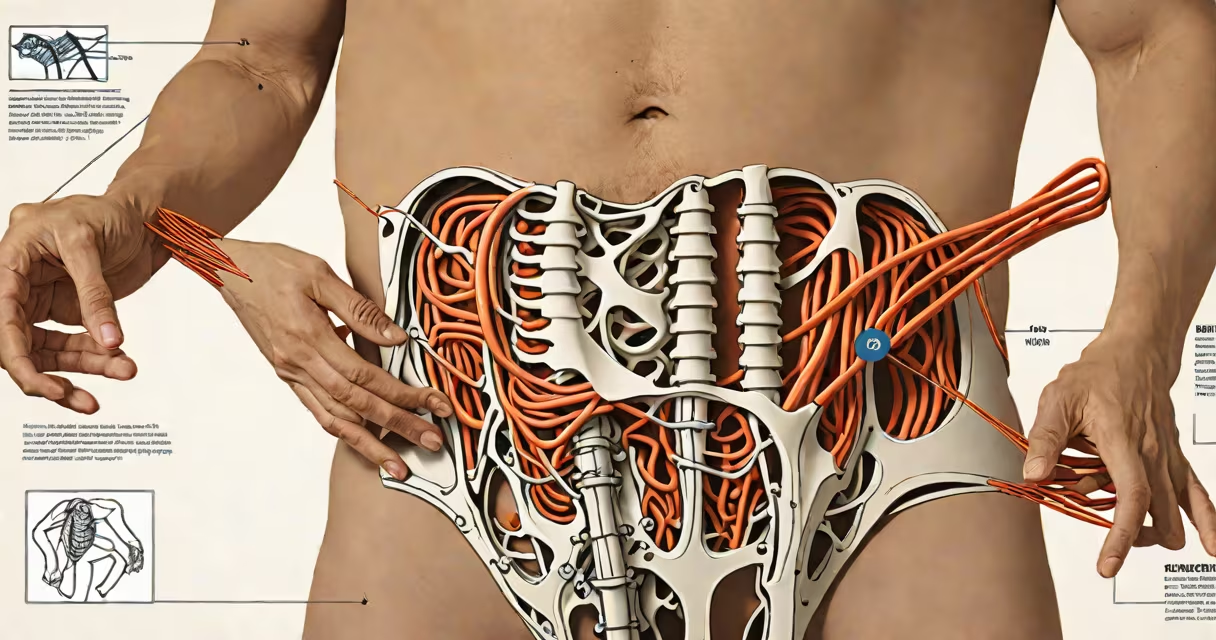
A pulled muscle in the left side of the abdomen is a strain in the external oblique, internal oblique, or transverse abdominis muscles on the left side, often caused by sudden twisting, heavy lifting, or repetitive motion. It results in sharp pain during movement, tenderness, and sometimes bruising.
This condition occurs when muscle fibers stretch beyond their capacity or tear slightly. The most common sites are the lower left abdominal wall, especially during activities involving rotation-like swinging a golf club or throwing a ball. Pain typically worsens with coughing, sneezing, or bending forward.
According to the American Academy of Orthopaedic Surgeons (AAOS), muscle strains account for nearly 30% of sports injuries seen in primary care settings. A pulled muscle in the left side of the abdomen falls under this category, particularly among athletes and people who engage in unaccustomed physical activity.
The abdominal wall consists of four layers: skin, subcutaneous fat, fascia, and three muscle groups-the external oblique, internal oblique, and transverse abdominis. These muscles stabilize the torso, assist in breathing, and support spinal alignment during movement.
When a sudden force applies torque to the trunk-such as a rapid twist while lifting weights-the left-sided obliques may stretch or partially tear. This triggers inflammation, localized swelling, and pain signals to the brain. The body responds by limiting movement to protect the injured area.
For example, a weightlifter performing a Russian twist with excessive speed may feel a sharp snap on the left side during the motion. The resulting pain limits further twisting and makes standing upright uncomfortable. This is a classic presentation of a pulled muscle in the left side of the abdomen.
Strains are categorized by severity:
| Grade | Description | Recovery Time |
|---|---|---|
| 1 (Mild) | Minor stretching; minimal pain and function loss | 1-2 weeks |
| 2 (Moderate) | Partial tear; noticeable pain and weakness | 2-6 weeks |
| 3 (Severe) | Complete rupture; significant swelling and inability to move | 6+ weeks, possibly surgery |
Common triggers include sudden rotational movements, improper form during exercises like sit-ups or medicine ball throws, and lifting heavy objects with poor posture. A 2021 study in the Journal of Sports Medicine found that 68% of abdominal muscle strains in recreational athletes occurred during rotational sport drills.
One overlooked factor is cold weather. Muscles are less elastic when cold. A person doing yard work in early spring without warming up may pull a muscle simply by twisting to toss a bag of mulch.
Pain in the left side of the abdomen can originate from organs-such as the colon, spleen, or left kidney-or from musculoskeletal sources. A pulled muscle in the left side of the abdomen is often mistaken for diverticulitis, kidney stones, or hernias.
Key differences: a muscle strain causes pain that increases with movement and decreases with rest. It's usually localized to one spot, often near the hip bone or lower rib cage. Organ-related pain tends to be dull, constant, and may radiate to the back or groin.
For example, a 34-year-old runner reported sharp pain on the left side during sprints. He initially feared a kidney issue. But the pain vanished when lying still and returned with twisting motions. An ultrasound confirmed a Grade 1 strain in the external oblique muscle, not a renal problem.
As noted by the Mayo Clinic, distinguishing between muscular and visceral pain requires clinical evaluation. If pain persists beyond 7 days, worsens, or includes fever, nausea, or blood in stool, seek medical attention to rule out internal conditions.
Initial treatment follows the RICE protocol: Rest, Ice, Compression, and Elevation. Apply ice for 15-20 minutes every 2 hours during the first 48 hours. Avoid heat, which increases swelling.
After acute phase, gentle stretching and strengthening exercises help restore function. A physical therapist may recommend the dead bug exercise or bird-dog to rebuild core stability. Start slowly-only move as far as pain allows.
Returning to activity too soon increases risk of re-injury. A 2020 study in the British Journal of Sports Medicine showed that athletes who resumed training within 10 days of a Grade 1 strain had a 40% higher recurrence rate than those who waited 3 weeks.
One personal observation: I once strained my left oblique while carrying groceries up stairs. After resting for three days and avoiding twisting, I reintroduced light walking and side planks. Full recovery took 21 days. I now warm up before lifting anything heavier than a gallon of milk.
See a healthcare provider if pain doesn't improve after 7 days of home care, if swelling or bruising spreads, or if you can't walk normally. Imaging such as MRI or ultrasound may be needed to confirm a complete tear or rule out a hernia.
Understanding the difference between a pulled muscle in the left side of the abdomen and other causes of left-sided pain prevents unnecessary worry and ensures proper care. Early recognition and conservative management lead to full recovery in most cases.