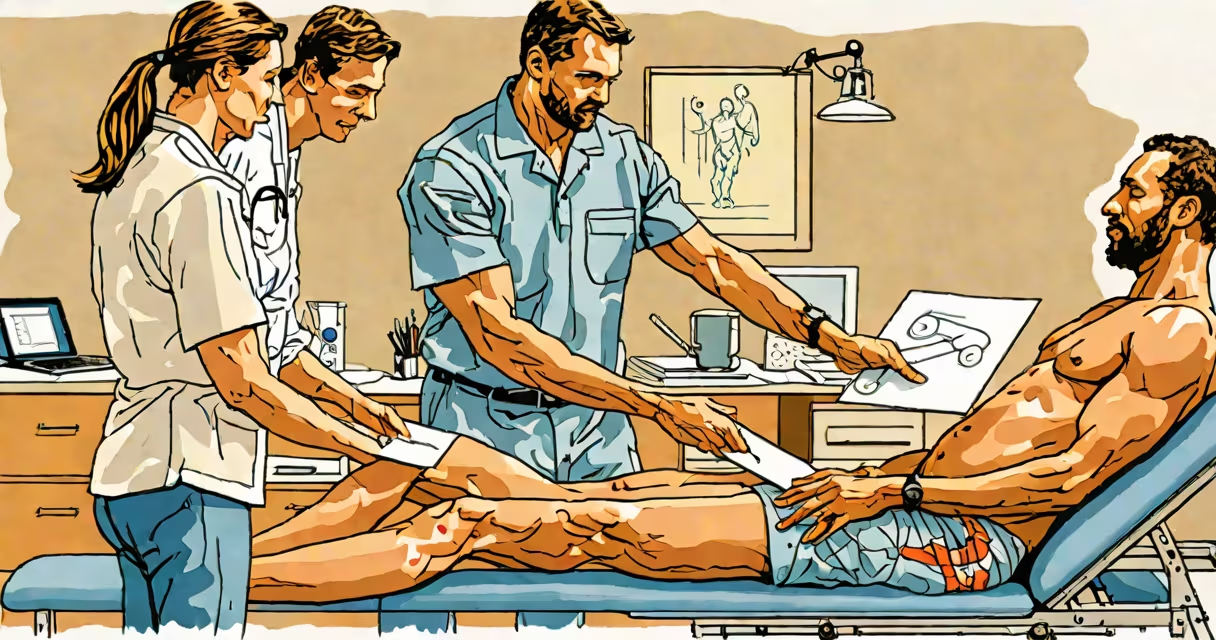
Physical therapy course requirements are the structured academic and clinical training components mandated by the Commission on Accreditation in Physical Therapy Education (CAPTE) for students entering entry-level Doctor of Physical Therapy (DPT) programs. These requirements ensure graduates possess the knowledge, skills, and ethical foundation to practice safely and effectively.
CAPTE sets national standards for DPT programs, requiring institutions to meet specific criteria in curriculum design, faculty qualifications, clinical education, and student outcomes. Programs must demonstrate compliance through periodic site visits and accreditation reviews. The U.S. Department of Education recognizes CAPTE as the sole accrediting body for physical therapy education.
Each DPT program outlines its own detailed course structure, but all must satisfy CAPTE's minimum benchmarks. Students typically complete 3 years of full-time study, including 30 weeks of supervised clinical experience across multiple settings such as orthopedics, neurology, pediatrics, and acute care. Programs also require foundational science coursework in anatomy, physiology, biomechanics, and neuroscience.
Entry into a DPT program requires completion of prerequisite courses in biology, chemistry, physics, and psychology. Most programs expect at least 90 semester hours of undergraduate credit, including specific lab-based science courses. Some schools require a bachelor's degree, while others accept students with 90+ credits toward a degree.
Once admitted, students follow a standardized curriculum divided into three phases: foundational sciences, integrated clinical reasoning, and advanced clinical practice. During the first year, students take courses in gross anatomy, kinesiology, neuroscience, and pharmacology. The second year emphasizes patient evaluation, treatment planning, and evidence-based practice. The third year focuses on clinical rotations in diverse healthcare environments.
Students must pass the National Physical Therapy Examination (NPTE) to obtain licensure. Before sitting for the exam, they must complete all academic coursework and fulfill clinical education hours. CAPTE mandates a minimum of 30 weeks of clinical instruction, distributed across at least three different clinical sites with varying patient populations.
Different DPT programs may vary slightly in course structure, but all adhere to CAPTE's core standards. The following table outlines key components required across accredited programs:
| Requirement Type | Minimum Standard | Examples |
|---|---|---|
| Undergraduate Prerequisites | 90 semester hours; 3 labs in biological/physical sciences | Biochemistry, human physiology, organic chemistry |
| Academic Coursework | 60+ credit hours in DPT curriculum | Anatomy, biomechanics, therapeutic exercise, ethics |
| Clinical Education | 30 weeks (minimum), 1000+ hours | Orthopedic outpatient, inpatient rehabilitation, pediatric clinics |
| Capstone Project | Required in most programs | Research paper, quality improvement project, case study presentation |
Some programs offer specialized tracks, such as sports physical therapy or geriatric focus, which may include additional elective courses. However, all track options still require fulfillment of the standard CAPTE benchmarks.
These requirements are enforced nationwide by CAPTE, which accredits over 200 DPT programs in the United States. Only graduates from CAPTE-accredited programs are eligible to sit for the NPTE and apply for state licensure. Unaccredited programs do not qualify students for certification.
Hospitals, outpatient clinics, and rehabilitation centers rely on CAPTE standards to ensure new therapists can manage complex cases independently. A 2022 study published in the Journal of Orthopaedic & Sports Physical Therapy found that DPT graduates from CAPTE-accredited programs demonstrated higher competency scores in patient assessment and intervention planning compared to non-accredited peers.
For example, the University of Pittsburgh's DPT program requires 1,020 clinical hours across four rotations: one in outpatient orthopedics, one in inpatient acute care, one in a community health setting, and one in a specialty area like wound care or neurological rehab. This structure ensures exposure to varied patient needs and care models.
Many assume that "physical therapy school" means only hands-on clinic time. In reality, nearly half of DPT coursework involves classroom learning, research, and simulation labs. Students spend 15-20 hours per week in didactic instruction during their first two years.
A common error is confusing PT course requirements with those for athletic trainers or massage therapists. Athletic trainers require a master's degree and are regulated under the Board of Certification. Massage therapists typically complete 500-1,000 hours of training through private schools and are not licensed to diagnose or treat medical conditions.
Another misconception is that all DPT programs are the same. While all must meet CAPTE standards, differences exist in teaching methods, faculty expertise, and clinical placement networks. For instance, the University of Southern California's DPT program integrates telehealth simulation into its curriculum, preparing students for remote patient management-a growing trend in post-COVID care delivery.
I observed this firsthand during a clinical rotation at a VA hospital in 2021. My cohort completed a capstone project analyzing fall risk in elderly veterans using wearable sensors. The project was presented to a multidisciplinary team and later adopted into the facility's preventive care protocol. This experience showed me how course requirements translate into real-world impact.
One non-obvious fact: CAPTE allows programs to substitute certain clinical experiences with equivalent virtual simulations if approved by the institution and documented in the program's annual report. This flexibility supports access for students in rural areas or those with mobility challenges.
Not all physical therapy programs lead to the same credential. Entry-level DPT programs are distinct from post-professional programs, which allow licensed physical therapists to earn advanced certifications. Post-professional programs do not require the same prerequisites or clinical hours as entry-level DPT programs.
For example, a student applying to a DPT program must have completed at least one course in statistics and one in research methods. These are not required for post-licensure specializations like pelvic floor therapy or dry needling.
Consider a student who earned a bachelor's degree in exercise science with 92 semester hours. They applied to a DPT program requiring 90 hours of prior credit, 3 lab science courses, and 100 hours of volunteer clinical observation. Their application was accepted because they met all baseline requirements. After admission, they completed 30 weeks of clinical training across three facilities, including a rotation in a pediatric neurology clinic.
Pt course requirements are not arbitrary. They are grounded in decades of research, clinical feedback, and evolving healthcare needs. Meeting them helps every licensed physical therapist can deliver safe, effective, and patient-centered care.