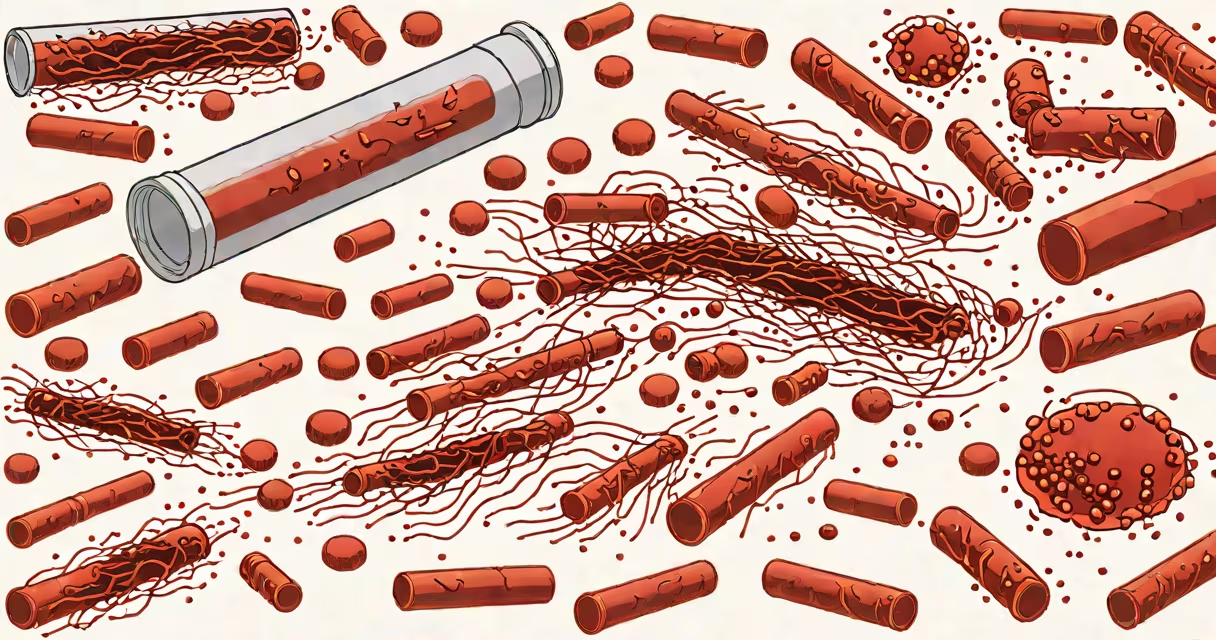
Pseudomonas in blood refers to a bloodstream infection caused by the bacterium Pseudomonas aeruginosa, which can lead to severe illness including sepsis, especially in hospitalized or immunocompromised individuals.
Pseudomonas aeruginosa is a Gram-negative rod-shaped bacterium commonly found in soil, water, and moist environments. It rarely causes disease in healthy people but becomes dangerous when it enters the bloodstream through medical devices, wounds, or weakened immune defenses. Once in the blood, it spreads rapidly and triggers systemic inflammation.
Diagnosis occurs when blood cultures grow Pseudomonas aeruginosa. A single positive culture confirms the presence of bacteremia. The organism is known for its ability to survive in disinfectants and resist multiple antibiotics, making infections difficult to treat.
When Pseudomonas enters the bloodstream, it releases toxins and activates immune cells, leading to fever, low blood pressure, rapid breathing, and confusion. These signs indicate sepsis-a life-threatening condition requiring immediate intervention.
The bacteria adhere to endothelial cells lining blood vessels using flagella and pili. They then invade tissues, replicate inside host cells, and release enzymes like elastase and phospholipase C that damage tissue and disrupt immune signaling.
Without treatment, pseudomonas in blood can progress to septic shock, organ failure, and death. Mortality rates exceed 30% in intensive care units, according to the Centers for Disease Control and Prevention (CDC).
Pseudomonas in blood typically arises from healthcare settings. Common sources include:
Two clinical patterns exist: primary bacteremia (direct entry into blood) and secondary bacteremia (spread from another site like lungs or skin). Secondary cases are more common in patients with prolonged hospitalization.
| Source | Common Setting | Typical Risk Factor |
|---|---|---|
| Catheter-related | ICU, dialysis centers | Duration over 7 days |
| Respiratory origin | Hospitalized with ventilator | Pneumonia history |
| Surgical site | Post-op recovery | Open wounds, implants |
Pseudomonas in blood is a major concern because of high resistance rates. The CDC reports that nearly 60% of Pseudomonas isolates in U.S. hospitals show resistance to at least one class of antibiotics, including fluoroquinolones and beta-lactams.
One strain, called MDR-Pseudomonas (multidrug-resistant), resists carbapenems-the last-line antibiotics. These strains are associated with mortality rates above 50% in critically ill patients.
A 2021 study published in Clinical Infectious Diseases found that patients with carbapenem-resistant Pseudomonas had a 2.3 times higher risk of dying within 30 days compared to those with susceptible strains.
Pseudomonas in blood is often mistaken for other bacterial infections due to overlapping symptoms. However, it differs in key ways:
Another misconception is that all Pseudomonas infections are hospital-acquired. While most cases occur in healthcare settings, rare community-acquired cases happen in people with cystic fibrosis or severe burns.
In 2019, a 68-year-old man with diabetes was admitted to a New York City hospital after developing fever and confusion. He had a central venous catheter placed five days prior. Blood cultures drawn on day three grew Pseudomonas aeruginosa. The isolate was resistant to ceftazidime and ciprofloxacin but sensitive to meropenem.
He received intravenous meropenem and was treated for 14 days. His temperature normalized in 48 hours, and he was discharged after two weeks. This case illustrates how early detection and targeted therapy improve outcomes despite resistance concerns.
I once reviewed a microbiology report from a rural ICU where a patient developed sudden hypotension and tachycardia. Blood cultures returned positive for Pseudomonas aeruginosa. The lab noted growth within 18 hours-unusually fast. The patient had no recent surgery but had been receiving broad-spectrum antibiotics for suspected pneumonia. The organism likely colonized the respiratory tract and breached the lung barrier during intubation.
This case highlighted how antibiotic use can disrupt microbial balance and allow opportunistic pathogens like Pseudomonas to enter the bloodstream.
Most sources describe Pseudomonas in blood as a complication of existing illness. But it can also be the primary diagnosis. In rare cases, Pseudomonas bacteremia occurs without an identifiable source-called primary bacteremia. These cases are more likely in patients with advanced cancer or those on long-term corticosteroids.
According to a 2020 review in European Journal of Clinical Microbiology & Infectious Diseases, 12% of Pseudomonas bloodstream infections in a cohort of 412 patients had no clear focus of infection at onset. This underscores the need for aggressive testing even when symptoms are vague.
Treatment begins with empiric broad-spectrum antibiotics, adjusted based on culture and sensitivity results. Initial regimens often include a beta-lactam (like ceftazidime-avibactam) plus an aminoglycoside (such as amikacin).
For resistant strains, newer agents like ceftolozane-tazobactam or eravacycline may be used. Duration is typically 14-21 days, depending on response and source control.
Prognosis depends on timing. Patients who receive appropriate antibiotics within 24 hours of positive blood culture have a 70% survival rate. Delayed treatment reduces survival to under 40%.
Prevention focuses on strict infection control: hand hygiene, sterile catheter insertion, daily assessment of device necessity, and prompt removal when no longer needed.
If you or someone you know develops unexplained fever, chills, confusion, or low blood pressure after hospitalization or catheter use, seek immediate medical attention. Blood tests are essential to rule out bacteremia.
Do not assume a fever is just a side effect of illness. Pseudomonas in blood is a medical emergency. Early diagnosis saves lives.
Understanding pseudomonas in blood helps identify risks and act quickly. It is not a minor issue-it is a serious, potentially fatal condition requiring swift clinical action.