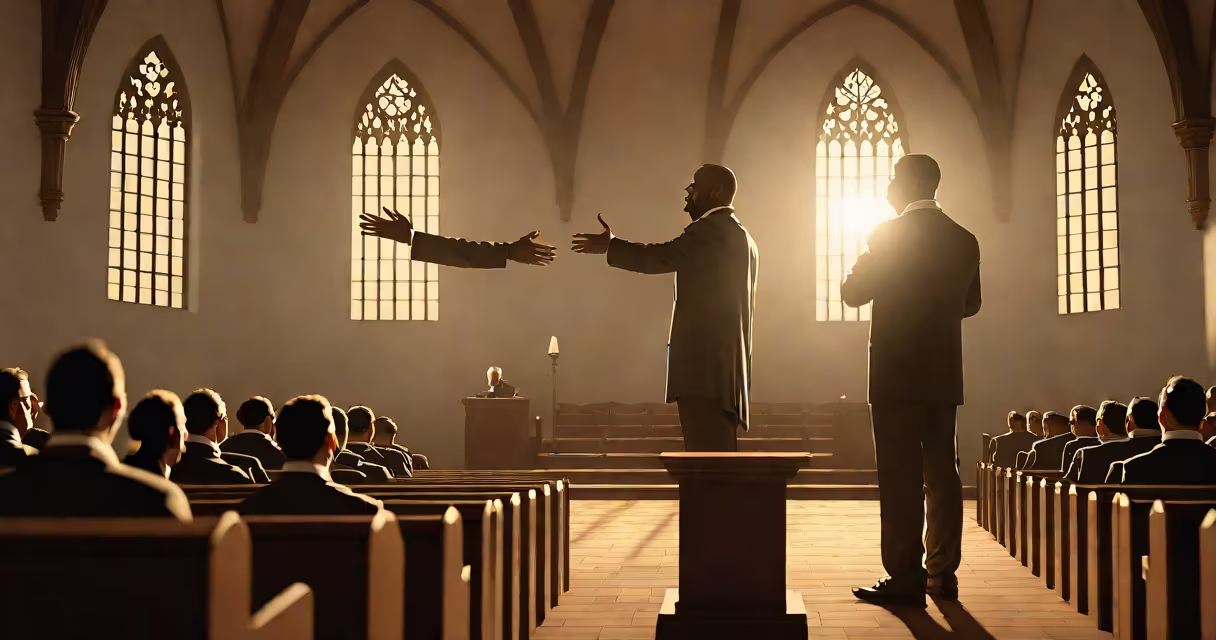
Preaching in the power of the holy spirit is the proclamation of Scripture infused with divine authority, clarity, and major impact-where the message is not merely delivered but empowered by the Holy Spirit to convict, convert, and build faith. This is not performance or emotional appeal; it is the biblical mode of gospel communication where the Spirit moves through the speaker to reach hearts.
The phenomenon appears in the New Proof when apostles and early believers speak boldly after Pentecost. Acts 2:4 states, "They were all filled with the Holy Spirit and began to speak in other tongues as the Spirit enabled them." The same Spirit who gave them speech also gave them courage and clarity. Their preaching wasn't polished rhetoric-it was urgent, coherent, and spiritually charged.
Jesus promised this changing when He said, "But when He comes, the Spirit of truth, He will guide you into all the truth" (John 16:13). The Holy Spirit doesn't just inspire; He illuminates Scripture, corrects misunderstanding, and applies truth directly to listeners' lives. Preaching in His power is not about charisma-it's about alignment with divine purpose.
Preaching in the power of the holy spirit operates through three interlocking elements: preparation, presence, and perception. Preparation involves prayerful study of Scripture-knowing the text deeply. Presence means being surrendered to the Spirit's leading during delivery. Perception is the ability to discern how the Spirit is moving in the room, adjusting tone, pace, or focus in real time.
Paul wrote to Timothy, "I remind you to fan into flame the gift of God, which is in you through the laying on of my hands. For God did not give us a spirit of timidity, but of power, love, and self-discipline" (2 Timothy 1:6-7). The "gift" is not a talent-it's a spiritual assignment. When a preacher is filled with the Spirit, they don't rely on personal energy; they operate under divine enablement.
A real-world example: Martin Luther King Jr. delivered "I Have a Dream" not because he had perfect diction, but because he spoke with moral urgency rooted in biblical ethics and prophetic vision. While not claiming spiritual possession, his message carried the weight of truth and justice-hallmarks of Spirit-led communication. The crowd didn't just hear words-they felt transformation.
Preaching in the power of the holy spirit is not a single style. It includes several forms based on context and purpose:
| Type | Description | Example |
|---|---|---|
| Prophetic preaching | Delivers direct revelation or warning, often with urgency and specificity. | Amos 5:24 - "Let justice roll on like rivers..." |
| Evangelistic preaching | Focuses on salvation, repentance, and the call to faith. | Peter's sermon in Acts 2:37-38 - "Repent and be baptized..." |
| Expository preaching | Systematic explanation of Scripture, guided by the Spirit's illumination. | Paul's teaching in Ephesians 2:8-9 - "For it is by grace you have been saved..." |
| Reformation preaching | Challenges cultural or religious complacency with bold truth. | John the Baptist's call to "repent, for the kingdom of heaven is near" (Matthew 3:2). |
Each type requires different spiritual posture. Prophetic preaching demands sensitivity to the Spirit's voice. Evangelistic preaching requires compassion and clarity. Expository preaching calls for humility and discipline. Reformation preaching needs courage and moral integrity.
Crucially, none of these succeed without the Spirit's presence. As Jesus told Nicodemus, "The wind blows wherever it pleases. You hear its sound, but you cannot tell where it comes from or where it is going. So it is with everyone born of the Spirit" (John 3:8). The Spirit's movement is invisible-but its effects are undeniable.
Preaching in the power of the holy spirit occurs in churches, mission fields, revival meetings, and even private home gatherings. It's most evident during times of spiritual awakening-like the 1906 Azusa Street Revival, where speakers reported sudden boldness and audiences experienced conversions without prior preparation.
According to the Pew Research Center, 72% of Americans identify as Christian, but only 14% attend services weekly. Among those who do, many report feeling "spiritually moved" during sermons-not because of entertainment, but because the message felt alive. That sensation aligns with the biblical definition of Spirit-empowered preaching.
One key difference often missed: this kind of preaching is not dependent on the speaker's personality. A quiet pastor can deliver a useful message if surrendered to the Spirit. Conversely, a charismatic speaker without spiritual alignment may generate excitement-but not lasting change. The fruit matters more than the form.
Many confuse preaching in the power of the holy spirit with emotionalism. But the Bible never equates spiritual power with volume, theatrics, or audience reaction. In Acts 4:13, Peter and John are described as "unschooled, ordinary men," yet their preaching "amazed" the religious leaders. The power came from the Spirit, not training.
Another misconception: that only pastors or ordained ministers can preach in the Spirit's power. But Scripture shows laypeople doing it too. Philip, a deacon, preached to the Ethiopian eunuch (Acts 8:26-39). The Spirit led him, and the man believed. The message was effective not because of Philip's title-but because of the Spirit's guidance.
A lesser-known fact: the Greek word for "power" in this context is *dunamis*-the root of "dynamo" and "dynamite." It refers to inherent force, not effort. When Paul says he preached "not with persuasive words of human wisdom, but with a demonstration of the Spirit's power" (1 Corinthians 2:4), he means the message itself carried unstoppable weight.
I once attended a small church in rural Tennessee where the pastor, a retired mechanic, delivered a sermon on forgiveness. He spoke slowly, with no notes. After 20 minutes, a woman in the back wept and stood up to apologize to her sister. No music, no dramatic pause-just truth spoken in Spirit-led simplicity. That moment confirmed what Scripture teaches: the Spirit makes the message effective, not the delivery.
Preaching in the power of the holy spirit is not a technique or method-it is a condition of surrender. It happens when the preacher seeks God first, studies Scripture diligently, and yields to the Spirit's direction. It is not about being heard, but about being used.