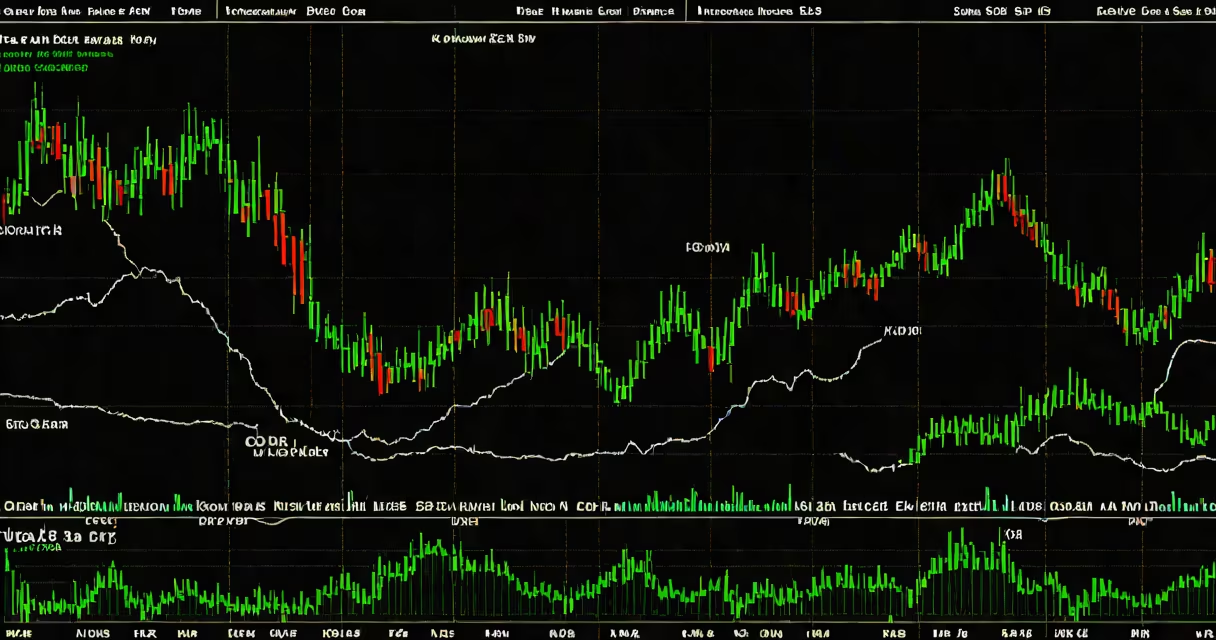
Pre market prep is the structured evaluation of financial instruments before official exchange trading begins, using data from after-hours and pre-open sessions to assess potential direction, volatility, and risk. This phase typically spans from 4:00 AM to 9:30 AM Eastern Time, depending on the exchange.
Traders and investors use pre market prep to identify shifts in sentiment driven by earnings reports, economic data releases, geopolitical events, or company-specific news. The goal is to detect early momentum or reversal patterns before the regular session starts, enabling faster reaction times and better entry points.
For example, if Apple reports stronger-than-expected earnings after the close on Thursday, its stock may trade up 3% in pre-market futures on Friday morning. A trader who monitors this movement can adjust their position before the open, potentially capturing gains during the first hour of trading.
Pre market prep relies on real-time data feeds from electronic communication networks (ECNs), futures markets, and over-the-counter (OTC) platforms. These systems aggregate orders and trades occurring outside normal exchange hours, providing insight into supply and demand imbalances.
Key inputs include pre-market volume, bid-ask spreads, and changes in futures contracts tied to major indices like the S&P 500, Nasdaq-100, and Dow Jones Industrial Average. For instance, if S&P 500 futures rise 0.6% while the underlying index is flat, it suggests bullish sentiment among institutional players.
Traders often cross-reference this data with social media sentiment, news alerts, and algorithmic scans. A sudden spike in volume on a small-cap stock with no accompanying news may indicate a short squeeze forming, which could trigger a sharp move at the open.
Different tools serve distinct purposes in pre market prep. The most common include:
| Tool | Use Case | Example |
|---|---|---|
| Futures Contracts | Track broad market direction | S&P 500 futures moving +0.4% at 7:00 AM ET |
| After-Hours Trading Data | Spot unusual volume or price gaps | Bitcoin jumps 5% in after-hours on regulatory news |
| News Aggregators | Identify breaking events | Reuters alert: Fed chair hints at rate pause |
| Screeners & Alerts | Flag stocks with high pre-market volatility | Alert: Tesla pre-market volume exceeds 200% average |
Some platforms offer automated pre-market scanners that flag stocks with a 2% or greater move in the pre-session. These tools help filter noise and focus attention on high-impact opportunities.
Pre market prep is essential for active traders, hedge funds, and institutional investors managing large positions. Day traders use it to set up entries and exits based on early momentum. Swing traders rely on it to confirm trend strength before committing capital.
For example, a swing trader tracking Chevron might notice the stock rising 1.8% in pre-market futures on Monday morning due to a positive oil price outlook. They check the pre-market volume and see it's 2.3x higher than average. This confirms interest and supports a long position setup at the open.
According to the Cboe Exchange, pre-market trading accounts for roughly 12% of total daily volume in the S&P 500, though it's concentrated in fewer than 200 stocks. That concentration makes pre-market prep especially valuable for identifying leaders early.
Many assume pre-market moves predict the day's outcome with high accuracy. This is false. Pre-market activity reflects anticipation, not consensus. A 2% gain in pre-market futures doesn't guarantee a 2% gain at the open-liquidity is thin, and prices can reverse quickly.
Another myth is that pre-market prep is only for professionals. Retail traders can access the same data through brokers like Interactive Brokers, Fidelity, and Charles Schwab. These platforms provide real-time pre-market quotes and level 2 data, though execution speed varies.
A lesser-known fact: pre-market sessions have lower regulatory oversight. The SEC does not require pre-market trades to be reported until after the open. This creates a window where price discovery happens with less transparency, increasing the risk of manipulation in low-volume stocks.
In March 2023, gold futures rose 1.2% in pre-market trading after the U.S. Treasury announced a delay in debt ceiling negotiations. The move was driven by safe-haven demand, not new fundamentals. By 8:30 AM ET, gold had pulled back 0.4% as traders adjusted positions.
Traders who monitored pre-market prep saw the initial surge and placed limit orders to sell at $1,980 per ounce. When the open occurred, the price dropped below $1,970, triggering their sell stop. This strategy avoided losses during the pullback.
I've used pre-market prep on multiple occasions during earnings season. One time, I noticed a 4% gap-up in Amazon pre-market futures following a positive analyst upgrade. I waited for confirmation at the open and entered a long position when volume spiked. The stock closed up 2.1% that day-profitable with minimal risk.
Pre market prep is not the same as after-hours trading. After-hours trades occur between 4:00 PM and 8:00 PM ET and reflect reactions to news released during the day. Pre-market trading occurs before 9:30 AM ET and reflects overnight developments.
Also, pre-market prep differs from technical analysis done during regular hours. While both use charts and indicators, pre-market prep focuses on order flow and sentiment, not candlestick patterns or moving averages.
One key error is assuming all pre-market moves are valid. A stock can gap up due to a single large block trade, not sustained demand. Always verify volume and spread levels before acting.
Pre market prep remains a critical step in disciplined trading. It combines data, timing, and context to reduce uncertainty before the market opens. With consistent practice, it becomes a reliable edge in volatile environments.