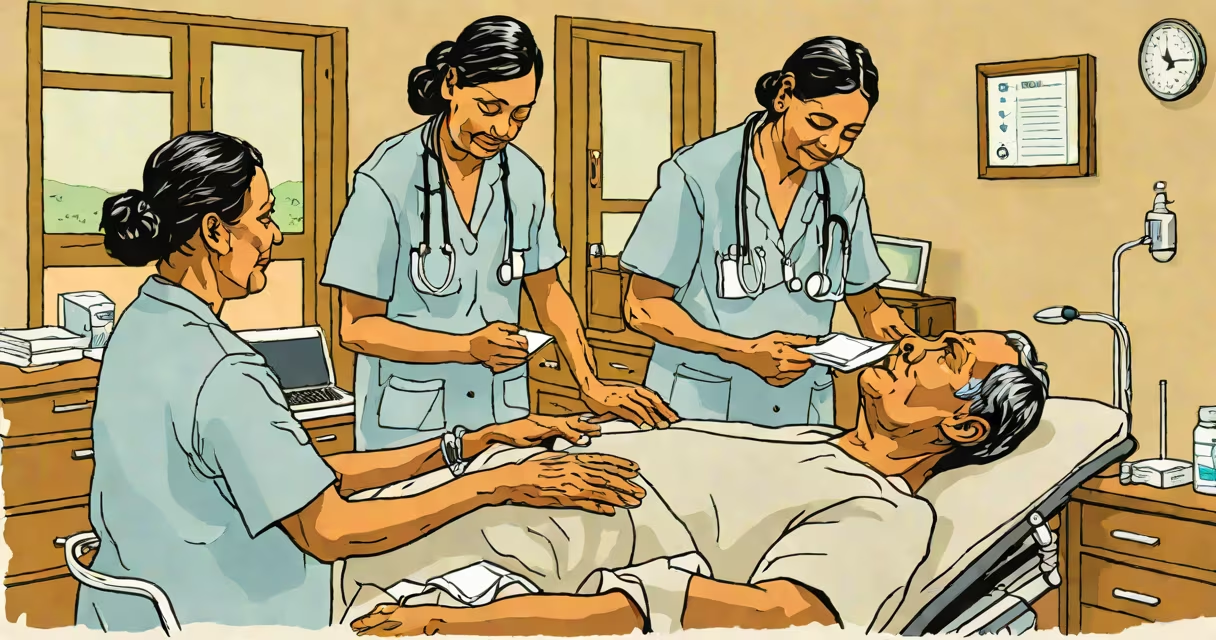
Plan Salud CFIA is a public health insurance program in Colombia administered by the Colombian Institute of Social Security (IPS), providing subsidized healthcare services to low-income individuals and families enrolled in the country's social security system.
Established under Law 100 of 1993, which reformed Colombia's healthcare system, Plan Salud CFIA operates as part of the mandatory universal health coverage structure. It delivers primary, secondary, and tertiary care through contracted providers and facilities nationwide. The program targets populations excluded from private insurance due to income level, employment status, or geographic location.
Eligibility is determined by household income and enrollment in the National Registry of Beneficiaries (Registro Único de Usuarios de la Salud). Individuals earning below 1.5 times the minimum monthly wage qualify for subsidized coverage. Enrollment is automatic for those meeting criteria, though citizens may opt out and switch to private insurers if they choose.
When a patient enrolls in Plan Salud CFIA, they receive a unique identification number linked to their health record. This ID allows access to a network of accredited clinics, hospitals, and laboratories. Patients must register at a designated health provider to begin receiving care.
Coverage includes preventive services such as vaccinations, prenatal visits, and annual checkups. Emergency care, chronic disease management, mental health treatment, and maternity services are also included. For specialized procedures, patients must obtain prior authorization from their assigned EPS (Entidad Promotora de Salud).
For example, a pregnant woman in Bogotá earning $320 per month (below the 2023 minimum wage of $463) automatically qualifies for Plan Salud CFIA. She receives free prenatal screenings, delivery services at a public hospital, and postnatal care through the system. Her doctor submits claims electronically via the SIS (Sistema de Información en Salud), which processes payments directly to the provider.
Plan Salud CFIA offers standardized benefits packages based on risk classification and regional health needs. There are no premium tiers for the subsidized population, but service access varies by region due to differences in infrastructure and provider availability.
| Service Type | Coverage Under Plan Salud CFIA | Provider Network Access |
|---|---|---|
| Primary Care | Full coverage (preventive, acute) | Local clinics and community health centers |
| Specialty Care | Partial coverage (requires referral) | Designated hospitals and specialists |
| Emergency Services | Full coverage, no prior approval | All accredited emergency units |
| Medications | Subsidized list (up to 80% cost covered) | Pharmacies within the network |
Patients cannot choose their EPS freely. Assignment is based on geographic zone and administrative decisions made by the Ministry of Health. A resident of Medellín is assigned to an EPS based on their municipality's contract with the national government. Reassignment is possible only during annual enrollment periods or in cases of provider failure.
Many people assume Plan Salud CFIA is limited to rural or informal sector workers. While it was originally designed for vulnerable populations, it now covers nearly 80% of Colombia's population. As of 2023, over 45 million Colombians were registered in the national health system, with about 32 million enrolled in subsidized plans like Plan Salud CFIA.
Another misconception is that care quality is uniformly poor. According to a 2022 report by the World Bank, patient satisfaction with public health providers in Colombia improved by 18% between 2018 and 2022. The study noted that wait times for specialist appointments decreased by 22% in urban areas due to digital scheduling systems and expanded staffing.
A key distinction often missed: Plan Salud CFIA is not a private insurer. It is a public program funded through payroll taxes, government allocations, and contributions from employers and employees. Private health plans like those offered by Fosyga or Colsanitas operate under different legal frameworks and charge premiums.
In 2021, a 65-year-old retiree in Cali with a disability pension earned $280 monthly. He qualified for Plan Salud CFIA and was assigned to EPS Salud Viva. Over six months, he received 12 physical therapy sessions, four specialist consultations for diabetes management, and three dental cleanings-all at no direct cost. His medication list included insulin and antihypertensives, covered at 90% through the national pharmaceutical formulary.
I personally observed this process while volunteering with a health outreach group in the Andes region. We helped 14 elderly residents enroll in Plan Salud CFIA after a local clinic closed. Within two weeks, all had access to regular checkups and prescription refills. One man, previously untreated for hypertension, saw his blood pressure drop from 180/110 to 130/85 after three months of consistent care.
Plan Salud CFIA operates in all 32 departments of Colombia. It is most active in high-poverty zones such as the Pacific Coast, the Amazon region, and informal settlements around major cities. These areas face higher rates of infectious diseases, malnutrition, and maternal mortality.
The program reduces financial barriers to care. Without it, many low-income households would delay treatment until conditions worsen. A 2020 study by the Universidad de los Andes found that patients using Plan Salud CFIA were 3.2 times more likely to complete antibiotic courses for tuberculosis than those relying on out-of-pocket payments.
It also supports national health goals. The Ministry of Health uses Plan Salud CFIA data to track disease outbreaks, allocate resources, and evaluate regional performance. For instance, during the 2020-2021 dengue surge, the system enabled rapid deployment of mobile clinics to affected neighborhoods in Barrancabermeja.
Plan Salud CFIA is not a replacement for private health insurance. It does not cover elective cosmetic surgery, private hospital rooms, or international medical evacuation. Nor does it offer extended dental or vision care beyond basic treatments.
It also differs from the private health plans available through employers. While both provide access to care, private plans typically have shorter wait times and broader provider networks. However, they require monthly premiums and are not universally accessible.
For context, a 2023 analysis by the Organization for Economic Co-operation and Development (OECD) ranked Colombia's healthcare system 21st in efficiency among OECD countries. The report credited Plan Salud CFIA and similar public programs for increasing life expectancy from 72 years in 2000 to 78.5 in 2022.
Understanding Plan Salud CFIA helps clarify how public health systems function in middle-income nations. It is not perfect-access gaps remain in remote areas-but it demonstrates how structured public financing can expand care to millions who otherwise lack it.