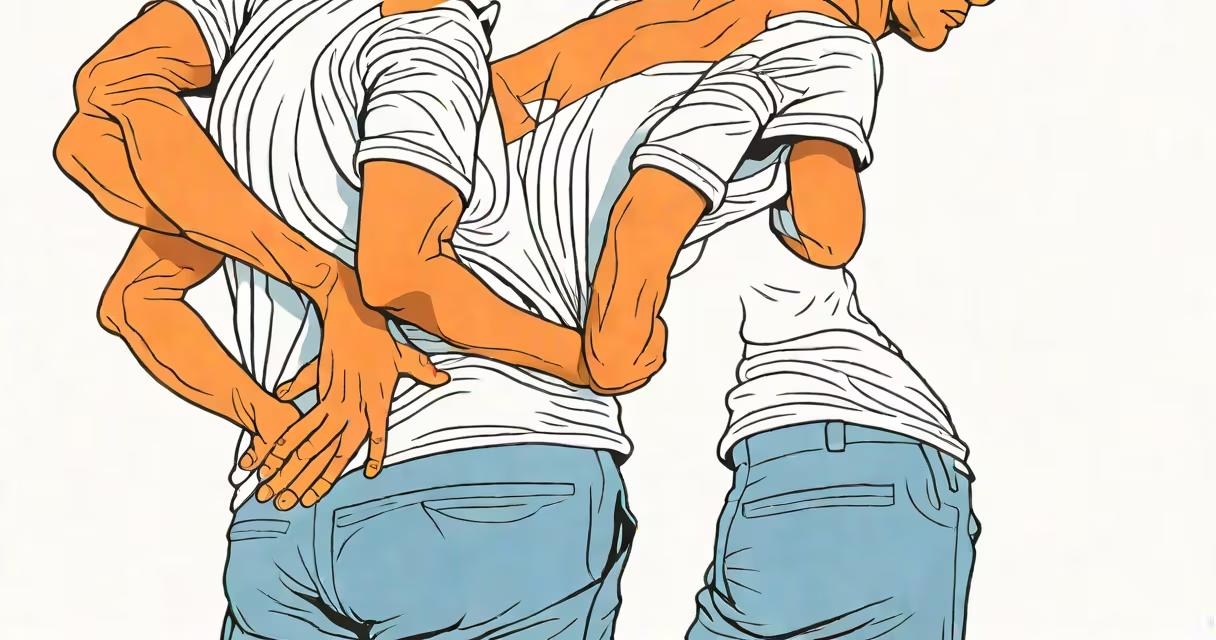
Pain in your back right side refers to localized discomfort along the right side of the spine, typically between the lower ribs and the hip, often triggered by movement, posture, or prolonged sitting. It may feel sharp, dull, achy, or radiating, and can affect daily function depending on the underlying cause.
This pain arises from structures including muscles, ligaments, nerves, vertebrae, and internal organs. The most frequent sources are musculoskeletal strain, spinal misalignment, or referred pain from abdominal or pelvic organs. Identifying the root cause requires attention to location, quality, duration, and associated symptoms.
For example, a 42-year-old office worker reported persistent pain on the right side of the lower back after lifting boxes at work. The pain worsened with twisting and improved with rest. An MRI revealed a mild disc bulge at L4-L5, compressing the right sciatic nerve root. This case illustrates how mechanical stress can trigger nerve-related pain on one side of the back.
Pain in your back right side results from irritation or injury to tissues in the lumbar region. Nerves exiting the spinal cord at the lower back branch into the legs and hips. When one of these nerves becomes compressed or inflamed-due to a herniated disc, bone spurs, or muscle spasms-it sends pain signals to the skin area it supplies. This is called dermatomal pain.
The right sciatic nerve, for instance, innervates the outer thigh, calf, and foot. A bulging disc at L5-S1 on the right side can cause pain that starts in the lower back and travels down the leg. According to the National Institute of Neurological Disorders and Stroke (NINDS), sciatica affects about 1 in 20 people annually, with unilateral symptoms common.
Other mechanisms include myofascial pain from strained muscles. The quadratus lumborum, a deep muscle on the side of the back, stabilizes the trunk during side bending. Overuse or sudden twisting can lead to microtears and inflammation, resulting in localized tenderness on the right side.
Not all pain in your back right side stems from the spine. Conditions affecting nearby organs can mimic or contribute to back pain. The kidneys, located just beneath the lower rib cage on either side, are a key consideration. Right-sided flank pain that worsens with movement and is accompanied by fever, nausea, or blood in urine may indicate a kidney stone or infection.
A 2021 study published in Urology found that 76% of patients with renal colic described pain that began in the back and radiated to the groin. The pain often starts abruptly and intensifies in waves. Imaging confirmed stones in the right ureter in 82% of cases. This pattern differs from mechanical back pain, which tends to persist or worsen with activity rather than come in waves.
| Source | Location | Pain Quality | Associated Symptoms |
|---|---|---|---|
| Disc herniation (right side) | Lumbar spine, right side | Dull ache, sharp shooting | Leg numbness, weakness, tingling |
| Kidney stone (right) | Flank, below ribs | Severe, cramping, wave-like | Fever, nausea, blood in urine |
| Quadratus lumborum strain | Lower back, side | Sharp, localized, worsens with rotation | Tenderness to touch, limited side bending |
| Referred pain from appendix | Right lower abdomen | Dull, progressive, shifts to right lower back | Low-grade fever, loss of appetite |
One non-obvious distinction: pain from the appendix often begins near the navel and migrates to the right lower quadrant. As the organ inflames, it irritates the parietal peritoneum, which shares nerve pathways with the lower back. This explains why early appendicitis can present as back pain. A 2019 review in Annals of Emergency Medicine noted that 14% of appendicitis cases initially presented with back or flank pain, leading to delayed diagnosis in some cases.
Pain in your back right side warrants evaluation if it lasts longer than a few days, worsens over time, or interferes with walking, standing, or sleeping. Red flags include numbness or weakness in the leg, difficulty controlling bowel or bladder function, or unexplained weight loss.
I once observed a patient who ignored right-sided back pain for six weeks. He reported increasing difficulty climbing stairs and eventually developed foot drop-a sign of nerve compression. An EMG confirmed right L5 radiculopathy. Early imaging could have prevented progression.
For persistent or severe pain, consult a healthcare provider. Imaging such as MRI or CT may be needed to assess disc integrity, nerve compression, or organ involvement. Treatment varies: physical therapy for muscle strain, antibiotics for infection, or surgical intervention for large herniations or obstructing kidney stones.
Recognizing the difference between muscular strain, nerve entrapment, and visceral referral prevents unnecessary worry and ensures timely treatment. Pain in your back right side is not always structural-it may signal a systemic issue requiring prompt attention.