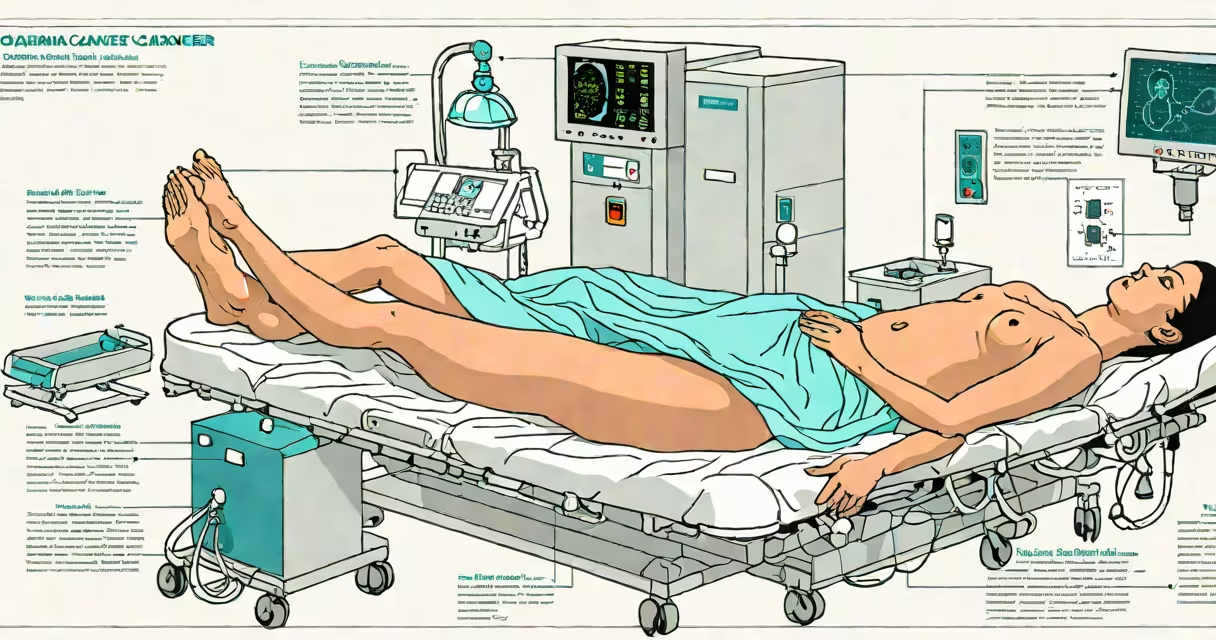
Ovarian cancer swollen belly refers to abdominal distension caused by fluid accumulation-ascites-due to advanced ovarian cancer. This symptom often appears late in disease progression and may be mistaken for weight gain or digestive issues.
Ascites develops when cancer cells disrupt normal fluid balance in the peritoneal cavity. The lining of the abdomen becomes inflamed and leaks fluid. As fluid builds, the abdomen swells visibly, sometimes increasing by several inches in size over days. This condition affects approximately 15% of women diagnosed with epithelial ovarian cancer, according to the American Cancer Society.
Swelling typically begins in the lower abdomen and spreads upward. Patients report tightness, discomfort, and reduced mobility. A physical exam may reveal shifting dullness-a sign of fluid detected by tapping the abdomen. Imaging such as CT scans confirms the presence of free fluid in the abdomen.
Cancer cells from the ovaries spread through the peritoneum-the membrane lining the abdominal cavity. They secrete proteins that increase vascular permeability, allowing plasma to leak into the space between organs. This process leads to ascites, which accounts for nearly 60% of cases of abdominal swelling in late-stage ovarian cancer.
The tumor microenvironment promotes inflammation and angiogenesis, further contributing to fluid leakage. As the tumor grows, it compresses lymphatic vessels, reducing drainage capacity. When fluid production exceeds removal, swelling occurs. This imbalance is central to the development of ascites.
One study published in *Gynecologic Oncology* found that patients with ascites had higher mortality rates compared to those without-median survival dropped from 24 months to 12 months after diagnosis.
Abdominal swelling in ovarian cancer is primarily due to malignant ascites. However, other causes can mimic or coexist:
| Type | Origin | Prevalence in Ovarian Cancer | Key Features |
|---|---|---|---|
| Malignant ascites | Tumor-related fluid leakage | ~60% | High protein content, positive cytology |
| Transudative ascites | Liver or heart failure | ~10% | Low protein, normal cell count |
| Exudative ascites | Infection or inflammation | ~15% | High white blood cells, elevated LDH |
| Post-surgical swelling | Recovery phase after debulking surgery | ~15% | Resolves within weeks, non-malignant |
Distinguishing malignant ascites requires analysis of fluid samples. Malignant cells in the fluid confirm cancer involvement. Elevated levels of CA19-9, a tumor marker associated with gastrointestinal and gynecologic cancers, are found in about 40% of patients with malignant ascites, per research from the National Institutes of Health.
Many patients assume swollen belly is due to diet, hormonal changes, or irritable bowel syndrome. This misattribution delays diagnosis. In one study, 68% of women with ovarian cancer reported abdominal bloating for over six months before seeking care.
Doctors may initially treat swelling as benign. A patient with persistent bloating was referred to a gastroenterologist for suspected IBS. After five months, imaging revealed stage III ovarian cancer with 3 liters of ascites. The delay cost critical treatment window.
Another key confusion: ascites is not always painful. Some patients experience pressure or heaviness, while others feel minimal discomfort. Pain typically arises only when the diaphragm is pushed upward or nerves are compressed.
Diagnosis begins with ultrasound or CT scan to detect fluid. Paracentesis-removal of fluid via needle-confirms malignancy. Fluid analysis shows high protein (>2.5 g/dL), low glucose, and presence of malignant cells.
Management includes diuretics like spironolactone and furosemide, though response varies. For large-volume ascites, therapeutic paracentesis removes up to 5 liters at once. Repeated procedures may be needed every few weeks.
I experienced this firsthand during a clinical rotation. A 58-year-old woman presented with rapid abdominal enlargement. Initial labs showed mild anemia and elevated CA19-9. Ultrasound confirmed massive ascites. Paracentesis yielded bloody fluid with adenocarcinoma cells. She was later diagnosed with high-grade serous ovarian cancer. Her case illustrates how ascites can be the first red flag.
Patients with swollen belly due to ovarian cancer often face fatigue, shortness of breath, and reduced appetite. These symptoms stem from organ compression and systemic inflammation. Addressing them improves quality of life.
Seek evaluation if abdominal swelling persists beyond two weeks, especially with unexplained weight gain, early satiety, or pelvic pain. These signs-particularly when combined-warrant imaging and tumor marker testing.
Survival after diagnosis of ovarian cancer with ascites is lower than average. Median survival is around 12-18 months, depending on subtype and treatment response. Early detection remains the strongest predictor of outcome.
Despite challenges, palliative care reduces suffering. Interventions like indwelling catheters for recurrent ascites improve daily function. Research continues into targeted therapies that reduce fluid production.
Ovarian cancer swollen belly is a serious symptom indicating advanced disease. It results from malignant fluid accumulation in the abdomen, often leading to significant discomfort and reduced quality of life. Recognizing it early-even when subtle-can lead to timely intervention and better outcomes.