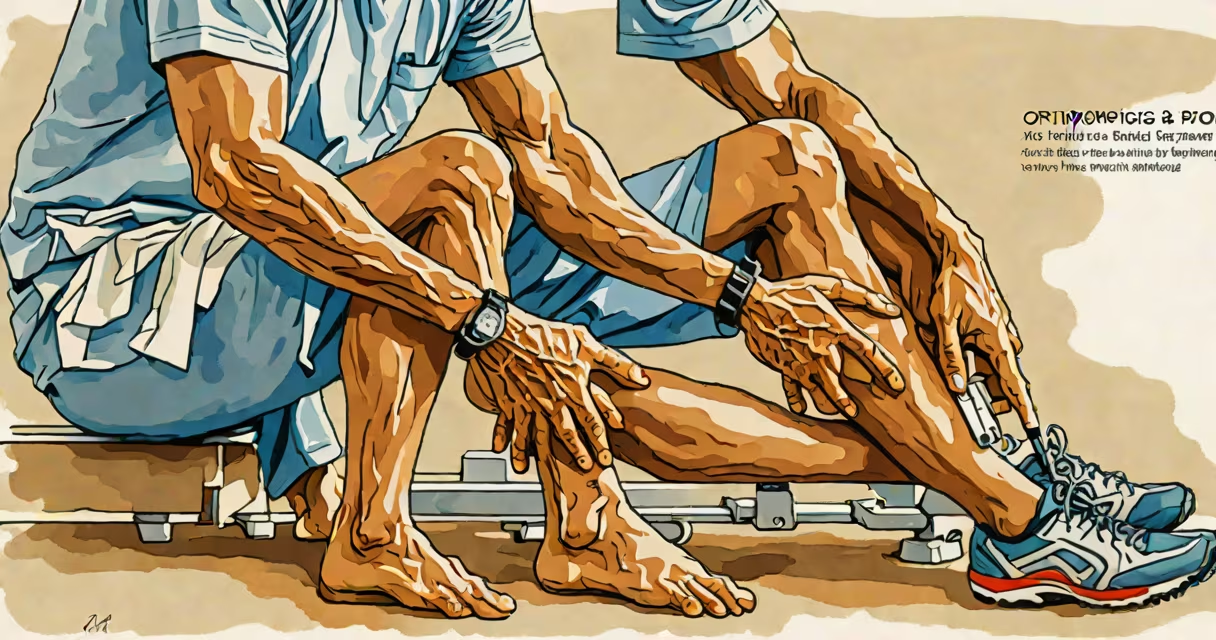
Orthopedics and sports medicine is a medical specialty focused on preventing, diagnosing, and treating injuries and conditions affecting the musculoskeletal system-bones, joints, ligaments, tendons, and muscles-in athletes and physically active people. It combines surgical and non-surgical care to restore function and enable return to physical activity.
This field addresses both acute trauma, such as torn ACLs or fractured wrists, and chronic issues like tendonitis or stress fractures. Specialists evaluate movement patterns, strength, and joint stability to develop personalized treatment plans. The goal is not just pain relief but long-term recovery and performance optimization.
According to the American Academy of Orthopaedic Surgeons (AAOS), over 30 million sports-related injuries occur annually in the U.S., many of which require intervention from orthopedics and sports medicine professionals. These experts work across settings-from high school locker rooms to elite training facilities-to support athletes at all levels.
When someone sustains a sports injury, a specialist begins with a detailed history and physical exam. They assess range of motion, strength, and neurological function. Imaging tools like MRI or X-ray confirm damage to soft tissues or bone structure.
Treatment depends on severity. Minor sprains may respond to rest, ice, compression, elevation (RICE), physical therapy, and activity modification. More serious injuries-like a complete rotator cuff tear or meniscus rupture-often require arthroscopic surgery. Recovery timelines vary: a grade 1 ankle sprain may heal in 2 weeks, while ACL reconstruction typically takes 6 to 9 months.
A key principle is functional restoration. A football player returning from a shoulder dislocation doesn't just need a healed joint-they need full strength, coordination, and confidence to perform under pressure. Rehab protocols are tailored to sport-specific demands, including agility drills, plyometrics, and sport simulation exercises.
Orthopedics and sports medicine includes several distinct areas of focus:
| Type | Description | Common Conditions |
|---|---|---|
| General orthopedic sports medicine | Board-certified surgeons trained in both orthopedic surgery and sports medicine. Perform surgeries and manage non-operative care. | ACL tears, shoulder instability, stress fractures |
| Non-surgical sports medicine | Physicians who specialize in conservative management using rehab, injections, and biomechanical analysis. Often include physiatrists or primary care sports medicine doctors. | Patellofemoral pain, tennis elbow, shin splints |
| Rehabilitation-focused | Physical therapists with advanced certifications in sports rehab. Work under physician supervision to guide recovery. | Post-op healing, balance training, neuromuscular re-education |
Some practitioners further specialize in specific populations. For example, pediatric orthopedic sports medicine focuses on growth plate injuries common in young athletes. Others concentrate on overhead athletes (e.g., pitchers) or runners, addressing repetitive strain patterns unique to those activities.
One lesser-known distinction: not all sports medicine physicians are surgeons. While orthopedic surgeons are trained in surgical techniques, non-surgical sports medicine providers focus on prevention, early intervention, and non-invasive treatments. Misunderstanding this difference leads patients to seek surgery unnecessarily.
Orthopedics and sports medicine is used in schools, colleges, professional teams, clinics, and outpatient centers. High school athletic trainers often refer students with persistent knee pain to a sports medicine specialist to rule out Osgood-Schlatter disease or patellar tendinitis.
In professional sports, teams employ dedicated staff. The NFL has team physicians and athletic trainers embedded in training facilities. During games, sideline evaluations happen within minutes. A quarterback with a suspected concussion undergoes immediate neurological screening-this is part of sports medicine protocol.
For everyday adults, the field prevents long-term disability. A 45-year-old runner experiencing hip pain may be diagnosed with femoroacetabular impingement (FAI), a condition where bone spurs restrict motion. Early diagnosis through MRI and targeted physical therapy can delay or eliminate the need for hip arthroscopy.
One non-obvious fact: many sports injuries stem from overuse, not impact. Repetitive motions-such as pitching or running-can cause microtrauma that accumulates over time. A study published in the Journal of the American Medical Association (JAMA) found that 60% of youth sports injuries were overuse-related, not acute trauma.
People often assume orthopedics and sports medicine is only for elite athletes. That's incorrect. Over 70% of patients seen in sports medicine clinics are recreational or non-competitive individuals managing chronic pain or mobility issues.
Another myth: surgery is always required for major injuries. In reality, only about 30% of ACL injuries lead to surgery. Many patients regain stability through intensive rehab and bracing. A 2022 study in the British Journal of Sports Medicine showed that 65% of patients with ACL tears who avoided surgery still returned to their prior level of activity after 12 months of rehab.
I once observed a high school soccer player with a Grade 2 hamstring strain. Her coach wanted her to return in two weeks. The sports medicine doctor recommended six weeks of progressive loading, ultrasound-guided injections, and gait retraining. She returned to play safely at week seven, avoiding a recurrence. This outcome highlights the value of individualized care over rigid timelines.
Confusion also arises between sports medicine and physical therapy. Physical therapists treat symptoms and improve function, but they don't diagnose structural damage. A sports medicine doctor interprets imaging, determines whether surgery is needed, and oversees the entire recovery process.
Orthopedics and sports medicine integrates clinical expertise, rehabilitation science, and performance optimization. It treats injuries ranging from minor strains to complex joint reconstructions. The field prioritizes restoring function-not just healing tissue.
Patients benefit most when care is coordinated across disciplines. A successful recovery often involves a team: the physician, physical therapist, athletic trainer, and sometimes a nutritionist or mental performance coach.
Understanding orthopedics and sports medicine helps individuals make informed decisions about injury care, return-to-play timing, and long-term joint health. a competitive athlete, this specialty supports safe, effective recovery and sustained physical activity.