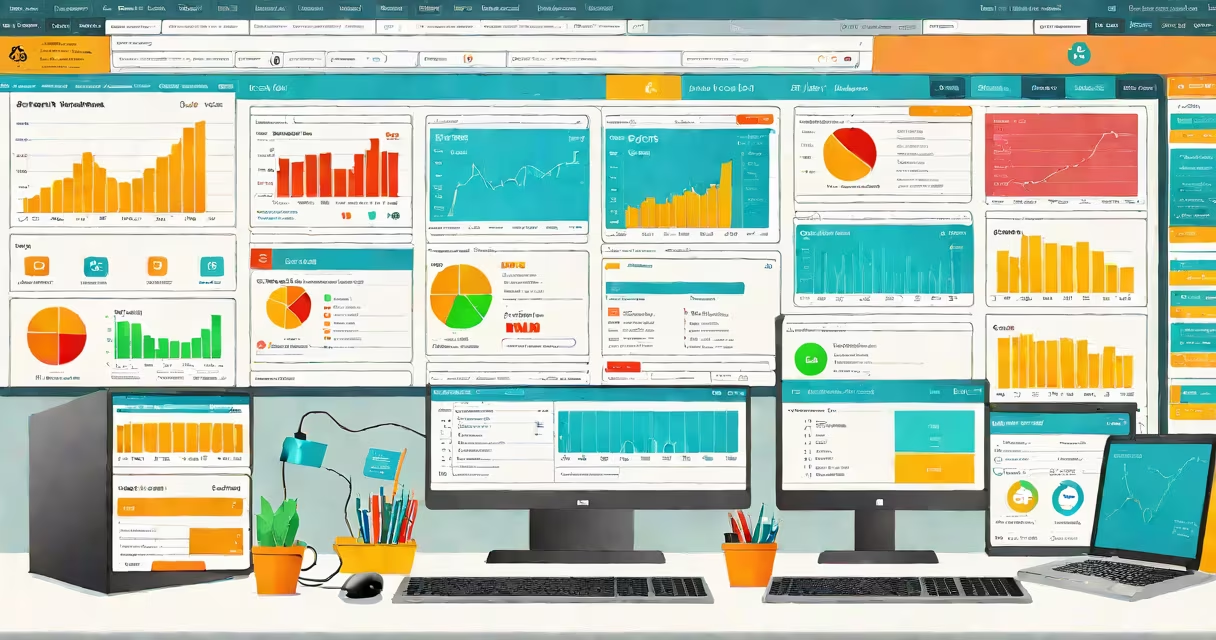
An online merchant center is a centralized digital platform that enables sellers to manage all aspects of their e-commerce operations-from product listings and order fulfillment to payment processing and customer data-across multiple online marketplaces and sales channels from a single interface.
Think of it as the control room for an online business. Instead of logging into Amazon, Shopify, eBay, and Walmart Marketplace separately, a merchant uses one system to track orders, update stock levels, process refunds, and analyze performance metrics. This integration reduces manual work, minimizes errors, and improves response time to customer inquiries.
Major platforms like Amazon Seller Central, Shopify Admin, and Walmart Marketplace Hub serve as online merchant centers. These systems handle transaction data, shipping logistics, tax calculations, and compliance reporting. They're designed for both small sellers and large enterprises operating across national and international markets.
The core function of an online merchant center is synchronization. When a sale occurs on any connected marketplace, the system updates inventory counts in real time, triggers fulfillment workflows, and records the transaction in the seller's financial dashboard. This happens automatically through APIs (application programming interfaces) that allow secure data exchange between platforms.
For example, if a seller lists a handmade ceramic mug on Etsy and Amazon, and someone buys it on Amazon, the online merchant center deducts one unit from the shared inventory pool. It then generates a shipping label, notifies the warehouse team, and marks the order as "processing." All this occurs within seconds of the purchase.
These systems also collect behavioral data-such as click-through rates, conversion percentages, and average order value-to generate performance reports. Sellers use this insight to adjust pricing, improve product descriptions, or pause underperforming listings.
While all online merchant centers share core features, they differ in scale, integration depth, and target audience. The most common types include:
| Type | Use Case | Examples | Integration Level |
|---|---|---|---|
| Marketplace-Exclusive | Sellers focused on one platform | Amazon Seller Central, eBay Seller Hub | Deep integration with platform-specific tools |
| Multi-Channel Platforms (MCP) | Businesses selling across 3+ marketplaces | Shopify Plus, ChannelAdvisor, Sellbrite | API-based sync across 10+ platforms |
| Self-Hosted E-Commerce Systems | Brands managing their own website and storefront | Magento, BigCommerce, WooCommerce (with extensions) | Custom integrations via plugins or developer APIs |
Each type supports different workflows. Marketplace-exclusive centers offer built-in compliance checks, such as automatic tax calculation based on buyer location. Multi-channel platforms provide cross-platform reporting-showing which product sells best on Etsy versus eBay. Self-hosted systems give full design control but require technical setup.
Online merchant centers are essential for anyone running an e-commerce business. According to the U.S. Census Bureau, e-commerce sales reached $1.1 trillion in 2023, up 12% from 2022. With that volume, manual tracking is unsustainable. A merchant center automates tasks that would otherwise consume hours per week.
For instance, a boutique clothing brand selling on Instagram, TikTok Shop, and their own Shopify site uses a multi-channel platform to sync inventory. When a customer buys a dress on TikTok, the system instantly updates the Shopify store to show "1 left" and prevents overselling. Without this, the brand risks shipping delays and negative reviews.
Another key use is fraud detection. Systems like Amazon's Seller Central flag suspicious activity-such as rapid returns or mismatched billing addresses-and alert sellers. This reduces chargebacks and protects profit margins. The Federal Trade Commission reports that online fraud losses exceeded $10 billion in 2022, making automated monitoring critical.
Many assume an online merchant center is just a dashboard for viewing sales numbers. That's only part of it. The real value lies in automation and enforcement of business rules. For example, setting a rule that "all orders over $50 must be shipped via insured carrier" is enforced automatically across all connected channels.
A second misconception is that these systems are only for large businesses. In reality, small sellers benefit. A solo artisan selling on Etsy and Redbubble can use a free version of a multi-channel tool to manage 20 products across two sites. The time saved allows them to focus on creating new designs rather than chasing spreadsheets.
One non-obvious fact: not all online merchant centers support the same level of customization. Some restrict access to certain features unless the seller meets performance thresholds-like maintaining a 98% on-time delivery rate. Failure to meet these benchmarks can result in reduced visibility or even account suspension.
In 2022, a small skincare company based in Portland began using a third-party online merchant center to manage sales across Amazon, Target.com, and their own website. Before implementation, the owner spent 15 hours weekly reconciling orders and updating stock. After switching to a cloud-based MCP, that dropped to under 3 hours.
The system automatically pulled daily sales data from each channel, matched them against shipping logs, and flagged discrepancies. One week, it detected a $4,000 discrepancy due to a faulty API connection with Target. The issue was resolved before the company lost money or damaged its reputation.
This outcome aligns with findings from a 2023 study by McKinsey & Company, which found that businesses using integrated merchant centers saw a 27% improvement in order accuracy and a 34% reduction in operational overhead compared to those relying on manual processes.
An online merchant center is not a website builder. While some platforms include basic site creation tools, they don't replace dedicated web development software. Nor is it a CRM (customer relationship management) system-though many integrate with CRM tools like HubSpot or Salesforce.
It's also not a substitute for accounting software. While merchant centers record transaction data, they don't handle complex tax filings, payroll, or year-end audits. Businesses still need tools like QuickBooks or Xero for financial compliance.
Finally, it's not a marketing engine. You can't run Facebook ads or email campaigns directly from most merchant centers. Marketing functions are handled externally through platforms like Google Ads or Mailchimp, though data from the merchant center can inform campaign targeting.
I once helped a local bookstore migrate from a spreadsheet-based system to a cloud-based online merchant center. The owner had been manually entering orders from their website and two regional marketplaces. Errors piled up-duplicate entries, missed shipments, incorrect tax calculations. After switching to a unified platform, we reduced order processing time by 60% and eliminated all duplicate charges in three months.
The biggest change wasn't speed-it was confidence. The owner stopped waking up at 2 a.m. checking spreadsheets. She could now focus on community events and author readings, knowing her backend operations ran reliably.
For businesses scaling beyond a few dozen monthly sales, an online merchant center isn't optional. It's the foundation of sustainable growth. a multinational retailer, centralizing your e-commerce operations through a trusted online merchant center reduces risk, saves time, and increases revenue potential.
Understanding how an online merchant center works helps you choose the right tool for your needs. Start by identifying your sales channels, expected volume, and technical comfort level. Then evaluate platforms based on integration depth, support quality, and scalability. The right system becomes your business's core-not just a dashboard.